

Key Takeaways:
- Introduction of high-performance AI-powered telecommunications hardware.
- Enhanced support for augmented reality and next-generation 5G-Advanced services.
- Strategic focus on network modernisation ahead of MWC 2026.
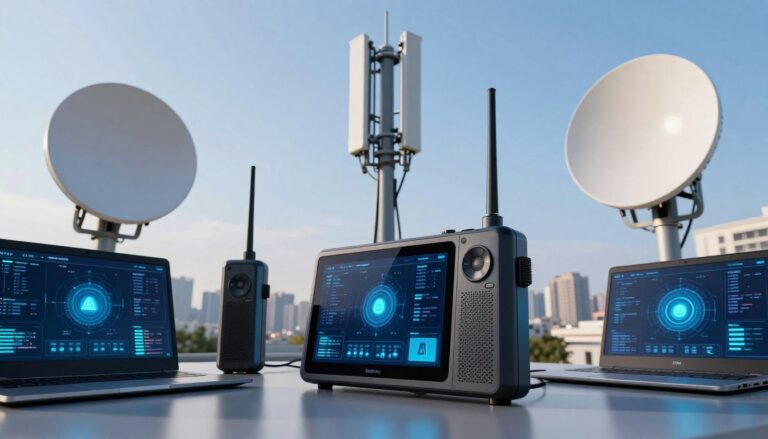
As the Mobile World Congress 2026 approaches, a leading telecommunications company has introduced cutting-edge hardware. These innovations are designed to support the global surge in augmented reality and advanced digital services.
The new AI RAN software is engineered to seamlessly integrate with existing systems, boosting network efficiency. These 5G-Advanced solutions pave the way for network upgrades. For Nigerian service providers, this technology is a game-changer, addressing the increasing demand for data.
The Swedish company is committed to equipping future connectivity with AI-ready radios and antennas. These tools are essential for the next wave of mobile technology. This innovation ensures networks stay resilient as user expectations continue to grow across Africa and worldwide.
Ericsson Launches AI-Ready Radios with Advanced Hardware Capabilities
Ericsson has made a groundbreaking move with its AI-ready radios, featuring cutting-edge hardware. These innovations aim to boost network performance and cater to the needs of data-intensive AI applications.
The latest Massive MIMO and remote radios from Ericsson boast the company’s Silicon with neural network accelerators. This combination enables real-time AI inference, which is essential for the smooth operation of today’s telecommunications networks.
The introduction of neural network accelerators in Ericsson’s radios marks a major leap forward. It enhances uplink performance, a key factor in meeting the rising demands of AI-driven services.
Enhancing Uplink Performance and Real-Time AI Inference
The new radios’ advanced hardware capabilities significantly improve uplink performance. This is critical for networks to manage the surge in data traffic from AI applications.
Ericsson’s AI-ready radios enable real-time AI inference, enabling immediate processing of complex data. This supports a broad spectrum of applications that necessitate swift data analysis and decision-making.
- Related: AI to redefine Nigeria’s workspaces
AI RAN Software Suite for Intelligent Network Management
Ericsson’s AI RAN software suite is at the forefront of telecommunications innovation. It aims to significantly enhance network performance. This suite offers intelligent network management through a range of AI-powered features.
The AI RAN software suite includes advanced features such as AI-managed beamforming and AI-powered positioning. These features are essential for improving network performance. They ensure the network meets the demands of various applications and devices.
AI-managed beamforming uses artificial intelligence to optimise the direction and strength of radio signals. This leads to better coverage and capacity, vital in densely populated areas. By dynamically adjusting beam directions, networks can support more users and provide a more reliable service.
AI-powered positioning also enhances device location accuracy within the network. This is highly beneficial for applications that require precise location information, such as emergency services and logistics tracking.
The integration of AI in the RAN software suite boosts network performance, energy efficiency, and reliability. It intelligently manages network resources, reducing energy consumption during low-demand periods. This contributes to a more sustainable operation.
Ericsson’s AI RAN software suite marks a significant advancement in telecommunications evolution. It leverages AI-powered features to offer a more intelligent, efficient, and reliable network management solution.
Industry Impact and Operator Benefits
Ericsson is revolutionising telecommunications with its AI-ready radios and AI RAN software. Erik Ekudden, the company’s CTO, highlights the importance of distributed cloud, advanced connectivity, and physical AI. These technologies are the foundation for the next wave of mobile innovation, opening new use cases and sectors for operators.
The launch of these technologies will profoundly impact the industry. It will enable operators to monetise next-generation connectivity and explore new business opportunities. With Ericsson’s AI-ready radios and AI RAN software, operators can enhance their network capabilities. This will improve efficiency and deliver high-quality services to customers.
Ericsson’s launch offers operators a chance to expand into new sectors and create new revenue streams. The AI RAN software enables intelligent network management. This allows operators to optimise their networks and deliver tailored services to customers.
The integration of AI and advanced connectivity will drive innovation across various industries. This includes manufacturing and healthcare, among others. As operators leverage next-generation connectivity, they will support a wide range of new use cases. These include IoT applications and mission-critical communications.
Ericsson’s Vision for AI-Driven Telecommunications
Ericsson leads the charge in transforming telecommunications with AI. The company is using AI to handle the shifts caused by AI-driven traffic and use cases. This ensures networks are not just AI-powered but AI-native.
Ericsson’s vision for the future of telecommunications is clear. It focuses on creating networks that can efficiently manage AI-driven traffic demands. This requires developing AI-ready infrastructure, like radios and antennas, and AI RAN software for intelligent network management.
Ericsson’s goal is to enable operators to deliver top-notch services that meet customer needs. The company’s dedication to AI-driven telecommunications is set to transform the industry. It will lead to more efficient, scalable, and innovative network solutions.

Senior AI Writer
Bio: Okikiola is a writer and AI enthusiast with a background in Office Technology and Management from the Federal Polytechnic Offa. She went further to study an MSc in International Business at De Montfort University (DMU). With extensive work experience across administrative and business roles, she now focuses on exploring how artificial intelligence can transform work, innovation, and everyday life.