

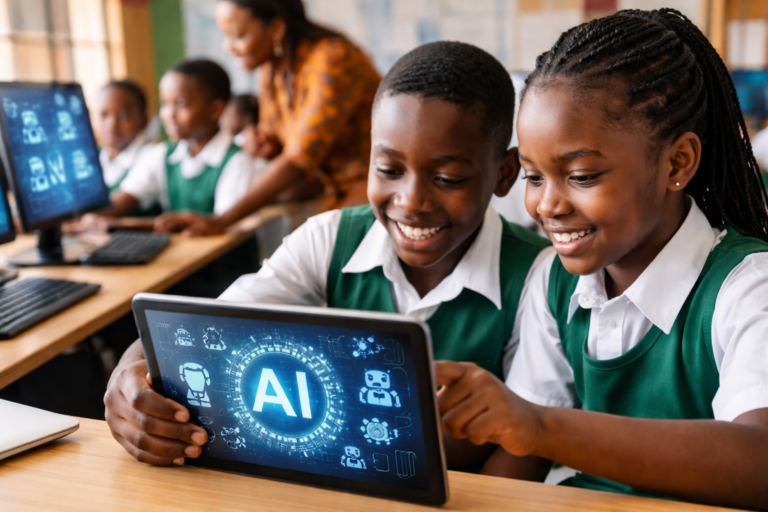
The Enugu State Government has unveiled plans to equip primary and secondary school pupils with skills in artificial intelligence (AI) and robotics, signalling a strategic push to prepare young learners for the demands of the future workforce.
The initiative forms part of the state’s broader education reform agenda, which prioritises technology-driven learning, innovation, and practical skill acquisition. By introducing AI and robotics at an early stage, the government aims to ensure that pupils are not only digitally literate but also able to engage with the emerging technologies shaping the global economy.
According to officials familiar with the programme, pupils will be exposed to foundational concepts in AI, robotics, coding, and problem-solving through hands-on, experiential learning. The approach is designed to move beyond theoretical instruction, encouraging creativity, critical thinking, and real-world application of digital skills.
The training is closely aligned with Enugu’s Smart Green Schools vision, which seeks to integrate modern learning tools, interactive digital classrooms, and technology-enabled teaching across the state’s public education system. Education stakeholders say the move reflects a growing recognition among sub-national governments that early exposure to advanced technologies is critical for long-term economic competitiveness.
Consider reading these:
- Artificial Intelligence adoption in Nigeria
- Viable AI Startup Business Ideas for Nigerians
- AI is creating new job roles in Nigeria
- AI regulations in Nigeria
- Funding providers for Nigerian AI startups
Education analysts note that Enugu’s focus on AI and robotics mirrors wider national conversations on the need for stronger digital skills development, particularly as Nigeria’s technology ecosystem continues to expand. Recent discussions around AI education in Nigeria have highlighted the importance of building capacity from the basic education level rather than relying solely on tertiary institutions.
Beyond student training, the programme is expected to be supported by teacher upskilling and digital literacy initiatives to ensure effective delivery. Experts argue that sustained investment in educator capacity will be essential to achieving meaningful outcomes from AI-focused curricula.
As global industries increasingly adopt automation and intelligent systems, initiatives such as this are seen as efforts to position today’s pupils for tomorrow’s jobs. Similar workforce-focused conversations have been explored in coverage on the future of work and AI in Africa, where early education is seen as a key driver of inclusive digital growth.
With the rollout underway, Enugu State joins a small but growing number of Nigerian states experimenting with structured AI and robotics education at the basic school level, setting a potential benchmark for technology-led education reform in the country.

Director/CEO
As the co-founder of AIBase, Joy established this platform to make artificial intelligence knowledge more accessible and relevant within the Nigerian ecosystem. She is an accounting graduate with a diverse professional background in multimedia and catering, experiences that have strengthened her adaptability and creative problem-solving skills.
Now transitioning into artificial intelligence and technology writing, Joy blends analytical thinking with engaging storytelling to explore and communicate emerging technology trends. Her drive to establish aibase.ng is rooted in a passion for bridging the gap between complex AI innovations and practical, real-world understanding for individuals and businesses.