

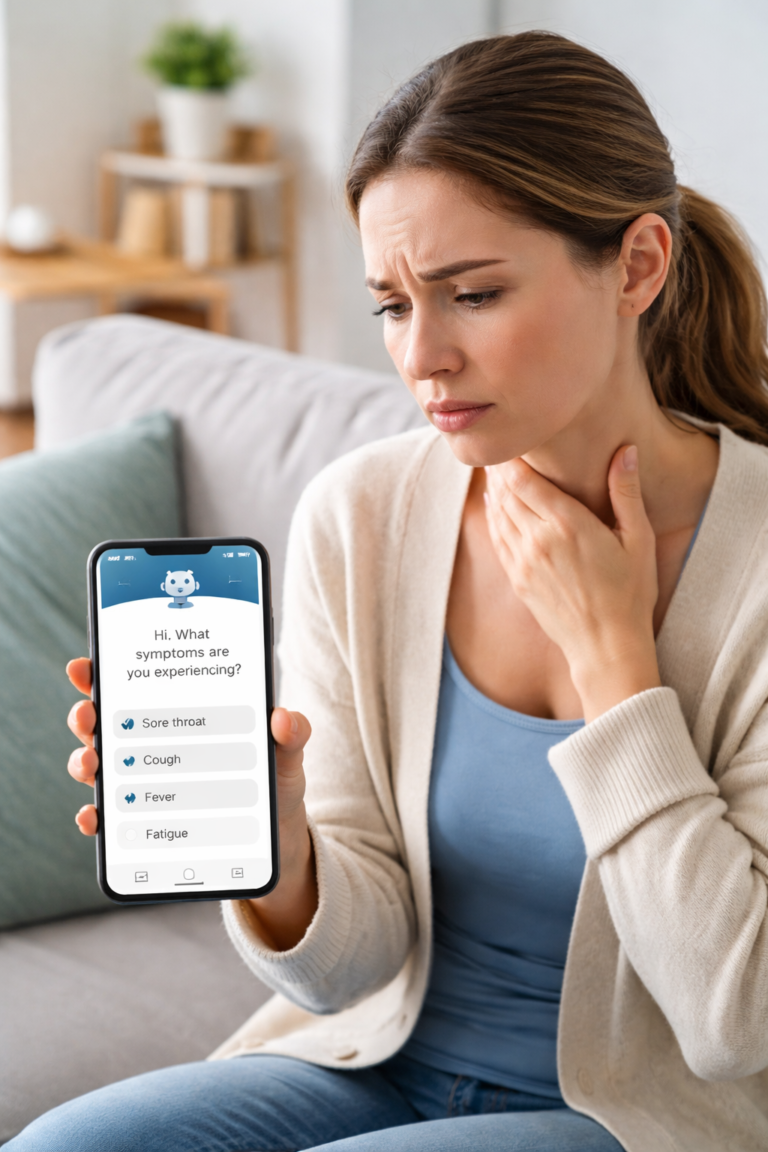
The impact of Artificial Intelligence (AI) has cut across many sectors of the global economy, with no exception to healthcare. From symptom checkers to virtual health assistants, AI offers users the promise of instant medical guidance and personalised recommendations. While these tools are convenient and accessible, relying solely on AI for health advice comes with both potential benefits and significant risks. Understanding this balance is crucial for anyone adopting AI for routine medical checkups.
Maximising the Benefits
- Accessibility and Convenience
AI-powered health tools provide guidance 24/7, making them especially valuable for people in remote or underserved areas. A patient experiencing mild symptoms can access advice without waiting days for an appointment. This immediacy can help reduce anxiety and improve proactive care.
- Early Detection and Preventive Care
Advanced AI systems can detect patterns in health data that might indicate potential problems. For example, wearable devices equipped with AI can track heart rates, sleep patterns, or blood sugar levels, alerting users to irregularities before they escalate into serious conditions. AI’s predictive capabilities are revolutionising preventive healthcare.
- Personalised Health Recommendations
AI can process a user’s health history, lifestyle choices, and existing conditions to offer tailored advice. From meal planning to exercise routines, AI tools can provide personalised insights previously available only through continuous consultations with healthcare professionals.
- Support for Healthcare Professionals
AI doesn’t just benefit patients. Doctors and nurses can leverage AI for preliminary diagnostics, data analysis, and the identification of rare conditions. This support allows healthcare professionals to focus on complex cases, improving overall efficiency and care quality.
Risks Inherent
- Accuracy and Reliability Concerns
AI systems are only as reliable as the data they are trained on. Incorrect or biased datasets can lead to misdiagnosis or inappropriate recommendations. Without human oversight, errors can go unnoticed, posing serious health risks.
- Lack of Human Judgment and Empathy
AI cannot replace the nuanced understanding of a trained physician. Emotional support, reassurance, and judgment calls based on complex symptoms are areas where human doctors remain irreplaceable. Patients may miss subtle cues that AI cannot interpret.
- Privacy and Data Security Issues
Health data is highly sensitive. AI platforms that store or analyse medical information may be vulnerable to breaches or misuse. Users need to be aware of privacy policies and the security measures in place before sharing personal health data.
- Overdependence and Self-Diagnosis
There is a growing risk that users will rely entirely on AI, avoiding professional medical consultations. Misinterpretation of AI-generated information can lead to unnecessary anxiety or dangerous delays in seeking care. AI should complement, not replace, professional advice.
Safety Guidelines
- Verify the Source
Not all AI health tools are created equal. Some are developed by reputable healthcare institutions, universities, or certified medical technology companies, while others may lack proper validation or oversight. Before using an AI tool:
- Check credentials: Look for affiliations with hospitals, medical research institutions, or recognised tech companies.
- Read reviews and clinical studies: Many credible tools publish data on their accuracy and outcomes. Avoid apps with vague claims or no evidence.
- Regulatory compliance: Ensure the AI tool complies with local healthcare regulations or standards, such as HIPAA in the U.S. or GDPR in Europe.
Using trusted sources reduces the risk of receiving inaccurate or misleading health advice.
- Supplement, Don’t Replace
AI is powerful, but it cannot replace professional judgment. Use AI as a tool to support your healthcare decisions, not as the final authority. For example:
- Use symptom checkers to prepare for doctor visits, not to self-diagnose critical conditions.
- Treat AI suggestions as informational guidance and cross-check them with reliable medical sources or professionals.
- Avoid acting solely on AI recommendations for serious conditions, especially those requiring prescription medications or surgical interventions.
This approach ensures that AI enhances your understanding without compromising safety.
- Maintain Professional Check-Ups
Regular consultations with licensed healthcare professionals remain essential, even if AI tools provide ongoing guidance.
- Routine check-ups help monitor changes that AI may not detect, especially subtle or complex symptoms.
- Professionals can interpret AI-generated data and put it in context with medical history and other health indicators.
- Certain conditions require physical examinations, lab tests, or imaging that AI alone cannot provide.
Think of AI as a “first layer” of insight, with healthcare professionals providing the “second, essential layer” of diagnosis and treatment.
- Protect Your Data
AI health tools often require sensitive personal information, such as age, medical history, lifestyle, and biometric data. Safeguarding this data is critical:
- Understand privacy policies: Know how your information is stored, shared, or used for research.
- Use secure platforms: Prefer apps with strong encryption and two-factor authentication.
- Limit unnecessary sharing: Avoid giving access to unrelated third-party apps or services.
- Regularly review permissions: Ensure only essential data is shared with the AI tool.
Protecting your health data prevents identity theft, privacy breaches, and misuse of sensitive information.
Closing
AI can greatly enhance healthcare through convenience, early detection, and personalised guidance. Yet risks like misdiagnosis, data security concerns, and overreliance require careful use. When combined thoughtfully with professional care, AI serves as a supportive tool for better outcomes, rather than a replacement for healthcare professionals.

Senior Reporter/Editor
Bio: Ugochukwu is a freelance journalist and Editor at AIbase.ng, with a strong professional focus on investigative reporting. He holds a degree in Mass Communication and brings extensive experience in news gathering, reporting, and editorial writing. With over a decade of active engagement across diverse news outlets, he contributes in-depth analytical, practical, and expository articles exploring artificial intelligence and its real-world impact. His seasoned newsroom experience and well-established information networks provide AIbase.ng with credible, timely, and high-quality coverage of emerging AI developments.