

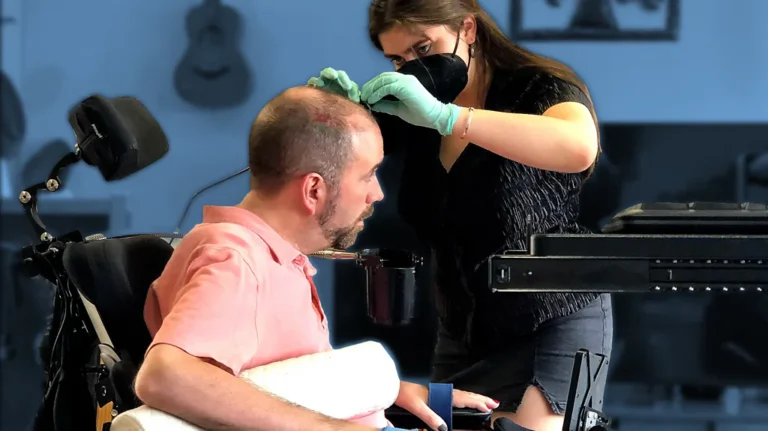
The idea of technology engaging with the human mind is now being examined within laboratories and research institutions. Advances in neuroscience and other related research in artificial intelligence have prompted a more precise question: not whether machines can access thoughts themselves, but whether they can analyse the physical signals produced by the brain when people think, intend, or imagine. This shift reframes the debate, focusing attention on how such systems work, what they can reliably interpret, and where firm scientific boundaries still exist.
“Reading Thoughts”
In scientific terms, human thoughts are not simple data units but complex mental states produced by electrical and chemical activity in the brain. When people refer to AI “reading thoughts”, they usually mean one of three processes: decoding brain signals to link neural patterns with actions or perceptions, recognising intentions such as planned movements or choices, or attempting to reconstruct language or images a person is thinking about.
Crucially, none of these involves direct access to subjective experience. AI systems do not perceive inner speech or mental imagery; they identify statistical correlations between measured biological signals and observable outcomes.
Practical Interaction
Modern efforts to interpret mental activity depend on brain-computer interfaces, which combine neuroscience, engineering, and machine learning to capture and translate neural signals into usable outputs. AI is essential because brain data is noisy and highly individualised, requiring trained models to recognise patterns associated with specific actions or imagined tasks.
Progress has been most visible in speech decoding, where AI can generate rough sentence reconstructions from brain scans, though these remain probabilistic interpretations rather than true mind-reading. While OpenAI does not work directly on brain decoding, its language models shape how decoded signals are turned into text, whereas companies like Neuralink focus on implantable devices that capture neural data with greater precision.
What AI Can and Cannot Do
Despite frequent sensational claims, today’s AI capabilities remain narrow and tightly controlled. Existing systems are primarily used in clinical contexts, where they help people with paralysis communicate, operate prosthetics, or interact with digital devices, enhancing quality of life rather than revealing private thoughts.
AI cannot decode thoughts at will; it depends on extensive, individual-specific training and still delivers imperfect results. Performance is further shaped by context, limited vocabularies, emotional states, fatigue, and environmental interference.
Crucially, there is no scientific evidence that AI can access subconscious thoughts or memories without a person’s active participation, making fears of involuntary mind surveillance unfounded at present.
Ethical Perspectives
Globally, governments and universities are investing in neuro-AI research, with priorities differing by region. In the United States and Europe, efforts largely focus on medical uses such as treating stroke, spinal injuries, and neurodegenerative conditions, while parts of Asia emphasise integrating brain-computer interfaces with robotics and intelligent environments.
At the same time, ethical standards are developing, with growing recognition of mental privacy and calls for “neurorights” to prevent unauthorised access to brain data. Regulators remain cautious because neural information is exceptionally sensitive, can reveal health and cognitive traits, and is therefore increasingly subject to strict consent and oversight requirements.
Summary
The question of whether AI can read our scrambled inner thoughts reveals more about our fears and hopes than about current technology. Today’s systems do not access thoughts in any direct or mystical sense. They analyse patterns in brain activity using sophisticated algorithms, producing useful but limited interpretations.
As research progresses, the boundary between assistance and intrusion will require constant negotiation. The challenge for societies is to harness the benefits of neuro-AI without compromising fundamental freedoms. Thought, after all, remains one of the last truly private spaces. Protecting it while exploring new frontiers of science will define the ethical character of the digital age.

Senior Reporter/Editor
Bio: Ugochukwu is a freelance journalist and Editor at AIbase.ng, with a strong professional focus on investigative reporting. He holds a degree in Mass Communication and brings extensive experience in news gathering, reporting, and editorial writing. With over a decade of active engagement across diverse news outlets, he contributes in-depth analytical, practical, and expository articles exploring artificial intelligence and its real-world impact. His seasoned newsroom experience and well-established information networks provide AIbase.ng with credible, timely, and high-quality coverage of emerging AI developments.