


1. Treat AI as Strategic National Infrastructure
AI should be embedded into Nigeria’s national development and economic blueprints, alongside roads, energy, transportation, and digital ID systems. Countries leading in AI, China, UAE, US, UK, Singapore, and the EU as a block are doing precisely this: treating AI as a foundational layer that boosts every other economic sector.
For Nigeria, this means embedding AI policy into long-term national plans (e.g., Nigeria Agenda 2050, Nigeria Digital Economy Policy), identifying priority sectors where AI can accelerate GDP growth, and establishing a central national AI coordinating body with absolute authority.
Without this strategic framing, Nigeria risks fragmented efforts and missed opportunities to leverage AI for economic transformation.
Stay updated on AI Analysis and trends in Nigeria.
Join our newsletter to receive the latest updates, news and analysis like this.
2. Invest in People, Power, and Digital Infrastructure
AI systems rely on three core pillars: skills, connectivity, and reliable electricity. Nigeria is currently constrained on all three fronts, limiting the potential for widespread AI adoption and innovation.

To build a resilient AI-ready economy, policymakers should expand STEM and AI-focused programmes across universities and polytechnics, build nationwide broadband that reaches rural and underserved communities, and prioritise stable electricity for digital hubs, universities, and AI research centres.
AI requires computing power, which consumes energy. Without fixing power interruptions and boosting broadband capacity, widespread AI adoption will remain limited to isolated pockets of excellence rather than driving national transformation.
3. Strengthen Government Institutions to Use AI Effectively
Public institutions must evolve to manage, adopt, and regulate AI responsibly. This includes training civil servants in data governance, machine learning basics, and digital ethics; digitising public-sector workflows to enable future AI automation; and equipping regulatory agencies (NITDA, NCC, CBN, NCDC) with AI expertise to enforce policies better.
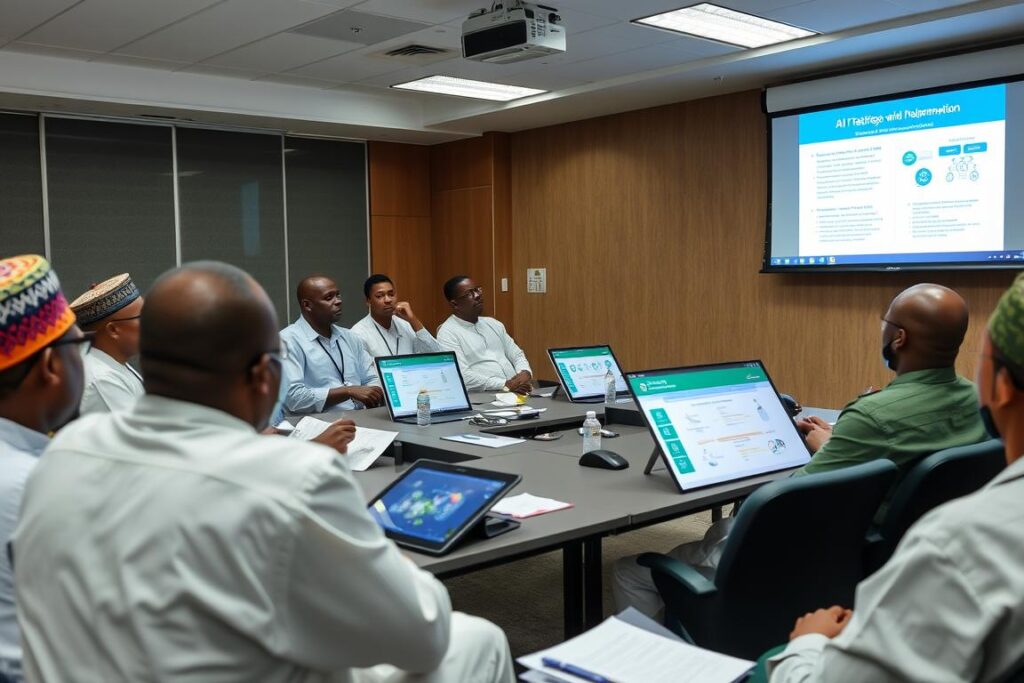
A state cannot govern an AI-enabled economy with analogue structures. Nigeria’s public sector must transform itself to effectively oversee and implement AI solutions that serve citizens and protect national interests.
“Countries that move decisively today will dominate the economies of tomorrow. Nigeria has the population, entrepreneurial energy, and market size to lead Africa—but leadership requires intentional policy action.”
4. Embed Ethics, Trust, and Inclusion into AI Deployment
AI carries risks: bias, misuse, surveillance abuse, job displacement, and privacy violations. Nigeria must ensure the technology strengthens society rather than magnifies inequality.
Key actions include mandating transparency and auditability in high-risk AI systems (finance, healthcare, elections), ensuring AI tools align with data protection laws, protecting citizens from harmful or discriminatory automated decisions, and including Nigeria’s diverse languages and communities in AI datasets.
Responsible AI is not optional—public trust will determine the adoption and long-term success of AI initiatives nationwide.
5. Link AI Deployment to Nigeria’s Real Economy
AI must move beyond theory and pilot projects. It needs to directly address Nigeria’s significant economic challenges across key sectors that drive GDP growth and job creation.
Agriculture
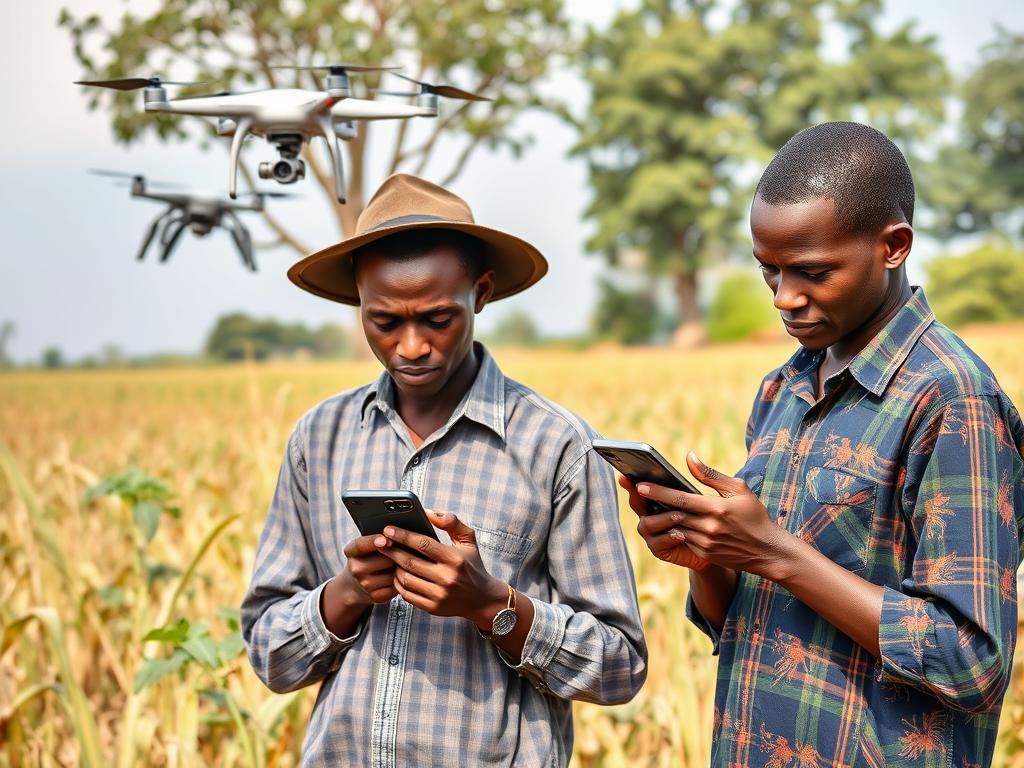
Precision farming, yield prediction, and supply-chain optimisation to boost food security and export potential.
Healthcare

Diagnostics support, hospital workflow automation, and epidemic modelling to improve healthcare access.
Energy & Power

Grid management, predictive maintenance, and renewable energy optimisation to solve power challenges.
AI must be tied directly to job creation, efficiency, and GDP growth, not kept in isolated innovation hubs disconnected from Nigeria’s economic realities.
6. Support Local AI Research and Indigenous Innovation
Nigeria must build AI solutions trained on Nigerian and African realities-not foreign datasets that ignore local languages, culture, or challenges. Critical steps include funding AI research labs in universities, supporting startups working on African datasets, and creating incentives for indigenous AI tools.

Countries without local AI research become permanent consumers, not creators. Nigeria has the talent and data resources to develop AI solutions that address uniquely African challenges and opportunities.
7. Establish Regulatory Sandboxes for Safe Innovation
To accelerate responsible AI development, Nigeria should create supervised environments for companies to test AI systems, establish faster approval pathways for AI tools in finance, healthcare, and transportation, and reduce regulatory uncertainty for innovators while ensuring citizen safety.
Regulatory sandboxes have already proven successful in fintech across Nigeria—AI can follow the same path to balance innovation with protection.
8. Build a National AI Talent Pipeline
Nigeria must reduce dependency on imported expertise by developing its own talent. Policy recommendations include introducing AI curricula in secondary and tertiary institutions, funding apprenticeships, scholarships, and national AI fellowships, and partnering with global companies to build capacity and offer certification programmes.
Talent is the world’s most valuable AI currency-Nigeria must secure its own by investing in strategic education initiatives and retention programs.
“By addressing the current gap in advanced data science skills, Nigerian enterprises can harness AI’s full potential and drive significant progress.”
9. Encourage Responsible Public–Private Partnerships
Nigeria’s private sector drives most AI activity today. The government should work with startups and innovation hubs, telcos and cloud service providers, banks and fintech ecosystem, and global technology firms to accelerate AI adoption.
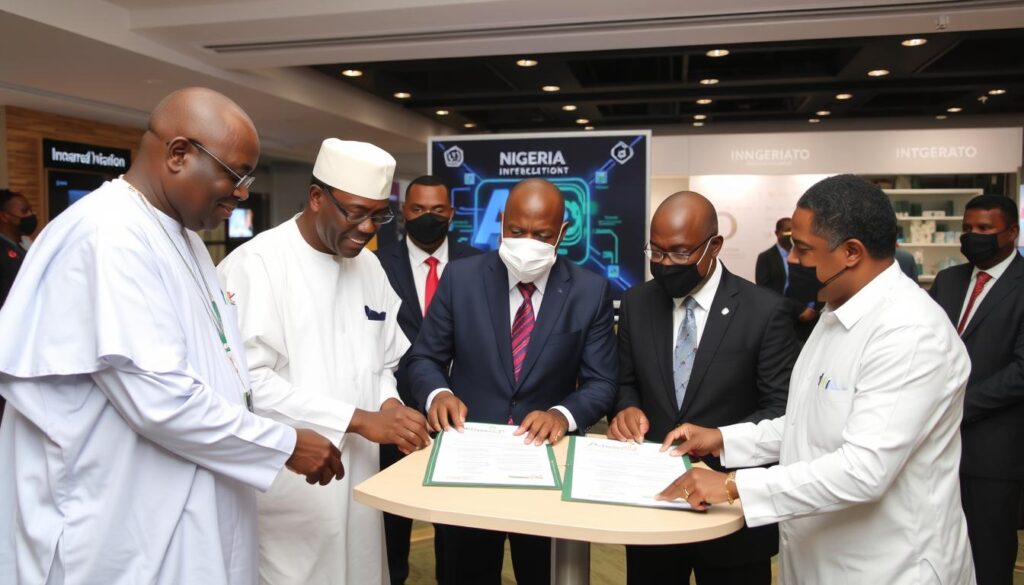
Partnerships must be structured, accountable, and aligned with national priorities—not copy-paste adoption of foreign models that may not address Nigeria’s unique context and challenges.
10. Strengthen Data Governance and Local Compute Capacity
Modern AI requires three things: data, compute, and talent. Nigeria must strengthen the first two immediately. This involves clear guidelines on data sharing, consent, and protection; investment in local cloud, edge computing, and GPU infrastructure; and ensuring researchers and startups can access affordable compute resources.
Without a computing infrastructure, Nigeria cannot produce cutting-edge AI models that serve its population and address local challenges effectively.

Nigeria Must Act Now
AI will determine global competitiveness for decades to come. Countries that move decisively today will dominate tomorrow’s economies. Nigeria has the population, entrepreneurial energy, and market size to lead Africa, but leadership requires intentional policy action.
These urgent priorities offer a pragmatic national strategy: enabling innovation while protecting citizens, building local capability while attracting global investment, and ensuring AI strengthens Nigeria’s real economy rather than bypasses it.

Senior Reporter/Editor
Bio: Ugochukwu is a freelance journalist and Editor at AIbase.ng, with a strong professional focus on investigative reporting. He holds a degree in Mass Communication and brings extensive experience in news gathering, reporting, and editorial writing. With over a decade of active engagement across diverse news outlets, he contributes in-depth analytical, practical, and expository articles exploring artificial intelligence and its real-world impact. His seasoned newsroom experience and well-established information networks provide AIbase.ng with credible, timely, and high-quality coverage of emerging AI developments.