

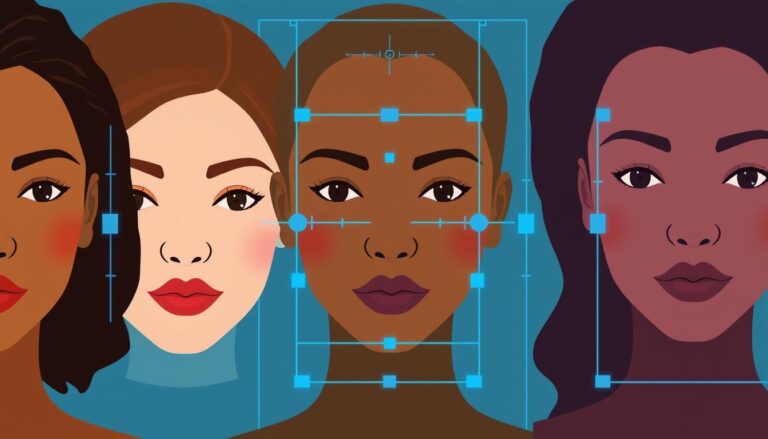
For Nigerian users, the consequences of AI bias can be particularly profound, affecting everything from financial opportunities to healthcare access. This article examines the 10 most common types of AI bias and their specific impacts on Nigerian users, offering insights into how these biases manifest in daily interactions with technology.
Understanding AI Bias in Nigeria
AI systems often reflect the biases present in their training data, creating challenges for Nigerian users.
AI bias refers to systematic errors in AI systems that create unfair outcomes for certain groups of people. These biases typically originate in the data used to train AI models, the algorithms themselves, or their implementation. In Nigeria, these biases are particularly problematic because many AI systems are developed outside the country using datasets that don’t adequately represent Nigerian users, their languages, cultures, or contexts.
The impact of AI bias in Nigeria extends beyond mere inconvenience. It can reinforce existing inequalities, limit access to essential services, and even perpetuate harmful stereotypes. As Nigeria increasingly adopts AI across sectors such as banking, healthcare, education, and government services, understanding and addressing these biases becomes crucial to ensuring equitable technological development.
1. Data Bias: AI Trained on Non-Nigerian Data
Most AI systems available in Nigeria are trained primarily on Western datasets. This creates a fundamental disconnect when these systems encounter Nigerian names, accents, addresses, or cultural references that weren’t adequately represented in their training data.
Effects on Nigerian Users:
- Virtual assistants and chatbots struggle to recognise Nigerian names like Oluwaseyi, Chidera, or Hauwa, often mispronouncing them or failing to process them entirely
- AI-generated content frequently produces advice that doesn’t account for Nigerian cultural contexts or social norms
- Navigation applications misidentify or fail to recognise popular locations in Lagos, Abuja, or other Nigerian cities
- Search algorithms may prioritise Western results over locally relevant information
This data bias creates a persistent barrier to effective AI use in Nigeria, as systems consistently fail to understand or adequately respond to local contexts, forcing users to adapt to the technology rather than the technology adapting to users.
2. Representation Bias: Underrepresentation of African Features
Global AI datasets frequently underrepresent African features, darker skin tones, and local demographic characteristics. This underrepresentation leads to AI systems that perform poorly when processing images or biometric data from Nigerian users.
Effects on Nigerian Users:
- Facial recognition systems fail to accurately verify Nigerian users’ identities, leading to higher rejection rates
- Digital ID verification systems may incorrectly reject legitimate identification photos
- Biometric attendance tools in workplaces and educational institutions misidentify staff and students with darker skin tones.
- Security systems using facial recognition may generate false positives or negatives, creating security vulnerabilities.
This representation bias can have serious consequences, ranging from minor inconveniences, such as being unable to unlock a smartphone, to more significant issues, such as being denied access to financial services or government benefits due to biometric verification failures.
3. Linguistic Bias: Misunderstanding Nigerian English and Languages
Speech recognition datasets predominantly feature American and British English accents, with minimal representation of Nigerian English, Pidgin, and local languages such as Yoruba, Igbo, and Hausa. This creates significant barriers when Nigerian users interact with voice-based AI systems.
Effects on Nigerian Users:
- Voice assistants frequently misunderstand Nigerian English accents and pronunciations
- Pidgin English phrases like “Wetin dey happen?” or “How far?” confuse speech-to-text applications
- Transcription tools struggle with common Nigerian expressions and terminology
- Language translation services provide inaccurate translations for Nigerian languages and dialects
This linguistic bias effectively excludes millions of Nigerians from fully utilising voice-based technologies, forcing them to adapt their speech patterns or abandon these tools altogether. It also reinforces linguistic hierarchies that privilege Western speech patterns over African ones.
4. Cultural Bias: Western Norms Over Nigerian Realities
AI systems often embed Western cultural norms, values, and assumptions into their recommendations and outputs. This cultural bias results in AI delivering advice, content, and solutions that may be irrelevant or inappropriate in Nigerian contexts.
Effects on Nigerian Users:
- AI-generated advice on business, parenting, or social interactions often fails to account for Nigerian social structures and cultural practices
- Content recommendation systems prioritise Western media over locally relevant content
- Generative AI tools produce images and content that depict Nigeria inaccurately or stereotypically
- Decision-making algorithms may apply Western values to situations where local cultural considerations should take precedence.
This cultural bias can lead to a form of digital colonialism, where Nigerian users are subtly pressured to conform to Western cultural norms to effectively use AI technologies, rather than having technologies that respect and accommodate local cultural contexts.
5. Algorithmic Bias: Mathematical Models Producing Unfair Results
Beyond data issues, the mathematical models and design choices underlying AI systems can themselves introduce bias. These algorithmic biases can persist even when efforts are made to diversify training data.
Effects on Nigerian Users:
- Fintech applications may flag Nigerian users as “high risk” due to gaps in formal credit history, despite reliable financial behaviour
- E-commerce platforms might highlight foreign products over Nigerian brands due to algorithmic preferences
- Recruitment AI tools can unintentionally disqualify candidates with local educational backgrounds or work experiences
- Content moderation algorithms may flag legitimate Nigerian content as suspicious or inappropriate
Algorithmic bias is particularly challenging to address because it’s often embedded in the fundamental design of AI systems and may not be immediately apparent to developers. This creates persistent inequities that can be difficult to identify and correct.
6. Socioeconomic Bias: Assumptions About Access and Habits
AI systems often model behaviour based on assumptions from wealthier countries with different infrastructure, connectivity, and economic realities than those in Nigeria. These socioeconomic biases create significant disconnects between how systems expect users to behave and the actual constraints Nigerian users face.
Effects on Nigerian Users:
- Intermittent network connectivity may be misinterpreted as suspicious activity by security algorithms
- Automated pricing systems might increase fees for Nigerian users based on location-based assumptions
- AI-powered loan applications may misjudge the creditworthiness of users who primarily operate in cash economies
- Educational AI tools might assume consistent high-speed internet access that isn’t available to many Nigerian students
These socioeconomic biases can exacerbate existing digital divides, making AI technologies less accessible and valuable to Nigerians who already face infrastructure and economic challenges. This creates a cycle where those who could most benefit from AI tools are often the least able to use them effectively.
7. Sampling Bias: Missing African Health and Behavioural Data
AI training datasets often represent only a small sample of the global population, with African health statistics, behavioural patterns, and demographic information frequently underrepresented. This sampling bias is particularly problematic in healthcare and behavioural prediction systems.
Effects on Nigerian Users:
- Health diagnostic tools provide inaccurate predictions for conditions common in Nigeria but rare in Western countries
- AI systems overlook local health realities such as malaria-related complications or sickle cell disease
- Medical chatbots offer guidance not tailored to Nigerian healthcare contexts or available treatments
- Behavioural prediction algorithms fail to account for cultural differences in communication and social interaction
This sampling bias can have serious health consequences when AI systems make recommendations that don’t account for the specific health challenges and contexts faced by Nigerian users. It can lead to missed diagnoses, inappropriate treatment recommendations, or failure to identify serious health concerns.
8. Stereotype Bias: Reinforcing Negative Stereotypes
AI systems trained on internet data can learn and perpetuate harmful stereotypes about Nigeria and Nigerians. These systems may disproportionately associate Nigeria with negative concepts based on biased patterns in their training data.
Effects on Nigerian Users:
- Search results related to Nigeria often highlight crime, corruption, or poverty rather than innovation, culture, or achievement
- AI-generated images portray Nigerians in stereotypical or outdated ways
- Content moderation systems flag harmless Nigerian cultural terms or expressions as potentially problematic
- Recommendation algorithms may suggest content that reinforces negative stereotypes about Nigeria
This stereotype bias not only affects how others perceive Nigeria but can also impact how Nigerians see themselves represented in digital spaces. It creates a distorted digital reflection that emphasises negative aspects while minimising positive achievements and cultural richness.
9. Geolocation Bias: Different Treatment Based on Location
AI systems often deliver different results or provide various levels of service based on a user’s geographic location. This geolocation bias can result in Nigerian users receiving lower-quality service or more restricted access to features.
Effects on Nigerian Users:
- Search engines may display outdated or less comprehensive information about Nigerian topics
- Global services might block or limit features for users with Nigerian IP addresses
- Content moderation systems apply stricter standards to content from Nigerian sources
- AI tools may offer fewer customisation options or reduced functionality to Nigerian users
Geolocation bias creates a tiered internet experience where Nigerian users receive less comprehensive or lower-quality service simply because of where they’re located. This reinforces digital inequalities and limits Nigerians’ ability to participate in global digital spaces fully.
10. Automation Bias: Overreliance on Flawed AI Outputs
Automation bias occurs when people place excessive trust in AI systems, accepting their outputs without questioning their accuracy or appropriateness. This bias is particularly problematic when combined with other biases that affect AI performance for Nigerian users.
Effects on Nigerian Users:
- Students may rely on incorrect AI-generated answers about Nigerian history, culture, or geography
- Individuals might follow flawed financial or legal advice from AI systems not trained on Nigerian contexts
- Users accept wrongly flagged bank transactions or identity verification failures without challenging them
- Businesses implement AI recommendations that don’t account for local market conditions
Automation bias amplifies the adverse effects of other AI biases by reducing the likelihood that users will question or challenge problematic AI outputs. This creates a situation where biased systems are trusted despite their demonstrated limitations in Nigerian contexts.
Why AI Bias Matters for Nigeria’s Development
AI bias is not merely an inconvenience or technical issue-it has profound implications for Nigeria’s social and economic development. As AI systems increasingly influence decisions across sectors, biases in these systems can:
Reduce Economic Opportunities
- Biased recruitment algorithms limit job prospects
- Financial exclusion due to flawed credit scoring
- Barriers to entrepreneurship through biased funding algorithms
Limit Financial Inclusion
- Restricted access to digital financial services
- Higher costs for financial products due to risk misclassification
- Exclusion from global payment systems
Distort Cultural Representation
- Misrepresentation of Nigerian culture in global contexts
- Reinforcement of harmful stereotypes
- Erosion of linguistic diversity
Amplify Existing Inequalities
- Widening the digital divide between urban and rural areas
- Reinforcement of gender and socioeconomic disparities
- Unequal access to AI-enhanced services
As Nigeria embraces AI across governance, fintech, education, and healthcare, addressing bias becomes not just a technical challenge but a national development priority. Failing to address AI bias could entrench existing inequalities and create new forms of digital exclusion, undermining the potential benefits of these technologies.
How Nigeria Can Reduce AI Bias
1. Build Nigerian Datasets
Developing comprehensive datasets that accurately represent Nigerian demographics, languages, cultures, and contexts is fundamental to addressing AI bias. This requires:
- Collecting diverse voice samples across Nigerian accents and languages
- Creating image datasets that represent Nigerian faces, clothing, and environments
- Documenting local terminology, expressions, and cultural references
- Gathering region-specific information about locations, businesses, and services
2. Develop Local AI Policies
Nigeria needs robust AI governance frameworks that prioritise fairness, transparency, and accountability. Key policy elements should include:
- Mandatory bias audits for AI systems deployed in critical sectors
- Requirements for transparency in how AI systems make decisions
- Standards for dataset diversity and representation
- Mechanisms for users to challenge biased AI outcomes
3. Encourage Local AI Development
Homegrown Nigerian AI models trained on relevant data will naturally reduce bias. Supporting local AI development requires:
- Investment in AI research and development within Nigerian universities
- Support for Nigerian AI startups and technology companies
- Public-private partnerships to develop Nigerian AI solutions
- Knowledge transfer programs with global AI leaders
4. Improve Digital Literacy
Users must learn to question AI outputs rather than blindly accept everything. Enhancing digital literacy involves:
- Educational programs about AI limitations and biases
- Training on how to identify potentially biased AI outputs
- Guidance on when to seek human verification of AI recommendations
- Community awareness campaigns about digital rights
Addressing AI bias requires a coordinated effort from government agencies, technology companies, academic institutions, and civil society organisations. By working together, these stakeholders can ensure that AI technologies serve all Nigerians equitably rather than reinforcing existing divides or creating new forms of digital exclusion.
Building a More Inclusive AI Future for Nigeria

Artificial intelligence is transforming how Nigerians bank, learn, work, and communicate. The potential benefits of these technologies are enormous, from improving healthcare outcomes to expanding financial inclusion and enhancing educational opportunities. However, without addressing the biases discussed in this article, AI systems risk excluding, misrepresenting, or disadvantaging millions of Nigerian users.
Understanding how AI bias works-and how it affects everyday digital interactions- is the first step toward building AI systems that genuinely serve the Nigerian population. By developing local datasets, creating appropriate policies, supporting Nigerian AI development, and enhancing digital literacy, Nigeria can work toward an AI future that reflects its diversity, respects its cultures, and serves all its citizens equitably.
The path to unbiased AI is challenging but essential for ensuring that Nigeria’s digital transformation benefits everyone. With conscious effort and collaboration across sectors, Nigeria can lead the way in developing AI systems that work for Africans, by Africans.
Stay updated on AI Analysis and trends in Nigeria.
Join our newsletter to receive the latest updates, news and analysis like this.

Senior Reporter/Editor
Bio: Ugochukwu is a freelance journalist and Editor at AIbase.ng, with a strong professional focus on investigative reporting. He holds a degree in Mass Communication and brings extensive experience in news gathering, reporting, and editorial writing. With over a decade of active engagement across diverse news outlets, he contributes in-depth analytical, practical, and expository articles exploring artificial intelligence and its real-world impact. His seasoned newsroom experience and well-established information networks provide AIbase.ng with credible, timely, and high-quality coverage of emerging AI developments.