

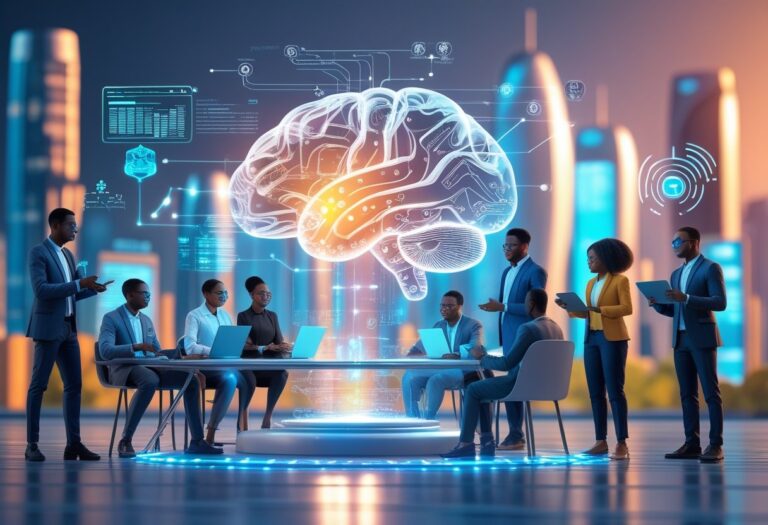
You can’t ignore how work keeps shifting as AI moves from novelty to a daily staple in banking, agriculture, healthcare, and just about everywhere else. AI keeps changing roles, handling routine tasks and giving people room for higher-value work. If you pick up new AI skills, you’ll have an edge. If you don’t, well, you might fall behind.
This article explores how jobs are shifting, which careers look promising, and which skills matter most now. You’ll get an honest look at where jobs could disappear, where new ones might pop up, and how Nigerian sectors are figuring out how to use AI responsibly.
AI’s Impact on the Nigerian Job Market
AI is shaking up how people work. It’s changing what employers look for and opening up new jobs in finance, agriculture, and customer service.
Companies now rethink hiring, training, and daily workflows as they try to mix automation with human smarts.
Transformation of Traditional Roles
Automation and machine learning are taking repetitive tasks off people’s plates. Bank clerks watch AI systems handle reconciliation and basic fraud checks, so they spend more time on risk assessment and advising clients.
Manufacturing plants now use predictive maintenance to avoid downtime. Technicians shift into roles focused on monitoring data and making decisions.
Teachers and university admin staff run into automated grading and intelligent tutoring tools. They spend less time marking and more on designing courses or mentoring students.
Retail staff, especially checkout clerks, see self-service and computer vision systems take over. People move toward jobs in inventory, analytics, and customer experience instead.
Emergence of New Careers
New job titles are cropping up everywhere as AI and digital tools spread. Companies bring on data engineers, machine learning engineers, and AI ethics officers to build and oversee these systems.
Roles such as conversation designer and localisation specialist help adapt chatbots and voice assistants for Nigerian Pidgin and local languages. It’s a superb blend of tech and culture.
In agriculture, precision-farming analysts use satellite data and machine learning to help farmers with crop health and yield forecasts. Fintech companies need fraud analytics specialists and algorithm auditors to protect digital wallets.
Startups now offer jobs in AI product management and cloud operations paths that didn’t exist a few years back.
AI Adoption Across Industries
Financial services and fintech are leading AI adoption in Nigeria. They use machine learning for fraud detection, credit scoring, and personalising customer experiences.
Banks and payment platforms invest in real-time analytics and AI risk systems to keep transactions safe and speed up decision-making. Agricultural companies use AI for soil analysis, yield predictions, and supply chain optimisation.
Telecoms and customer service teams roll out chatbots and sentiment analysis to handle a ton of queries quickly. Energy and utilities are using AI for grid management and demand forecasting, while the legal and healthcare sectors are testing document review tools and diagnostic support.
Each industry adapts at its own pace. Data, infrastructure, and clear rules help, but organisations that train staff and establish strong governance see smoother, safer AI rollouts.
Job Displacement and Creation
AI is shaking up who does what at work. Routine tasks are getting automated, and new data and machine learning roles are popping up everywhere.
Routine Job Automation
Automation targets repetitive stuff-teller transactions, invoice processing, and basic data entry. Banks and businesses in Nigeria now use software robots and rule-based systems to speed things up, so they don’t need as many people for daily grind tasks.
Clerical and low-skilled workers face the highest risk of losing out. Instead, companies hire fewer generalists and go for people who can run automated systems or make sense of outputs.
Training in digital skills and process oversight helps those affected move into supervisor or tech support roles.
Productivity goes up as companies handle more work with fewer mistakes. But unless firms invest in upskilling, displaced workers might have a tough time finding jobs that pay as well.
Rising Demand for AI-Related Roles
There’s a surge in demand for data scientists, machine learning specialists, and AI engineers in Nigeria. Finance, agriculture, and retail firms all want people who can build models, crunch big datasets, and roll out predictive tools.
These jobs require new skills-think stats, Python or R coding, and cloud know-how. Universities and private bootcamps now run short courses to help mid-career folks catch up.
Employers keep looking for practical portfolios, not just theory. More AI jobs mean higher pay, but the skills gap is also widening.
When companies can’t find local talent, they hire freelancers or offshore teams. If Nigeria invests in STEM training, more locals can take advantage of these opportunities.
The Role of AI Chatbots
AI chatbots are taking over customer-facing work, such as answering questions, booking appointments, and providing basic support. Banks, telcos, and e-commerce sites use chatbots for FAQs and routine transactions, which cuts down response times and costs.
While chatbots reduce demand for entry-level call centre jobs, they also create jobs in chatbot design, conversation engineering, and monitoring. People need to train language models for local languages and handle cases when bots can’t help.
Chatbots collect tons of data, which analytics and machine learning teams use. It helps firms tweak services, spot fraud, and personalise offers. If managed well, chatbots shift work from repetitive answering to higher-level AI and data analysis.
Emerging Career Opportunities Driven by AI

AI is creating new jobs and transforming old ones across tech, health, farming, and even creative work. Most roles need data skills, some domain expertise, and the ability to use AI tools for real-world tasks.
Machine Learning and Data Science
Data science roles are booming in Nigeria, especially in finance, telecoms, and e-commerce. Employers want data analysts, data engineers, and machine learning specialists who can clean local datasets, build models, and deploy them to production.
If you know Python, SQL, and cloud platforms like AWS, Azure, or GCP, you’ll move from training to paid gigs faster. Experience with MLOps, version control, and model monitoring is a big plus for long-term roles.
Tasks range from building fraud-detection models for banks to churn prediction for telcos and recommendation engines for online shops. Bootcamps, certificate courses, and startup internships are good entry points.
Mid-level jobs usually want to see a project portfolio, problem definition, modelling, and deployment, all of which count.
AI in Healthcare and Agriculture
AI jobs in healthcare focus on medical imaging, diagnostics, and health data analysis. Employers bring on health data analysts and AI tool integrators to help hospitals and clinics.
These folks prep patient data, validate AI outputs, and help doctors use decision support systems. Knowing the rules and how to protect privacy is key.
In agriculture, AI specialists work on yield prediction, pest monitoring, and smart irrigation. Jobs include agritech data scientists and AI field operators who set up sensors, label images, and keep farm equipment models running.
Lots of these projects partner with extension services or NGOs to bring the tech to smaller farms.
Opportunities in Creative Industries
The creative world’s catching on, too. People who mix creativity with AI tools are in demand—think AI-assisted content creators, multimedia designers, and creative technologists using generative models for copy, images, and audio.
They still need to edit and refine the AI’s output to align with the brand or local culture. Studios, agencies, and freelancers use AI for storyboarding, concept art, and localising content.
Skills like prompt engineering, editing, and knowing copyright rules help people move from hobbyist to paid work. If you blend creativity with tech, you could end up in game design, film VFX, or digital marketing.
AI-Enhanced Remote Work
AI is making remote work more doable for Nigerians in all sorts of fields. Remote roles include AI tool trainers, data annotators, and customer support agents who use AI to scale up services.
Employers want people who can manage workflows, keep data clean, and adapt models for local languages. Platforms that connect global clients with Nigerian talent now look for folks who know collaboration tools, some automation scripting, and how to handle data ethically.
Freelancers who document their process and deliver consistent results, like annotated datasets or improved models, get repeat gigs and better pay.
Upskilling for the Future of Work
Targeted training is key to moving from routine jobs to ones that require judgment, creativity, or leadership. Digital skills, people skills, and ongoing online learning are now central for career survival in Nigeria’s evolving job market.
Digital Skills in High Demand
Employers in finance, telecoms, and agritech want staff who can work with data tools. Skills like using spreadsheets, basic SQL, some Python, and dashboards (Power BI or Tableau) are in demand.
These skills let you clean data, run analyses, and make clear reports. Practical experience matters more than paper certificates—build small projects, automate a report, or train a simple fraud model. Employers care about real results: faster processing, fewer errors, and higher sales.
Companies should run bootcamps and pair juniors with data-savvy seniors for mentorship. That way, skills are passed on quickly and align directly with business needs.
Importance of Emotional Intelligence and Leadership
Tech skills alone won’t cut it anymore. Employers want emotional intelligence (EI) and leadership, too.
EI helps teams deal with change, give feedback, and keep customer trust when AI is making decisions. Key EI habits include clear talk, listening, and handling stress when deadlines get tight.
Leaders have to set ethical AI standards, decide what to automate, and make sure staff feel safe as roles change. Leadership training should focus on coaching, conflict resolution, and decision-making with incomplete information.
Short workshops, role-plays, and on-the-job coaching help people use these human skills alongside new tech. It’s not easy, but it’s worth it. AI Careers
Utilising Online Courses
Online courses give people flexible ways to build digital and leadership skills. Reputable platforms and local providers run short modules on data literacy, AI basics, cybersecurity, and project management.
Pick courses with hands-on assessments, not just endless videos. Projects, peer reviews, and certificates that show real work matter more than just ticking boxes.
Free resources can get you started, but paid micro-credentials often include mentor feedback and industry tasks. That extra support can make a difference.
Organisations should help fund courses and allow staff to study during working hours. Structured learning paths—like data foundations, then dashboarding, then automation-help people build skills in a logical order and actually see their progress.
Hybrid Human-AI Skills
Jobs now expect people to work alongside AI tools, not just worry about being replaced by them. Workers need to know how to ask questions, check for bias, and tweak prompts or settings to get better results.
Prompt engineering, evaluating outputs, and basic model monitoring have become essential. Workers should write down where models fall short and know when to call for human judgment.
Teams can try paired workflows: AI drafts reports, and humans double-check facts, add context, and talk to clients. Training should mix technical practice with authentic protocols for accountability and data privacy.
Sectoral Transformation through AI in Nigeria
AI adoption speeds up decision-making, automates routine work, and creates new specialist jobs. You’ll see digital transformation most where there’s lots of data, big customer bases, and gaps that AI tools can fill.
Finance and Banking
Banks use machine learning for fraud detection and credit scoring. That cuts false positives and speeds up approvals.
Real-time transaction monitoring flags suspicious patterns across mobile wallets. This reduces loss and builds trust.
Core banking systems now include AI for automated reconciliation and customer chatbots. Staff can focus more on relationships and tricky risk analysis.
Fintech startups build models for local payment habits and sparse data, which helps small traders get loans.
Regulators and banks invest in AI governance and model explainability. That opens up jobs in compliance, data engineering, and model validation.
People with these skills are in demand as the sector continues to change.
Education and EdTech
EdTech platforms use adaptive learning algorithms to personalise lessons by ability and language. Schools and online tutors use AI to track progress, recommend content, and spot learners at risk of dropping out.
Natural language processing supports multilingual teaching, including Nigerian Pidgin, making lessons more accessible. Teachers use AI dashboards to find class gaps and design targeted interventions.
AI tools handle administrative tasks such as timetabling and grading multiple-choice tests. That lightens the load and creates new roles in data analysis and instructional design.
Agriculture and Agro-Tech
Precision agriculture uses satellite images, drones, and machine learning to predict yields and spot pests early. Startups mix sensor data and weather models to help farmers choose planting dates and fertiliser for their soil.
AI-driven marketplaces connect growers with buyers and logistics providers, reducing post-harvest losses. Mobile apps powered by models give smallholders crop advice in local languages, so yields go up without huge investments.
All this tech means more jobs for agritech developers, data annotators, and field techs who bridge models and on-farm work. But training and connectivity still matter if we want to scale up.
Healthcare Innovations
AI in healthcare supports diagnostics through image analysis and symptom triage tools in remote clinics. Systems flag abnormal scans and suggest likely diagnoses, speeding up care in short-staffed settings.
Telemedicine platforms use AI to route patients, schedule follow-ups, and keep records. Predictive models track disease outbreaks using health and mobility data, helping with response planning.
Hospitals and labs need data engineers, model auditors, and clinical-AI leads to safely use these tools, ensure data privacy, perform local model checks, and provide a clinician training guide responsible for AI in health services.
Responsible and Ethical AI Integration
This section digs into how ethical design, national policy, and practical workforce plans shape AI in Nigeria. The focus is on fair decision-making, legal frameworks, and the skills needed to use AI responsibly.
AI Ethics and Responsible AI
Organisations need to put fairness, transparency, and privacy first when building AI. They should document data sources, model choices, and decision paths so auditors and users can trace outcomes.
Bias checks are a must. Teams should run regular tests for demographic and regional bias on real Nigerian data, such as payment histories or job records, and adjust models to avoid harming any group.
Protecting privacy means using active controls. Systems that use personal data must obtain explicit consent and retain data only as long as needed. Encryption, role-based access controls, and audits help reduce misuse.
Ethical review boards or independent assessors can check systems before launch. These groups should include technologists, legal experts, and community voices to balance tech skills with local values.
Regulatory Initiatives and Strategy
Nigeria’s national AI strategy should set objective, enforceable standards for safety, liability, and data governance. Laws must spell out acceptable uses, who’s responsible for harm, and what explainability is required in automated decisions.
Each sector needs its own rules. Finance, health, and education demand more transparency and audit trails. For example, lenders using AI for credit scoring should publish the typical input factors and allow people to appeal to a human.
Government and industry can co-write guidelines. Public consultations and pilot programs help shape rules that fit Nigeria’s infrastructure and social realities.
Regulators should require regular impact assessments and have real penalties for breaking the rules. International best practices matter too-adopting global privacy and responsible AI norms helps Nigerian firms reach export markets while protecting people at home.
Workforce Transformation Strategies
Organisations need to run targeted reskilling and redeployment programmes to enable staff to take on AI-augmented roles. Short courses in data literacy, model interpretation, and ethics help technicians and managers use AI tools safely.
Employers should map out which jobs will change and offer clear pathways forward. For instance, bank loan officers might shift to verifying AI recommendations or tackling complex cases flagged by models.
Apprenticeships with tech firms build real-world skills. Education providers really ought to update curricula, weaving in AI basics, ethics, and domain-specific applications.
When universities, employers, and innovation hubs team up, curriculum updates happen faster, and internship pipelines open. Governments and companies can pitch in by funding transition support, like wage top-ups or certification grants.
That kind of backing eases the disruption and helps build a workforce ready for responsible AI deployment.

Director/CEO
As the co-founder of AIBase, Joy established this platform to make artificial intelligence knowledge more accessible and relevant within the Nigerian ecosystem. She is an accounting graduate with a diverse professional background in multimedia and catering, experiences that have strengthened her adaptability and creative problem-solving skills.
Now transitioning into artificial intelligence and technology writing, Joy blends analytical thinking with engaging storytelling to explore and communicate emerging technology trends. Her drive to establish aibase.ng is rooted in a passion for bridging the gap between complex AI innovations and practical, real-world understanding for individuals and businesses.