

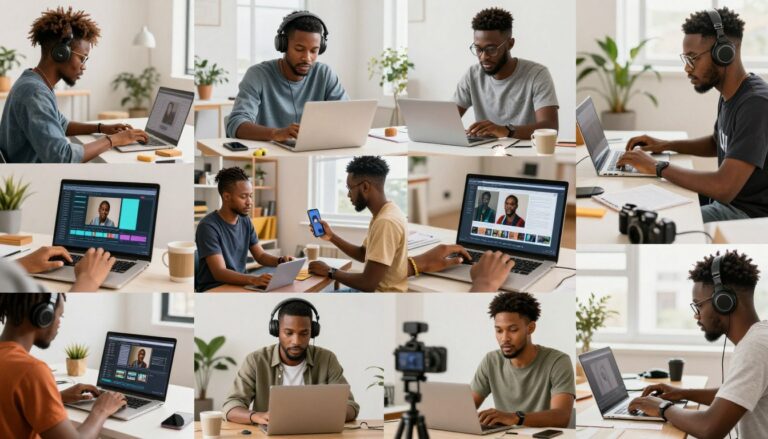
Nigeria’s digital landscape has witnessed remarkable transformation over recent years. Young Nigerians increasingly turn to content creation as viable career paths. Musicians, comedians, fashion designers, writers, and digital marketers build thriving businesses through online platforms. The rise of social media and digital payment systems has created unprecedented opportunities for creative individuals.
The creator economy represents an ecosystem where individuals generate income by producing and distributing digital content directly to audiences. This economic model differs fundamentally from traditional employment. Creators monetise their skills, knowledge, creativity, and personality through various channels including YouTube, Instagram, podcasting platforms, online courses, and digital marketplaces. In Nigeria, this economy has grown exponentially, with thousands earning sustainable income from content creation.
Artificial intelligence now plays transformative roles within this burgeoning ecosystem. Nigerian creators leverage intelligent systems to overcome traditional barriers including limited resources, technical expertise gaps, and time constraints. This comprehensive exploration examines ten specific ways artificial intelligence empowers Nigerian creators, supported by real-world examples, practical use cases, and a curated list of accessible tools driving innovation across the creative sector.
Knowing the Creator Economy in Nigeria
The creator economy in Nigeria encompasses all economic activities where individuals produce original content for consumption by audiences who support them financially. This support manifests through advertising revenue, sponsorships, direct payments, subscriptions, merchandise sales, and other monetisation mechanisms. Unlike conventional employment where individuals trade time for wages, creators build assets through content that generates recurring income.
Nigeria’s creator economy spans multiple sectors. Musicians release tracks on streaming platforms and earn royalties. Fashion designers showcase collections through Instagram and sell directly to customers. Comedians build followings on YouTube and monetise through advertisements. Tech educators create programming courses sold on digital platforms. Food content creators partner with brands for sponsored posts. Writers publish e-books and earn passive income. The diversity reflects Nigeria’s rich cultural heritage and entrepreneurial spirit.
Several factors have accelerated growth in Nigeria’s creator economy. Improved internet infrastructure and affordable data plans expanded digital access. Smartphone penetration reached significant portions of the population. Payment platforms like Flutterwave and Paystack simplified online transactions. Global platforms recognised Nigerian creators and enabled local monetisation. Young Nigerians increasingly viewed content creation as legitimate career paths rather than hobbies.
However, Nigerian creators face substantial challenges. Creating high-quality content consistently demands significant time investment. Competition intensifies as more individuals enter the space. Technical skills in video editing, graphic design, and analytics often prove lacking. Marketing expertise needed to grow audiences remains scarce. Scaling operations while maintaining quality presents difficulties. These challenges create opportunities where artificial intelligence delivers meaningful impact.
Key Characteristics of Nigeria’s Creator Economy
Nigeria’s creator economy possesses distinct characteristics shaped by local context. Mobile-first consumption dominates, with most audiences accessing content through smartphones. Short-form video content performs exceptionally well on platforms like TikTok and Instagram Reels. Informal payment methods including bank transfers and mobile money remain common alongside formal payment gateways. Creators often operate in multiple languages including English, Pidgin, Yoruba, Igbo, and Hausa to reach diverse audiences.
Community plays central roles in Nigerian content creation. Collaboration between creators amplifies reach through cross-promotion. Audiences maintain strong personal connections with creators they support. Word-of-mouth recommendations drive discovery more powerfully than algorithmic suggestions in many cases. This community-oriented approach influences how creators integrate technology, favouring tools that enhance rather than replace human connection.
1. Content Creation and Automation
Artificial intelligence fundamentally transforms how Nigerian creators produce content by automating repetitive tasks and accelerating creative processes. Content creation traditionally consumed enormous time, limiting how much creators could produce. Intelligent systems now handle various creation aspects, freeing creators to focus on strategy, creativity, and audience engagement.
Automated Video Editing
Video content dominates Nigeria’s creator economy, yet editing remains time-intensive. AI-powered video editing tools analyse raw footage and automatically generate edited versions. These systems identify key moments, remove filler content, add transitions, synchronise audio, and apply effects. A Nigerian travel vlogger documenting Lagos experiences might record two hours of footage. Traditional editing could require eight hours. AI tools reduce this to under one hour whilst maintaining professional quality.
Platforms like Descript and Runway ML offer such capabilities. Descript allows creators to edit video by editing transcribed text, with the software automatically adjusting video to match. When a fitness creator in Abuja removes a sentence from their workout tutorial transcript, the corresponding video segment disappears. This text-based editing approach proves intuitive for creators without technical video editing skills.
AI-Generated Graphics and Thumbnails
Visual assets including social media graphics, video thumbnails, and promotional images significantly impact content performance. Professional designers charge fees many emerging creators cannot afford. AI graphic design tools democratise access to quality visuals. A Nigerian business podcaster can describe their episode topic to an AI system, which generates multiple thumbnail options incorporating relevant imagery, professional typography, and on-brand colours.
Tools like Canva’s AI features and Adobe Firefly enable such workflows. These platforms suggest design layouts based on content type, automatically remove image backgrounds, generate illustrations from text descriptions, and adapt designs across multiple format requirements. A fashion creator preparing posts for Instagram feed, stories, and TikTok receives appropriately sized variants automatically, ensuring consistent branding across platforms with minimal effort.
Content Ideation and Topic Generation
Consistent content creation requires endless ideas. Creative blocks frustrate even experienced creators. Artificial intelligence analyses trending topics, audience interests, and content performance data to suggest relevant ideas. A Nigerian tech reviewer might query an AI system about emerging smartphone features their audience cares about. The AI analyses search trends, social media conversations, and competitor content to suggest specific topics with high potential engagement.
This capability extends beyond simple suggestions. AI systems generate detailed content outlines, key points to address, and potential angles for covering topics. A food content creator planning a video about jollof rice variations receives an AI-generated outline suggesting introduction hooks, recipe variations to demonstrate, cultural context to include, and call-to-action recommendations. This structured guidance accelerates content planning significantly.
2. Audience Analysis and Insights
Understanding audiences represents crucial success factors for creators. Knowing who watches content, what they enjoy, when they engage, and why they follow enables strategic decisions. Artificial intelligence processes vast quantities of data to deliver actionable audience insights that would be impossible to derive manually.
Demographic and Behavioural Analysis
AI analytics platforms examine audience demographics including age, gender, location, and interests. More importantly, these systems identify behavioural patterns revealing when audiences are most active, which content types generate strongest engagement, and how viewers discover content. A Nigerian comedy creator might discover through AI analysis that their primary audience consists of 18-24 year olds in Lagos who engage most actively between 8-10 PM on weekdays and prefer skits under 60 seconds.
Such insights inform content strategy directly. The creator adjusts posting schedules to match peak activity times. They focus on shorter formats that align with audience preferences. They incorporate Lagos-specific references that resonate with their geographic concentration. These data-driven adjustments, guided by artificial intelligence analysis, often produce significant performance improvements.
Sentiment Analysis
Comments and messages provide valuable feedback, but processing hundreds or thousands manually proves impractical. AI sentiment analysis tools evaluate audience reactions at scale, determining whether responses are positive, negative, or neutral. Beyond basic sentiment, advanced systems identify specific emotions including excitement, disappointment, confusion, or appreciation. A Nigerian educational creator launching a new course format receives AI-generated sentiment reports showing 78% positive reception with particular appreciation for practical examples but concerns about video length.
This granular feedback enables rapid iteration. The creator understands their new approach succeeds overall but should shorten future videos. Without AI analysis, they might have formed impressions based on a few vocal comments that don’t represent broader audience sentiment. Platforms like Brandwatch and MonkeyLearn offer such sentiment analysis capabilities accessible to individual creators.
Predictive Performance Analytics
AI systems analyse historical content performance to predict how new content will perform before publication. These predictions consider factors including topic relevance, posting time, format, thumbnail appeal, and title effectiveness. A Nigerian music producer planning to release a new single uploads the track details to an AI analytics platform. The system predicts expected streams, identifies optimal release timing, and suggests promotional strategies based on similar successful releases.
Such predictive capabilities reduce uncertainty in content creation. Creators make informed decisions about which ideas to pursue and how to optimise presentation. When predictions suggest weak performance, creators can adjust approaches before investing significant production effort. This intelligence supports more efficient resource allocation across content portfolios.
3. Personalisation and Content Recommendations
Artificial intelligence enables Nigerian creators to deliver personalised experiences that strengthen audience relationships and improve engagement. Personalisation means tailoring content, recommendations, and interactions to individual preferences rather than treating all followers identically.
Customised Content Delivery
AI systems track individual viewer preferences and behaviours to customise what content each person sees. A Nigerian lifestyle creator with diverse content spanning fashion, beauty, fitness, and wellness uses AI to ensure followers interested primarily in fitness see more workout content whilst beauty enthusiasts receive makeup tutorials. This personalisation happens automatically through intelligent content distribution rather than manual audience segmentation.
Email marketing platforms with AI capabilities like Mailchimp and ConvertKit enable such personalisation. When the creator sends newsletters, AI determines which content blocks to show each subscriber based on past engagement. Someone who consistently opens fitness-related emails receives workout tips, whilst another subscriber interested in beauty content sees makeup tutorials. This relevance increases engagement rates substantially compared to identical messages sent to all subscribers.
Product and Service Recommendations
Creators monetising through product recommendations, affiliate marketing, or digital product sales benefit from AI recommendation engines. These systems analyse what products individual audience members are likely to purchase based on their interests and behaviours. A Nigerian tech creator promoting various gadgets uses AI to ensure smartphone enthusiasts see phone accessories whilst photography hobbyists receive camera equipment recommendations.
This intelligent matching improves conversion rates whilst enhancing audience experience. Followers receive relevant suggestions rather than generic promotions. The creator generates more revenue from the same audience size by increasing relevance. Platforms like Amazon Associates and impact.com incorporate such AI recommendation capabilities into their affiliate programmes.
Interactive Personalised Experiences
Advanced AI applications enable truly interactive personalised experiences. Chatbots powered by artificial intelligence engage with followers individually, answering questions, providing recommendations, and guiding them to relevant content. A Nigerian financial education creator implements an AI chatbot on their website. When visitors arrive, the chatbot asks about their financial goals. Someone interested in saving receives content about savings strategies, whilst entrepreneurs see business finance resources.
These interactions feel conversational rather than robotic thanks to natural language processing capabilities. The chatbot understands questions phrased in various ways and provides contextually appropriate responses. It operates 24/7 without creator involvement, scaling personalised engagement far beyond what manual responses could achieve. Tools like ManyChat and Chatfuel make such implementations accessible to individual creators.
4. Monetisation and Revenue Optimisation
Converting creative work into sustainable income challenges many Nigerian creators. Artificial intelligence optimises various monetisation approaches, helping creators maximise earnings from existing audiences whilst identifying new revenue opportunities.
Dynamic Pricing Strategies
Creators selling digital products, courses, or services can implement AI-powered dynamic pricing that adjusts based on demand, audience willingness to pay, and market conditions. A Nigerian photography educator selling online courses uses AI to test different price points with different audience segments. The system identifies that students find certain modules worth premium pricing whilst others perform better at lower costs. This intelligence enables revenue maximisation through strategic pricing rather than arbitrary decisions.
Beyond simple price testing, AI systems consider broader factors. They analyse competitor pricing, seasonal demand patterns, and individual purchasing power indicators. During periods of high interest, prices adjust upward to capture willingness to pay. When demand softens, strategic discounts maintain sales volume. This sophisticated pricing approach typically increases revenue by 15-30% compared to static pricing models.
Advertising Revenue Optimisation
Creators monetising through advertising need to balance ad placement with user experience. Too few ads leave money unclaimed. Too many ads frustrate audiences and reduce engagement. AI optimisation systems determine optimal ad placement, frequency, and formats for individual viewers. A Nigerian YouTuber uses AI to ensure dedicated fans see fewer ads whilst casual viewers see standard ad loads. This personalised approach maintains revenue whilst rewarding loyal community members with better experiences.
Platforms like YouTube already incorporate such AI optimisation in their advertising systems. However, independent tools like Ezoic offer additional control for creators managing their own websites. These systems continuously test different ad configurations and learn which approaches maximise revenue without harming engagement metrics. The AI balances multiple objectives simultaneously in ways manual management cannot match.
Sponsorship Matching and Valuation
Brand sponsorships represent significant income sources for established creators. However, identifying appropriate sponsors, negotiating fair rates, and managing relationships proves challenging. AI platforms match creators with relevant brands based on audience demographics, content themes, and engagement patterns. A Nigerian fitness creator receives AI-generated suggestions for sports nutrition brands, athletic apparel companies, and wellness services whose target customers align with their audience profile.
Beyond matching, AI systems provide data-driven sponsorship valuations. Rather than guessing rates or accepting whatever brands offer, creators receive objective assessments of what their promotional value justifies. The AI considers factors including follower count, engagement rates, audience demographics, past campaign performance, and market benchmarks. This intelligence prevents underpricing whilst ensuring proposals remain competitive. Platforms like AspireIQ and Grin offer such capabilities to independent creators.

5. Content Distribution and Cross-Platform Management
Nigerian creators often maintain presence across multiple platforms including YouTube, Instagram, TikTok, Twitter, Facebook, and WhatsApp. Managing this multi-platform strategy manually proves overwhelming. Artificial intelligence streamlines distribution, ensuring content reaches appropriate audiences on each platform with optimised formatting and timing.
Automated Cross-Platform Posting
AI-powered distribution tools automatically adapt content for different platform requirements. A Nigerian motivational speaker records a ten-minute video. The AI system automatically generates a full-length YouTube version, extracts key sixty-second clips for TikTok and Instagram Reels, creates static image quotes for Twitter, and produces a text summary for LinkedIn. Each variant maintains core messaging whilst conforming to platform-specific best practices.
Tools like Repurpose.io and Lately specialise in such cross-platform content adaptation. These systems understand that vertical video performs better on mobile-first platforms whilst horizontal formats suit YouTube. They recognise that Twitter audiences prefer concise text with striking visuals whilst LinkedIn followers engage with professional insights. This intelligent adaptation extends creator reach significantly without proportional time investment.
Optimal Timing and Scheduling
Each social media platform has optimal posting times when audiences are most active and algorithms favour content distribution. These optimal times vary by platform, audience demographics, and content type. Manually tracking and posting at ideal times across multiple platforms proves impractical. AI scheduling systems analyse when each creator’s specific audience engages most on each platform and automatically schedule posts accordingly.
A Nigerian fashion designer’s AI scheduler might determine that their Instagram audience engages most at 7 PM on weekdays whilst their Pinterest followers are active during weekday lunchtimes. The system automatically schedules identical content to these different platforms at different optimal times. This intelligent timing typically increases reach by 30-50% compared to arbitrary posting schedules. Buffer, Hootsuite, and Later all incorporate AI-powered optimal timing features.
Platform-Specific Optimisation
Beyond timing, each platform rewards different content characteristics. Instagram favours visually striking images with moderate caption length. Twitter performs best with concise, opinion-driven text and trending topics. YouTube prioritises longer watch times and click-through rates. TikTok rewards videos that quickly capture attention and generate shares. AI systems optimise content characteristics for each platform’s specific algorithm preferences.
This optimisation includes technical adjustments like video resolution, aspect ratio, and compression settings alongside content modifications like caption length, hashtag selection, and thumbnail design. A Nigerian music creator releasing a new song receives AI-generated variants optimised for each platform’s technical requirements and algorithmic preferences. This specialised approach significantly improves content performance compared to posting identical versions everywhere.
6. Language Translation and Localisation
Nigeria’s linguistic diversity presents both opportunities and challenges for creators. With over 500 languages spoken and English, Pidgin, Yoruba, Igbo, and Hausa serving as major lingua francas, reaching diverse audiences requires multilingual capabilities. Artificial intelligence makes translation and localisation accessible even to monolingual creators.
Real-Time Content Translation
AI translation services enable Nigerian creators to offer content in multiple languages simultaneously. A creator producing business education content in English can automatically generate Yoruba, Igbo, and Hausa versions of their videos through AI dubbing and subtitle services. These systems don’t just translate words—they adapt idioms, cultural references, and examples to maintain relevance across language communities.
Services like Papercup and Synthesia offer AI dubbing that maintains the creator’s voice characteristics whilst speaking different languages. A tech reviewer in Lagos explaining smartphone features in English can deliver the same review in Hausa with their voice, though they don’t speak Hausa themselves. This capability dramatically expands potential audience reach across Nigeria’s linguistic landscape.
Subtitle and Caption Generation
Many Nigerian viewers consume content on mobile devices in environments where audio isn’t practical. Subtitles and captions significantly expand accessibility. AI transcription services automatically generate accurate subtitles in multiple languages from video content. A comedy creator uploads their English-language skit, and within minutes receives accurate English subtitles plus Pidgin translations that capture humour and cultural nuances.
Advanced AI systems understand context and slang rather than providing literal translations. When a creator uses Nigerian Pidgin expressions, the AI recognises these and provides culturally appropriate translations rather than nonsensical literal conversions.
Cultural Localisation
Effective communication transcends literal translation to encompass cultural adaptation. AI localisation systems help creators adjust content for different regional audiences within Nigeria. A fashion creator based in Lagos showcasing outfits can receive AI suggestions on how to adapt styling references for audiences in Northern Nigeria where fashion sensibilities differ. The AI might suggest modest styling alternatives or different cultural reference points that resonate more strongly with specific regional audiences.
This cultural intelligence prevents unintentional insensitivity whilst maximising relevance. Rather than creating entirely separate content for different regions—which proves time-prohibitive—creators make strategic adjustments guided by AI cultural analysis. This approach balances efficiency with genuine regional responsiveness.
7. Customer Service and Community Management
As creator communities grow, managing interactions, answering questions, and maintaining engagement becomes overwhelming. Nigerian creators with thousands of followers receive hundreds of daily messages, comments, and inquiries. Artificial intelligence transforms community management from impossible burden to manageable process.
AI-Powered Chatbots
Intelligent chatbots handle routine inquiries automatically, freeing creators to focus on content production and meaningful interactions. A Nigerian online course creator implements an AI chatbot that answers frequently asked questions about course content, pricing, payment methods, and technical requirements. The chatbot operates continuously, providing instant responses regardless of time zones or creator availability.
Modern chatbots powered by large language models understand natural language rather than requiring specific keywords. Students ask questions in various ways—”How much does the course cost?”, “What’s the price?”, “Is it expensive?”—and receive appropriate responses. When questions exceed the chatbot’s capabilities, it seamlessly escalates to the creator with full conversation context. Platforms like ManyChat, Chatfuel, and MobileMonkey enable such implementations without programming expertise.
Comment Moderation and Management
Popular content attracts numerous comments requiring moderation to maintain positive community culture. Manually reviewing every comment proves impractical as audiences grow. AI moderation systems automatically identify and filter spam, abusive language, and inappropriate content. A Nigerian entertainment creator whose videos attract thousands of comments uses AI to flag problematic content for review whilst allowing constructive comments through immediately.
These systems learn community-specific standards rather than applying generic rules. The AI understands that friendly banter acceptable in one creator’s community might be inappropriate in another. It recognises context, distinguishing between genuinely offensive content and edgy humour typical of certain creative styles. This nuanced moderation maintains community standards without excessive false positives that frustrate engaged followers.
Automated Response Systems
Beyond answering questions, AI systems can acknowledge engagement and maintain community connection at scale. When followers comment on Instagram posts, AI generates personalised acknowledgements rather than generic “thanks for watching” responses. A food creator whose recipe video receives 500 comments uses AI to provide relevant responses—asking about ingredient substitutions when someone mentions dietary restrictions, or suggesting related recipes when someone expresses interest in specific cuisines.
These automated interactions feel genuine because AI analyses comment content to generate contextually appropriate responses. Followers receive acknowledgement that addresses their specific comments rather than robotic form responses. This scaled personalisation strengthens community bonds even as audiences grow beyond the creator’s capacity for manual interaction.
8. Workflow Automation and Productivity Enhancement
Content creation involves numerous administrative and technical tasks beyond creative work. Managing schedules, organising files, tracking deadlines, coordinating collaborations, and analysing performance data consume significant time. Artificial intelligence automates these workflows, allowing Nigerian creators to focus on their core creative strengths.
Project Management and Task Automation
AI-enhanced project management systems help creators organise complex workflows. A Nigerian documentary filmmaker managing multiple projects uses AI to track filming schedules, editing deadlines, interview transcriptions, and publication timelines. The system automatically assigns tasks, sends reminders, identifies potential scheduling conflicts, and suggests optimal sequencing for interdependent activities.
Tools like Notion AI and ClickUp incorporate intelligent assistants that understand creator workflows. When the filmmaker mentions filming an interview next Tuesday, the AI automatically creates associated tasks for equipment preparation, location scouting, question preparation, and post-filming transcription. This intelligent task generation prevents overlooked steps whilst reducing planning time significantly.
File Organisation and Digital Asset Management
Creators accumulate thousands of files including raw footage, photos, graphics, audio clips, and documents. Locating specific assets manually proves frustrating and time-consuming. AI-powered digital asset management systems automatically tag, categorise, and organise files based on content analysis. A Nigerian travel creator with years of footage searches for “sunset shots in Calabar” and immediately receives relevant clips, though they never manually tagged files with those terms.
The AI analyses visual content, recognises locations, identifies people, and understands context. It automatically creates logical folder structures and generates searchable metadata. When the creator needs B-roll footage showing Lagos traffic, the system retrieves relevant clips instantly from thousands of hours of archived material. Services like Frame.io and Adobe Creative Cloud incorporate such intelligent organisation capabilities.
Performance Tracking and Reporting
Understanding what content works requires analysing data across multiple platforms. Manually compiling performance reports proves tedious. AI analytics systems automatically aggregate data from YouTube, Instagram, TikTok, and other platforms into unified dashboards highlighting key insights. A Nigerian business coach receives weekly AI-generated reports showing which content types drove most engagement, which topics attracted new followers, and which posts generated conversions.
Beyond basic reporting, these systems identify patterns and provide recommendations. The AI might notice that educational content performs best on weekday mornings whilst inspirational posts succeed on weekend evenings, suggesting strategic content scheduling adjustments. This actionable intelligence emerges automatically from data analysis that would require hours of manual work weekly.
9. Skill Development and Learning Assistance
Nigerian creators continuously develop new skills to remain competitive and expand capabilities. Learning video editing, graphic design, marketing analytics, and business management alongside content creation proves challenging. Artificial intelligence accelerates skill development through personalised learning assistance and intelligent tutoring.
Personalised Learning Paths
AI-powered educational platforms assess individual skill levels and create customised learning paths. A Nigerian creator wanting to improve video editing skills takes an AI-administered assessment. The system identifies specific knowledge gaps—perhaps strong in basic cutting but weak in colour grading—and generates a personalised curriculum addressing those gaps efficiently. Rather than generic courses covering everything, the creator receives targeted instruction on areas where they need development.
Platforms like Coursera and Udemy increasingly incorporate such AI personalisation. The systems continuously assess progress and adjust difficulty accordingly. When a learner struggles with certain concepts, the AI provides additional practice and alternative explanations. When someone demonstrates mastery, the system accelerates to more advanced material. This adaptive approach matches how human tutors teach whilst scaling to serve millions of learners simultaneously.
AI Coding and Technical Assistants
Many Nigerian creators need technical skills including basic coding for website customisation, data analysis for audience insights, or automation for workflow efficiency. AI coding assistants enable non-programmers to accomplish technical tasks through natural language instructions. A creator wanting to add a custom booking form to their website describes what they need in plain English. The AI generates appropriate HTML and JavaScript code with explanations of how it works.
Tools like GitHub Copilot and ChatGPT serve as intelligent pair programmers for creators learning technical skills. They explain code functionality, debug errors, suggest improvements, and teach programming concepts through practical examples. This accessibility democratises technical capabilities that previously required years of study or expensive developer hiring.
Real-Time Skill Feedback
Improving creative skills requires feedback on practice attempts. AI systems provide instant analysis of creative work, identifying strengths and areas for improvement. A Nigerian voice-over artist practising narration uploads practice recordings to an AI system. The software analyses pacing, clarity, emotional expression, and technical audio quality, providing specific feedback like “increase energy in the opening 15 seconds” or “reduce background noise through better microphone positioning.”
This immediate feedback accelerates skill development compared to waiting for human critique. The creator iterates rapidly, implementing suggestions and receiving new analysis within minutes. Over time, the AI tracks improvement trends, celebrating progress and highlighting persistent areas needing attention. Platforms like Descript offer such intelligent feedback for audio and video work.
10. Trend Analysis and Content Strategy
Success in Nigeria’s creator economy requires staying attuned to emerging trends, audience interests, and platform algorithm changes. Artificial intelligence monitors vast information streams to identify relevant trends before they peak, enabling creators to capitalise on opportunities early.
Emerging Trend Identification
AI systems analyse social media conversations, search queries, news coverage, and content performance across platforms to identify emerging trends. A Nigerian lifestyle creator receives AI alerts about growing interest in sustainable fashion within their audience demographic. The intelligence includes specific aspects gaining traction—upcycling existing garments, African textile sustainability, or eco-friendly fashion brands—enabling focused content creation addressing precise interest areas.
This early identification provides competitive advantage. Rather than joining crowded conversations around established trends, creators address emerging interests whilst competition remains limited. The AI distinguishes between fleeting fads and substantial trends with staying power, helping creators invest effort wisely. Tools like Google Trends, SparkToro, and BuzzSumo offer such trend intelligence, with AI-enhanced platforms providing increasingly sophisticated analysis.
Competitive Intelligence
Understanding what competitors create and how their content performs informs strategic decisions. AI competitive analysis tools track relevant creators, analyse their content strategies, identify their most successful content types, and spot gaps in their coverage. A Nigerian tech reviewer uses AI to monitor twenty competing channels. The system identifies that whilst competitors extensively cover flagship smartphones, mid-range device reviews receive less attention despite strong audience interest.
This intelligence reveals opportunities. The creator can fill identified gaps, addressing audience needs competitors overlook. The AI also alerts when competitors shift strategies or launch new content series, enabling rapid strategic responses. Rather than copying competitors, creators use intelligence to differentiate effectively and position uniquely within their niche.
Long-Term Strategic Planning
Beyond immediate trends, AI systems analyse broader patterns to inform long-term strategy. These platforms identify shifts in audience preferences, emerging content formats, platform algorithm changes, and industry evolution. A Nigerian fitness creator receives AI analysis suggesting that short-form educational content is gaining favour over long workout videos within their audience segment, indicating a strategic pivot opportunity.
The AI supports scenario planning by modelling potential outcomes of different strategic choices. If the creator shifts from three weekly long videos to daily short clips, what audience growth and engagement impacts are probable? The system provides data-informed projections based on similar strategic shifts by comparable creators. This reduces uncertainty in significant strategic decisions that shape creator businesses over months and years.
Notable AI Tools Helping Nigerian Creators Thrive
The practical implementation of artificial intelligence in Nigeria’s creator economy depends on accessible tools offering relevant capabilities. The following compilation presents notable platforms and services that Nigerian creators actively use to enhance their creative businesses across various functions.
Content Creation Tools
Content production represents the core creative activity where AI delivers immediate practical value. These tools help Nigerian creators produce higher-quality content more efficiently across multiple formats and media types.
| Tool Name | Primary Function | Key Capabilities | Accessibility |
| Canva AI | Graphic design and visual content creation | AI image generation, background removal, text-to-image, design suggestions, brand kit management | Free tier available, premium features affordable, mobile app supports offline work |
| Descript | Audio and video editing through text | Transcription, text-based editing, filler word removal, AI voices, multi-track editing | Free tier with limitations, subscription pricing competitive with traditional editing software |
| Runway ML | AI video generation and editing | Text-to-video, video enhancement, background removal, motion tracking, effects generation | Credit-based pricing, accessible for project-based use, requires stable internet |
| ChatGPT | Text generation and creative assistance | Content ideation, script writing, editing assistance, research support, question answering | Free tier available, premium subscription offers advanced models and priority access |
| Jasper AI | Marketing copy and content writing | Blog posts, social media captions, video scripts, product descriptions, SEO optimisation | Subscription required, pricing scales with usage, offers templates for common creator needs |
| DALL-E 3 | AI image generation from text descriptions | Creates custom images, illustrations, and graphics from written prompts with high quality | Available through ChatGPT Plus subscription or API credits, generates unique visuals |
Video and Audio Enhancement Tools
Nigerian creators producing video and audio content benefit from AI tools that enhance production quality, often transforming amateur recordings into professional-grade outputs without expensive equipment or technical expertise.
- Adobe Podcast AI – Removes background noise and enhances voice clarity in audio recordings, transforming low-quality recordings into broadcast-worthy audio through intelligent processing
- Kapwing – Offers AI-powered video editing including automatic subtitle generation, background removal, and content resizing for different platforms
- Pictory – Converts long-form content like articles or scripts into short engaging videos automatically, selecting relevant visuals and adding voiceovers
- Eleven Labs – Generates natural-sounding AI voices in multiple languages and accents, enabling voiceover creation without recording equipment
- Opus Clip – Automatically identifies and extracts the most engaging segments from long videos, creating short clips optimised for social media platforms
Social Media Management and Analytics
Managing multi-platform presence requires coordination, scheduling, and performance analysis that AI tools streamline significantly. These platforms help Nigerian creators maintain consistent presence whilst understanding what content resonates with their audiences.
- Buffer – Provides AI-powered optimal posting time recommendations, content scheduling across platforms, and unified analytics dashboard
- Hootsuite Insights – Delivers AI-driven social listening, sentiment analysis, and competitive benchmarking to inform content strategy
- Later – Offers visual content planning with AI suggestions for optimal posting schedules and hashtag recommendations
- Sprout Social – Combines publishing tools with AI analytics that identify content trends and audience preferences
- Metricool – Tracks performance across platforms with AI-generated insights highlighting best-performing content types and growth opportunities
Monetisation and Business Tools
Converting creative work into sustainable income requires business capabilities beyond content creation. These AI-enhanced tools support Nigerian creators in monetising effectively and managing creator businesses professionally.
Revenue Optimisation
- Gumroad – Digital product sales platform with AI-powered pricing recommendations and customer behaviour analysis
- Patreon – Membership platform offering AI insights on subscriber retention and engagement patterns
- Ezoic – Website monetisation platform using AI to optimise advertisement placement and maximise revenue
- ConvertKit – Email marketing with AI segmentation and personalisation capabilities for product promotion
Business Management
- Notion AI – Workspace organisation with intelligent task management, note-taking, and project planning assistance
- QuickBooks – Accounting software with AI expense categorisation and financial reporting for creator businesses
- Calendly – Scheduling tool with AI optimisation for meeting times and automated booking workflows
- Dubsado – Client management system with AI-powered workflow automation for service-based creators
Learning and Skill Development
Continuous improvement requires accessible education resources. These platforms incorporate artificial intelligence to personalise learning experiences, helping Nigerian creators develop new capabilities efficiently.
- Skillshare – Online learning platform with AI recommendations matching courses to creator interests and skill gaps
- Coursera – Offers university-level courses with AI-adaptive learning paths and personalised pacing
- YouTube Creator Academy – Free education specifically for video creators with AI-curated learning paths
- LinkedIn Learning – Professional development courses with AI suggestions based on career goals and current skills
- Udemy – Diverse course marketplace with AI-powered search helping creators find relevant skill training
Translation and Accessibility
Reaching Nigeria’s linguistically diverse population requires translation and accessibility features. These AI tools help creators communicate effectively across language barriers and make content accessible to broader audiences.
- DeepL – Provides highly accurate translation between languages with understanding of context and cultural nuances
- Rev – Offers AI transcription services that convert audio and video to text quickly and accurately
- Otter.ai – Real-time transcription and note-taking tool useful for interviews, meetings, and content planning
- Papercup – AI dubbing service that translates video content whilst preserving voice characteristics
- Amara – Subtitle creation and translation platform supporting collaborative captioning workflows
Community Management
Maintaining engaged communities as audiences grow requires tools that scale personal interaction. These AI-powered platforms help Nigerian creators manage community relationships without sacrificing authenticity.
- ManyChat – Chatbot platform for Instagram and Facebook enabling automated yet personalised follower interactions
- Commsor – Community management tool with AI analytics identifying most engaged members and conversation trends
- Discord with AI bots – Community platform enhanced with AI moderation, welcome messages, and member assistance
- Circle – Community platform offering AI-powered content recommendations and engagement insights
- Mighty Networks – Combines community features with AI-driven member matching and content discovery
Practical Considerations for Nigerian Creators
Whilst artificial intelligence offers transformative capabilities, Nigerian creators face specific considerations when implementing these technologies. Understanding practical realities ensures realistic expectations and successful adoption.
Internet Connectivity and Infrastructure
Many AI tools require stable internet connections for optimal functionality. Nigerian creators outside major urban centres may encounter connectivity challenges affecting tool performance. Cloud-based AI services demand consistent data access, which can prove expensive on limited data plans. Creators should prioritise tools offering offline capabilities where possible and select subscription plans matching their connectivity realities.
Some platforms provide progressive web applications that work partially offline, synchronising when connections restore. Downloadable AI tools running locally on devices, though less common, eliminate connectivity dependency entirely. When evaluating tools, Nigerian creators benefit from testing performance under actual working conditions rather than assuming capabilities demonstrated in high-bandwidth environments.
Cost and Affordability
Whilst many AI tools offer free tiers, advanced capabilities typically require subscriptions priced in foreign currencies. Exchange rates and payment processing fees increase actual costs for Nigerian creators. Strategic tool selection becomes essential—identifying which capabilities deliver sufficient value to justify subscription costs versus free alternatives meeting basic needs.
Creators might begin with free tools whilst building audiences, upgrading to premium services as revenue grows. Some platforms offer educational discounts or reduced pricing for creators in developing economies. Annual subscriptions often provide savings versus monthly payments. Collaborative tool access, where multiple creators share subscriptions for features allowing multiple users, can distribute costs effectively.
Learning Curves and Technical Skills
AI tools vary significantly in user-friendliness. Some platforms offer intuitive interfaces requiring minimal technical knowledge, whilst others demand substantial learning investment. Nigerian creators should assess their current technical proficiency honestly and select tools matching their skill levels initially. As comfort increases, they can explore more sophisticated platforms offering greater capabilities alongside increased complexity.
Many tools provide tutorials, documentation, and community support facilitating learning. YouTube hosts numerous tutorials demonstrating AI tool usage in creator contexts. Investing time in proper learning yields better results than superficial tool adoption that fails to leverage available capabilities fully. Creators benefit from dedicating specific time to mastering selected tools rather than constantly switching between options.
Data Privacy and Intellectual Property
Using AI tools involves sharing content and data with platforms. Creators should understand how services handle their information, particularly regarding intellectual property rights. Terms of service clarify whether platforms claim any rights to content uploaded or generated. Privacy policies explain data usage, storage locations, and sharing practices.
Reputable platforms clearly state that creators retain full ownership of their content and AI-generated outputs. However, some services may use uploaded content to train AI models unless explicitly opted out. Nigerian creators working with sensitive content or proprietary information should carefully review policies and select platforms with strong privacy commitments and clear intellectual property protections.
Ethical Considerations and Authenticity
Audiences value authentic connections with creators. Overreliance on AI-generated content risks diminishing the personal authenticity that attracts followers initially. Nigerian creators should view artificial intelligence as enhancement tool rather than replacement for genuine creative voice. The technology handles routine tasks and technical execution, freeing creators to focus on authentic expression and audience relationship building.
Transparency about AI usage varies by context. Some audiences appreciate knowing how content is created, whilst others focus purely on final quality. Creators should develop personal standards around AI disclosure that align with their values and audience expectations. Educational creators might discuss AI tools openly, demonstrating their applications. Entertainment creators might use AI extensively for production efficiency without highlighting technical processes. Either approach can succeed when consistent with overall brand positioning.
Future Outlook for AI in Nigeria’s Creator Economy
Artificial intelligence capabilities continue evolving rapidly. Understanding likely developments helps Nigerian creators prepare for emerging opportunities and challenges within the creator economy over coming years.
Increasing Accessibility and Localisation
AI tools will become more accessible to Nigerian creators through several trends. More platforms will offer pricing structures accommodating developing economy realities. Local payment integration through Nigerian services will simplify transactions. African language support will expand beyond major languages to include more indigenous tongues. Internet infrastructure improvements will reduce connectivity barriers to cloud-based tools.
Some AI companies specifically target African markets with localised offerings. These platforms understand Nigerian creator contexts, offering features addressing local challenges like intermittent power supply, mobile-first workflows, and multilingual content needs. As this localisation accelerates, Nigerian creators will access tools designed for their specific circumstances rather than adapting foreign platforms built for different contexts.
Enhanced Multimodal Capabilities
Future AI systems will seamlessly work across text, images, audio, and video simultaneously. A Nigerian creator might describe a video concept in text, and the AI generates complete videos including visuals, voiceover, music, and effects. Current tools require separate processes for different media types. Emerging platforms integrate these functions, streamlining creation workflows dramatically.
These multimodal systems will understand context more deeply. Rather than treating each content element separately, the AI comprehends overall creative intent and ensures all components support unified messages. A fashion creator planning a seasonal collection reveal receives AI assistance generating cohesive visuals, product descriptions, promotional videos, and social media content that consistently express the collection’s aesthetic across all touchpoints.
Personalised AI Assistants
Generic AI tools will evolve into personalised assistants that learn individual creator styles, preferences, and workflows. These systems adapt to how specific creators work rather than forcing creators to adjust to tool constraints. A Nigerian music producer’s AI assistant learns their sonic preferences, typical song structures, and creative process. Over time, it provides increasingly relevant suggestions and automates tasks according to the producer’s established patterns.
This personalisation extends beyond technical preferences to understanding brand voice, audience characteristics, and strategic goals. The AI becomes a collaborative partner that knows the creator’s business intimately and offers contextually appropriate assistance. Rather than starting fresh with each interaction, these persistent assistants accumulate knowledge and improve through continued collaboration.
Democratised Advanced Capabilities
Sophisticated capabilities currently available only to well-resourced creators or companies will become accessible to individuals. Professional-quality video effects, advanced data analytics, comprehensive market research, and sophisticated automation—capabilities requiring expensive specialists historically—will be available through affordable AI tools. This democratisation levels competitive playing fields, allowing talented Nigerian creators with limited resources to compete based on creativity rather than budget.
However, this accessibility also intensifies competition. As barriers lower, more individuals enter creator economies. Success will increasingly depend on authentic voice, genuine audience connections, and strategic positioning rather than technical execution alone. AI handles technical excellence as baseline expectation, shifting competitive advantage toward distinctly human qualities like originality, personality, and community building.
Regulatory and Ethical Frameworks
As AI becomes ubiquitous in content creation, regulatory frameworks will emerge addressing intellectual property, disclosure requirements, and quality standards. Nigerian creators should stay informed about developing regulations affecting AI usage in commercial content. Industry best practices around AI disclosure, attribution, and ethical usage will evolve, with creator communities establishing norms that balance innovation with authenticity.
Platform policies will also adapt. Social media platforms may require disclosure when content is AI-generated or establish quality thresholds preventing low-effort AI content from receiving algorithmic promotion. These policies will shape how creators integrate artificial intelligence effectively whilst maintaining platform compliance and audience trust.
Embracing AI in Nigeria’s Creator Economy
Artificial intelligence has emerged as transformative force within Nigeria’s creator economy, addressing fundamental challenges whilst opening new possibilities for creative entrepreneurs. The ten roles explored throughout this examination—content creation automation, audience analysis, personalisation, monetisation optimisation, distribution management, translation services, community management, workflow enhancement, skill development, and strategic intelligence—collectively empower Nigerian creators to build sustainable businesses around their creative talents.
These capabilities prove particularly valuable in Nigerian contexts where resources often constrain what individual creators can accomplish independently. AI tools effectively function as virtual teams, providing capabilities that previously required hiring specialists or accepting quality limitations. A solo creator now accesses production assistance, analytics expertise, marketing intelligence, and technical capabilities that enable professional-quality output and strategic sophistication.
However, technology alone doesn’t guarantee success. The most effective Nigerian creators integrate artificial intelligence strategically whilst maintaining the authentic human connections that attract and retain audiences. They view AI as amplifier of their unique creative voices rather than substitute for genuine expression. Technical capabilities handle execution excellence, freeing mental space for the creative thinking, audience understanding, and cultural resonance that distinguish memorable creators from forgettable content producers.
The creator economy in Nigeria will continue evolving as more individuals recognise content creation as viable career path and as artificial intelligence capabilities expand. Creators who thoughtfully adopt relevant AI tools whilst developing distinctly human creative strengths position themselves advantageously for long-term success. They leverage technology for efficiency and scale whilst building irreplaceable audience relationships grounded in authenticity and cultural connection.
Nigerian creators entering this ecosystem or seeking to strengthen existing creative businesses benefit from exploring the AI tools and applications outlined throughout this examination. Starting with accessible platforms addressing immediate needs, then expanding to more sophisticated capabilities as skills and businesses grow, provides practical pathway to AI integration. Resources like AIBase support this journey by curating relevant tools and providing guidance tailored to Nigerian creator contexts.
The intersection of human creativity and artificial intelligence creates unprecedented opportunities for Nigerian creative entrepreneurs. Those who embrace these possibilities whilst maintaining artistic integrity and audience connection will help define the future of content creation across Africa’s most populous nation. The ten roles of AI in Nigeria’s creator economy represent not distant possibilities but present realities that forward-thinking creators already leverage to build meaningful creative careers.

AI Writer
Bio: Joseph Michael is an MBA graduate in Marketing from Ladoke Akintola University of Technology and a passionate tech enthusiast. As a professional writer and author at AIbase.ng, he simplifies complex AI concepts, explores digital innovation, and creates practical guides for Nigerian learners and businesses. With a background in marketing and brand communication, Joseph brings clarity, insight, and real-world relevance to every article he writes.