

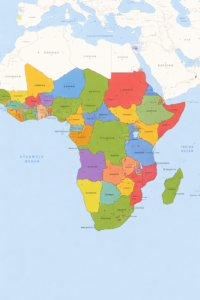
Artificial intelligence is poised to reshape the future of work across Africa, according to a new report by PricewaterhouseCoopers (PwC). The report predicts that over the next decade, millions of roles across the continent could be transformed as AI adoption spreads, potentially boosting productivity in key sectors while also presenting challenges for workers and governments.
PwC explains that AI will not simply replace jobs-it will both automate certain tasks and enhance human work. Positions involving repetitive or administrative duties are most at risk of automation, while roles requiring creativity, critical thinking, problem-solving, and interpersonal skills are expected to be supported and augmented by AI tools rather than eliminated.
The report highlights that several sectors are likely to see early and significant transformation. In financial services and telecommunications, AI could streamline customer service operations, improve fraud detection, and automate complex data processing tasks. Manufacturing and retail may benefit from smarter supply chain management, while agriculture could see improvements in yield forecasting and predictive analytics. Public administration is also expected to adopt AI for service delivery, resource management, and data-driven decision-making.
“Artificial intelligence represents both a disruption and an opportunity for African economies,” the report said. “The outcome will depend largely on how quickly businesses and governments invest in digital skills and supporting infrastructure.”
According to PwC, AI-driven productivity gains could contribute substantially to economic growth if adoption is managed strategically. However, the benefits may not be evenly distributed, particularly in countries with weak or uneven digital infrastructure. Without proper planning, AI could widen inequality or exacerbate existing labour market pressures.
Africa’s youthful population offers a significant advantage in adapting to emerging technologies. Yet, persistent gaps in digital literacy and technical skills could limit opportunities if reskilling programs fail to keep pace with technological change. The report also notes the challenge posed by the continent’s large informal sector, where many workers and small businesses may lack access to the technology and connectivity needed to benefit from AI.
PwC urged governments to prioritise investment in broadband expansion, education reform, and the development of clear AI governance frameworks to guide responsible deployment. Businesses, in turn, were encouraged to adopt workforce transition strategies that focus on reskilling and adapting employees to new ways of working rather than relying on job cuts.
While the long-term impact of AI in Africa remains uncertain, the report concludes that proactive preparation and investment will determine whether the technology becomes a catalyst for inclusive growth or deepens existing unemployment.

Senior Reporter/Editor
Bio: Ugochukwu is a freelance journalist and Editor at AIbase.ng, with a strong professional focus on investigative reporting. He holds a degree in Mass Communication and brings extensive experience in news gathering, reporting, and editorial writing. With over a decade of active engagement across diverse news outlets, he contributes in-depth analytical, practical, and expository articles exploring artificial intelligence and its real-world impact. His seasoned newsroom experience and well-established information networks provide AIbase.ng with credible, timely, and high-quality coverage of emerging AI developments.