

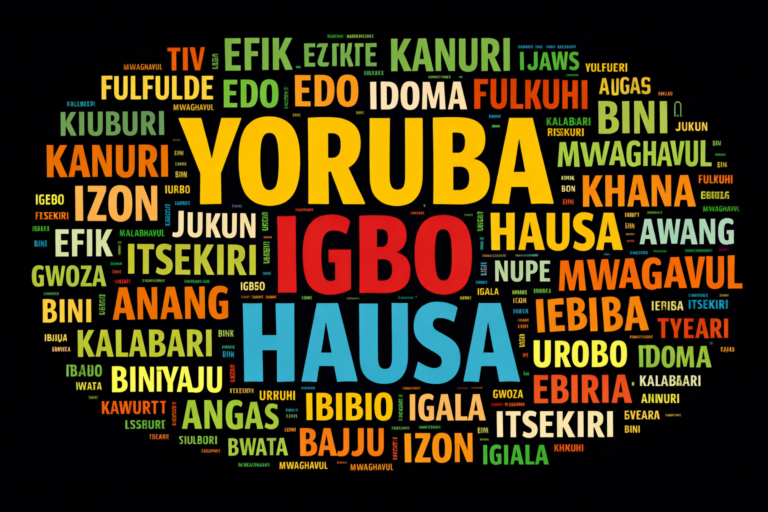
Nigeria is one of the most linguistically diverse countries in the world. From the tonal richness of Yoruba to the expressive idioms of Tiv, Kanuri, Nupe, Ibibio and hundreds of others, language is the vessel through which Nigerians transmit culture, values, history and collective memory. Linguists estimate that Nigeria is home to over 520 indigenous languages, placing the country among the top five most linguistically diverse nations globally. Yet this extraordinary diversity is under growing threat. According to UNESCO and Nigerian cultural institutions, more than two dozen Nigerian languages are already endangered, with some spoken fluently by only a handful of elderly speakers.
At the same time, Nigeria is experiencing a rapid digital and technological transformation. Artificial Intelligence (AI) tools now power smartphones, translation apps, social media moderation systems and virtual assistants used daily by millions of Nigerians. This convergence raises a critical and timely question: can AI be harnessed not just for economic growth and productivity, but also to preserve Nigeria’s indigenous languages before they disappear? For a country where English dominates formal education, governance and digital spaces, the stakes are high. Without deliberate intervention, technology could accelerate language loss; with the right approach, it could become a powerful tool for revival.
Why Indigenous Languages Matter
Indigenous languages are far more than communication tools; they are repositories of identity, indigenous knowledge systems and social cohesion. In many Nigerian communities, languages encode traditional medicine, agricultural practices, conflict resolution mechanisms and spiritual worldviews that exist nowhere else. When a language dies, scholars often note that an entire way of seeing the world vanishes with it. As the late Kenyan writer Ngũgĩ wa Thiong’o famously argued, language carries culture, and culture carries the values by which people perceive themselves and others.
In practical terms, language also shapes access to education and inclusion. Studies by UNICEF and Nigeria’s Federal Ministry of Education have consistently shown that children learn best in their mother tongue during early education, yet many Nigerian pupils encounter formal learning first in English. This disconnect contributes to poor literacy outcomes in rural areas and reinforces social inequality. Preserving and digitising indigenous languages is therefore not just a cultural imperative, but also an educational and developmental one.
Against this backdrop, AI presents both a risk and an opportunity. If Nigerian languages remain absent from datasets, algorithms and digital platforms, they will continue to be marginalised in the digital age. But if AI systems are intentionally trained to understand, speak and translate indigenous languages, technology could help document endangered tongues, support multilingual education and ensure that Nigeria’s linguistic heritage survives—and thrives—in the 21st century.
2. Nigeria’s Language Landscape
Nigeria’s linguistic landscape is as complex as it is remarkable. Often described as a microcosm of Africa’s cultural diversity, the country’s languages reflect centuries of migration, trade, conquest and cultural exchange. Understanding this landscape is essential to appreciating both the scale of the challenge and the potential role Artificial Intelligence can play in preserving indigenous languages.
Scale and Distribution of Languages in Nigeria
Linguists broadly agree that Nigeria has between 520 and 530 indigenous languages, depending on classification criteria such as dialect continua and mutual intelligibility. This figure, frequently cited by Ethnologue and Nigerian academic institutions, makes Nigeria the most linguistically diverse country in Africa and one of the most diverse in the world. These languages cut across three major language families: Niger-Congo (the largest, including Yoruba, Igbo and Tiv), Afro-Asiatic (notably Hausa and Kanuri), and Nilo-Saharan (spoken by smaller populations).
Geographically, linguistic diversity is unevenly distributed. The Middle Belt—states such as Benue, Plateau, Taraba and Adamawa—accounts for a disproportionate number of minority languages, many of which are spoken by fewer than 100,000 people. In contrast, the northern and south-western regions are dominated by a handful of widely spoken languages. Hausa, for example, functions not only as a mother tongue for tens of millions but also as a regional lingua franca across northern Nigeria and parts of West Africa.
According to recent demographic estimates, Hausa, Yoruba and Igbo together account for roughly 60–65 per cent of Nigeria’s population, while hundreds of other languages share the remaining space. This imbalance has significant implications for which languages receive institutional support, media representation and, increasingly, digital presence.
Major Languages versus Minority and Endangered Languages
Nigeria’s “big three” languages—Hausa, Yoruba and Igbo—enjoy relative vitality. They are used in radio and television broadcasting, religious institutions, literature and, increasingly, digital platforms. Yoruba and Hausa, in particular, have gained some visibility in AI-driven tools such as speech recognition systems, translation models and chatbots, albeit still far behind global languages like English, French or Arabic.
By contrast, many minority languages exist almost entirely outside formal systems. Some lack standardised orthographies; others are rarely written or taught in schools. UNESCO’s most recent assessments classify over 25 Nigerian languages as endangered, with several considered “critically endangered”, meaning they are spoken fluently only by older generations. Examples include languages such as Ajawa (Bauchi State), Basa-Gumna (Niger State) and Sheni (Bauchi State), which are at risk of disappearing within a generation if current trends continue.
Urbanisation has intensified this divide. As Nigerians migrate to cities such as Lagos, Abuja and Port Harcourt, intergenerational language transmission often breaks down. English—and increasingly Nigerian Pidgin—becomes the language of convenience, aspiration and economic mobility. For many urban families, indigenous languages are no longer passed on to children, accelerating language shift and eventual loss.
This uneven landscape presents a core dilemma for AI development in Nigeria. While major languages may attract investment and data, low-resource languages risk being digitally invisible. Without deliberate inclusion, AI systems trained on Nigerian data could mirror—and even deepen—existing linguistic inequalities. Yet with intentional design, the same technologies could help document minority languages, standardise writing systems and amplify voices that have long existed at the margins of Nigeria’s national conversation.
3. Causes of Language Endangerment in Nigeria
The decline of indigenous languages in Nigeria is not accidental; it is the outcome of intertwined social, economic and policy-driven forces that have evolved over decades. While linguistic change is natural, the speed and scale of language loss in Nigeria today are historically unprecedented, raising urgent concerns among linguists, educators and cultural advocates.
Urbanisation, Education and Economic Pressures
One of the most powerful drivers of language endangerment in Nigeria is rapid urbanisation. The National Bureau of Statistics estimates that over 54 per cent of Nigerians now live in urban areas, a figure projected to exceed 60 per cent by 2035. In cities, linguistic diversity often gives way to practicality. English dominates formal workplaces, education, official documentation and digital services, while Nigerian Pidgin increasingly serves as a social bridge across ethnic lines.
Education policy has also played a significant role. Although Nigeria’s National Policy on Education recommends mother-tongue instruction in the early years of schooling, implementation has been inconsistent. Many public and private schools, especially in urban centres, prioritise English from the outset, seeing it as a pathway to global competitiveness and socioeconomic mobility. As a result, children may grow up understanding but not speaking their ancestral languages fluently—a key indicator of impending language shift.
Economic incentives reinforce this trend. In a labour market shaped by globalisation, technology and migration, English proficiency is often equated with opportunity. Indigenous languages, by contrast, are frequently perceived—rightly or wrongly—as offering limited economic value. This perception discourages parents from transmitting their languages to children, particularly in multilingual households.
Dominance of English and Nigerian Pidgin
English occupies a uniquely powerful position in Nigeria. As the official language of government, law, higher education and national media, it functions as a neutral bridge in a multi-ethnic state. However, this dominance comes at a cost. Research by Nigerian linguists suggests that English is now the primary language of daily communication for millions of young Nigerians, especially in cities.
Alongside English, Nigerian Pidgin has expanded rapidly. Once stigmatised, Pidgin is now widely spoken across social classes and regions, fuelled by popular culture, radio, comedy and social media. Some estimates suggest that over 75 million Nigerians can communicate in Pidgin, making it one of the most widely understood languages in the country. While Pidgin enhances national connectivity, its rise can inadvertently displace smaller indigenous languages, particularly among younger speakers who adopt it as a first or dominant language.
Intergenerational Language Breakdown
Perhaps the most critical factor in language endangerment is the breakdown of intergenerational transmission. UNESCO identifies this as the single strongest predictor of language extinction. In many Nigerian households, grandparents speak an indigenous language fluently, parents are bilingual, and children respond almost exclusively in English or Pidgin.
This pattern is especially visible among minority language communities, where speaker populations may already be small. Once a language is no longer learned naturally at home, it quickly becomes confined to ceremonial or symbolic use, losing its role in everyday life. Without active revitalisation efforts, such languages often disappear within one or two generations.
In this context, technology is not the root cause of language loss—but it can accelerate existing trends. Digital platforms overwhelmingly favour dominant languages, reinforcing their prestige and utility. Yet the same technologies, if intentionally redirected, could help reverse intergenerational decline by making indigenous languages visible, usable and relevant in modern Nigerian life.
4. The Promise of AI for Language Preservation
Artificial Intelligence is often associated with automation, efficiency and economic disruption. Yet, in the context of language diversity, AI offers a quieter but potentially transformative promise: the ability to document, revitalise and normalise indigenous languages at scale. For a multilingual country like Nigeria, where many languages are under-documented and under-resourced, AI could become a critical ally in cultural preservation—if deployed thoughtfully.
How AI Understands and Works with Language
At the heart of AI-driven language tools is Natural Language Processing (NLP)—a branch of AI that enables machines to read, interpret, generate and respond to human language. NLP powers familiar technologies such as voice assistants, translation apps, spell-checkers and chatbots. Closely related are Automatic Speech Recognition (ASR), which converts spoken language into text, and Text-to-Speech (TTS) systems, which give machines a voice.
For well-resourced global languages like English, these systems are trained on billions of words and thousands of hours of audio. Indigenous Nigerian languages, however, are often described as “low-resource languages” because they lack large, digitised datasets. AI’s promise lies in its growing ability to learn from smaller datasets, adapt across languages and incorporate community-generated data—a shift that opens new possibilities for languages previously excluded from the digital ecosystem.
Documentation and Digital Archiving
One of the most immediate benefits of AI is in language documentation. Machine learning tools can assist linguists and communities in recording spoken language, transcribing oral histories and organising digital archives. For endangered Nigerian languages with few remaining fluent speakers, this is crucial. AI-assisted transcription can dramatically reduce the time and cost of documenting vocabularies, folktales, songs and rituals—materials that traditionally took years to compile manually.
Digital archives also make languages more resilient. Once a language exists in searchable, accessible digital form—audio, text and video—it is far less likely to vanish completely. AI can help structure these archives, enabling future generations to learn and revive languages even after fluent speakers decline.
Revitalisation Through Learning and Everyday Use
Beyond preservation, AI offers tools for language revitalisation and learning. AI-powered language learning apps, chatbots and voice assistants can provide interactive, low-cost ways for young Nigerians to engage with their ancestral languages. A child in Lagos, for instance, could practise basic Tiv or Efik with a conversational chatbot, even if no fluent speaker is available at home.
Speech technologies are particularly promising in Nigeria’s largely oral linguistic traditions. Voice-based AI systems can support pronunciation, tonal accuracy and listening comprehension—areas where written textbooks often fall short. For languages with limited written traditions, this oral-first approach aligns more closely with cultural realities.
Normalising Indigenous Languages in Digital Spaces
Perhaps most importantly, AI can help restore the relevance of indigenous languages in modern life. When a language appears in keyboards, translation tools, voice assistants or social media features, it gains prestige and practicality. Research in sociolinguistics consistently shows that languages perceived as “useful” are more likely to be transmitted to children.
If Nigerians can search the web, send voice notes, receive public information or interact with digital services in their mother tongues, language use shifts from symbolic to functional. In this sense, AI does not merely preserve languages as museum artefacts; it can help reintegrate them into daily communication, governance and education.
Still, this promise is not automatic. Without intentional inclusion, AI systems risk reproducing existing inequalities—favouring dominant languages while leaving others behind. The real opportunity for Nigeria lies in shaping AI development to reflect its linguistic reality, ensuring that technological progress strengthens, rather than erases, the country’s rich language heritage.
5. Current AI Initiatives Relevant to Nigerian Languages
In recent years, Nigeria has begun to feature more prominently in conversations about African language technology. While progress remains uneven, a growing number of government-backed projects, academic efforts and private-sector innovations are demonstrating how AI can be adapted to Nigeria’s multilingual reality. These initiatives, though still at an early stage, provide valuable insights into what is possible—and what remains to be done.
Government and Policy-Driven Efforts
At the federal level, Nigeria has signalled increasing interest in aligning AI development with national priorities, including culture and education. The National Artificial Intelligence Strategy, launched in the mid-2020s, explicitly acknowledges the importance of local content and indigenous knowledge systems. While language preservation is not yet its central pillar, policymakers have increasingly framed multilingual AI models as essential for inclusion, digital governance and public service delivery.
One notable development has been Nigeria’s participation in broader African multilingual AI initiatives, aimed at ensuring that African languages are represented in global AI systems. These efforts recognise that without state involvement, market forces alone will prioritise commercially dominant languages. Cultural agencies such as the National Institute for Nigerian Languages (NINLAN) have also intensified calls for the digitisation of indigenous languages, arguing that technology is now indispensable to their survival.
Academic and Research-Led Projects
Nigerian universities and research groups are playing a critical role in building foundational language resources. Scholars in computational linguistics and computer science have begun compiling language datasets for Nigerian languages, including text corpora, speech recordings and bilingual dictionaries. These datasets form the backbone of AI applications such as translation and speech recognition.
Recent peer-reviewed studies highlight experimental AI models for languages such as Yoruba, Hausa, Igbo, Ibibio and Tiv, focusing on tasks like sentiment analysis, machine translation and speech-to-text conversion. Researchers consistently point out that even modest datasets—when carefully curated—can produce usable AI tools, challenging the assumption that only massive data volumes are viable.
Importantly, some projects prioritise minority and underrepresented languages, often working directly with local communities. This participatory approach not only improves data quality but also builds trust and cultural ownership—an essential factor in language preservation.
Private Sector and Community-Led Innovations
Beyond academia, Nigerian technologists and startups are increasingly experimenting with AI for local languages. Voice assistants that understand basic Yoruba or Hausa commands, translation tools embedded in messaging platforms, and AI-powered chatbots designed for language learning are beginning to emerge. While many of these tools remain limited in scope, they mark a shift in mindset: indigenous languages are no longer seen as incompatible with advanced technology.
Community-led platforms have also gained traction. In some cases, developers collaborate with teachers, storytellers and cultural organisations to create AI-assisted dictionaries, pronunciation guides and storytelling apps. These initiatives often rely on crowdsourced data, enabling speakers themselves to contribute recordings, translations and usage examples. Such models are particularly promising for endangered languages that lack institutional support.
The Gap Between Major and Minority Languages
Despite these encouraging signs, a clear gap remains. Hausa, Yoruba and Igbo dominate most AI-related efforts, reflecting their larger speaker bases and greater availability of data. By contrast, hundreds of smaller Nigerian languages are still absent from digital and AI ecosystems. Experts warn that this imbalance could lead to a two-tier linguistic future: a handful of digitally empowered languages and a long tail of digitally silent ones.
Nonetheless, the trajectory is shifting. Advances in AI techniques—such as transfer learning and multilingual models—mean that progress in major languages can increasingly be leveraged to support related minority languages. If combined with targeted investment and inclusive policy, Nigeria’s current initiatives could evolve from isolated experiments into a coherent national strategy for AI-enabled language preservation.
Taken together, these developments show that the question is no longer whether AI can work with Nigerian languages, but how intentionally and equitably it will be deployed.
6. Challenges in Using AI for Indigenous Languages
While the potential of AI to support indigenous languages in Nigeria is significant, realising this promise is far from straightforward. Structural, technical and socio-economic barriers continue to limit how effectively AI can be applied to language preservation. Understanding these challenges is essential to avoiding overly optimistic narratives and to designing solutions that are both realistic and sustainable.
The Low-Resource Language Problem
The most fundamental obstacle is the scarcity of digital language data. Most AI language systems require large volumes of text and audio to function accurately. For many Nigerian languages—especially minority ones—such data simply does not exist in digitised form. Some languages have limited written literature; others are primarily oral, with no standardised spelling system.
This data gap places indigenous Nigerian languages firmly in the category of “low-resource languages”, a term widely used in AI research. Without sufficient datasets, AI models struggle with accuracy, nuance and contextual understanding. As a result, developers often focus on languages with existing digital footprints, reinforcing a cycle in which already-dominant languages receive more technological investment while others are left behind.
Linguistic Complexity and Technical Barriers
Nigeria’s languages present unique technical challenges for AI systems. Many are tonal languages, where pitch can change the meaning of a word entirely. Capturing tonal distinctions accurately in speech recognition and synthesis systems requires high-quality audio data and specialised modelling techniques. Dialectal variation further complicates matters; a language spoken in one community may differ significantly from the same language spoken elsewhere.
In addition, several Nigerian languages lack agreed-upon orthographic standards, making text-based AI applications difficult to implement. Inconsistent spelling conventions can confuse algorithms and reduce the reliability of machine translation or text analysis tools. Addressing these issues often requires close collaboration between linguists, native speakers and technologists—an interdisciplinary effort that is still relatively rare.
Funding, Infrastructure and Skills Gaps
AI development is resource-intensive, and Nigeria faces persistent constraints in funding and infrastructure. Many research projects rely on short-term grants, limiting their ability to build long-lasting language technologies. High-performance computing resources, stable electricity and reliable internet access—essential for AI training and deployment—remain unevenly distributed across the country.
There is also a shortage of specialised expertise at the intersection of linguistics and AI. While Nigeria has a growing pool of talented software developers and linguists, few professionals are trained in both domains. This skills gap slows progress and increases reliance on external partners, which can raise concerns about data ownership and cultural sovereignty.
Social Attitudes and Language Prestige
Beyond technical issues, social perceptions play a critical role. Many Nigerians, particularly younger urban dwellers, associate indigenous languages with tradition rather than modernity. This perception can dampen enthusiasm for contributing data or using AI tools in local languages. If communities do not see their languages as relevant to economic and social advancement, technological solutions alone will have limited impact.
Moreover, there are ethical concerns about who controls language data and how it is used. Without clear frameworks, communities may fear exploitation or misrepresentation, especially when their cultural expressions are digitised and processed by AI systems.
The Risk of Digital Exclusion
Finally, there is a risk that poorly designed AI initiatives could deepen existing inequalities. If AI tools only support a small subset of Nigerian languages, speakers of other languages may find themselves further marginalised in digital spaces. Language preservation, therefore, is not just a technical challenge but a question of equity and inclusion.
Addressing these challenges will require coordinated action—combining policy support, community engagement, sustained funding and technical innovation. Without such alignment, AI’s role in preserving Nigeria’s linguistic diversity will remain limited, regardless of its theoretical potential.
7. Case Studies and Practical Examples
Examining real-world examples helps move the discussion of AI and language preservation in Nigeria from theory to practice. While large-scale success stories are still emerging, several Nigerian languages and community-driven efforts already illustrate both the possibilities and limitations of AI-enabled language technologies.
Yoruba, Hausa and Igbo in Digital and AI Ecosystems
Among Nigerian languages, Yoruba, Hausa and Igbo are the most visible in AI-driven applications. Their relatively large speaker populations, established writing systems and presence in print and broadcast media have made them early candidates for digital inclusion.
Yoruba, for instance, has featured in experimental speech recognition and text-to-speech systems, as well as translation tools integrated into messaging and educational platforms. Researchers have highlighted Yoruba as a benchmark for African tonal language modelling, given its complex use of pitch and diacritics. Hausa has similarly gained traction in voice-based systems, particularly for radio transcription and public information services in northern Nigeria. Igbo, though facing internal debates over orthography, has been the subject of AI-driven dictionary projects and language learning tools aimed at younger users.
These developments demonstrate an important point: when data exists and communities engage, AI can work effectively with Nigerian languages. However, they also expose the unevenness of progress, as these three languages continue to attract disproportionate attention compared to hundreds of others.
Minority Languages and Community-Led Digitisation
More instructive, perhaps, are initiatives focused on minority and endangered languages. In several states, small teams of linguists and technologists have collaborated with local communities to collect audio recordings, transcribe folktales and build basic digital lexicons. AI tools are then used to assist with transcription, pattern recognition and storage, dramatically speeding up processes that once took years.
For example, community-driven projects in parts of the Middle Belt have used smartphone recordings and simple machine-learning models to document pronunciation and vocabulary in languages spoken by fewer than 50,000 people. While these tools are not yet consumer-facing, they create digital footprints that can later support language learning apps or educational materials.
Crucially, these efforts tend to prioritise local ownership. Speakers are not merely data sources but active participants, helping define how their language is represented and used. This approach aligns with global best practice in language revitalisation and reduces fears of cultural extraction.
AI Chatbots and Language Learning Experiments
Another emerging area is the use of AI-powered chatbots for language learning and practice. Some Nigerian developers and researchers have experimented with chatbots that can hold simple conversations in indigenous languages, correct basic grammar and offer vocabulary prompts. While still limited in fluency, such systems are particularly appealing to young, urban Nigerians who may not have daily exposure to their ancestral languages.
Early evaluations suggest that even basic conversational AI can increase learners’ confidence and motivation, especially when combined with cultural content such as proverbs, songs and storytelling. This reinforces the idea that AI’s value lies not in replacing human teachers, but in supplementing scarce linguistic resources.
Lessons from These Examples
Across these case studies, several patterns emerge. First, AI works best when it builds on existing linguistic and community foundations. Second, progress is fastest where there is collaboration between technologists, linguists and native speakers. Finally, sustainability remains a challenge; many promising projects struggle to scale beyond pilot stages due to funding and infrastructure constraints.
Nonetheless, these examples show that AI-enabled language preservation in Nigeria is no longer hypothetical. It is happening—unevenly, incrementally, but with growing sophistication. The task ahead is to ensure that such efforts expand beyond a handful of languages and become part of a coherent national approach to safeguarding Nigeria’s linguistic heritage.
8. Policy and Education: What Nigeria Needs
For AI to play a meaningful and lasting role in preserving Nigeria’s indigenous languages, technology alone is not enough. Sustainable impact will depend on deliberate policy choices, educational reforms and institutional commitment. Without these foundations, AI initiatives risk remaining fragmented experiments rather than drivers of national transformation.
Strengthening Language Policy in the Digital Age
Nigeria has long recognised the importance of indigenous languages in principle. The National Policy on Education endorses mother-tongue instruction in early childhood education, and cultural institutions have repeatedly warned about language endangerment. However, enforcement and adaptation to the digital era have been weak.
What is now needed is a clear national framework that explicitly links language preservation with digital and AI development. Such a framework should prioritise the digitisation of indigenous languages as a matter of cultural security, much like the preservation of historical artefacts. Government-backed funding for language datasets—text, audio and annotated corpora—would provide the raw material AI systems require.
Equally important is coordination. Language-related responsibilities are currently spread across multiple ministries and agencies, often with limited collaboration. A centralised strategy, involving education, culture, science and technology stakeholders, would help align efforts and avoid duplication.
Integrating AI and Indigenous Languages in Education
Education is the most powerful long-term lever for language preservation. If indigenous languages remain absent from classrooms and digital learning platforms, their decline is likely to continue. AI offers new ways to bridge resource gaps in multilingual education, particularly in regions with teacher shortages.
AI-powered learning tools—such as speech-based tutors, interactive reading apps and automated assessment systems—could support mother-tongue instruction in early schooling. These tools can help teachers manage multilingual classrooms and provide learners with personalised feedback, even in under-resourced settings. For older students, AI-driven translation and language-learning platforms could make indigenous languages more accessible and relevant.
Teacher training is critical. Educators must be equipped not only to teach indigenous languages, but also to use digital and AI tools confidently. Colleges of education and universities have a key role to play in developing interdisciplinary programmes that combine linguistics, pedagogy and technology.
Community Involvement and Cultural Ownership
Policy success will ultimately depend on community buy-in. Language preservation cannot be imposed from above; it must be rooted in the values and aspirations of speakers themselves. Communities should be involved in decisions about data collection, orthography, and how their languages are represented in AI systems.
Clear ethical guidelines are also essential. These should address data ownership, consent and benefit-sharing, ensuring that communities retain control over their linguistic resources. When people feel respected and empowered, they are far more likely to contribute to digitisation and revitalisation efforts.
Public–Private and International Partnerships
Finally, Nigeria cannot tackle this challenge in isolation. Partnerships with local tech firms, universities, cultural organisations and international research networks can accelerate progress. Global technology companies increasingly recognise the importance of linguistic diversity, but Nigeria must articulate its priorities clearly to avoid being a passive recipient of external agendas.
With coherent policy, educational reform and community-centred approaches, AI can move from the margins to the mainstream of language preservation. The choice facing Nigeria is not whether technology will shape its linguistic future—it already is—but whether that future will reflect the country’s full cultural richness or only a narrow slice of it.
9. Global Comparisons and Lessons for Nigeria
Nigeria is not alone in grappling with the tension between technological progress and linguistic diversity. Across the world, multilingual societies are experimenting with AI as a tool for language preservation, offering valuable lessons for Nigeria as it charts its own path. These international experiences demonstrate both what is possible and what pitfalls to avoid.
Indigenous Language AI Efforts Around the World
In countries such as New Zealand, AI and digital tools have been actively deployed to support the Māori language. Speech recognition systems, language-learning apps and digital dictionaries have been developed in close collaboration with indigenous communities. Importantly, Māori language revitalisation has been underpinned by strong legal and educational frameworks, ensuring that technology complements, rather than replaces, human-led efforts.
Similarly, Wales has invested heavily in Welsh-language technology. AI-powered translation tools, voice assistants and public-service platforms operate in Welsh alongside English. The Welsh government has treated language technology as part of national infrastructure, recognising that digital presence is essential for linguistic survival in the modern age.
In India, a country whose linguistic complexity rivals Nigeria’s, AI-driven language initiatives focus on scalability. Multilingual models are being trained to support dozens of regional languages, enabling translation, speech recognition and information access across vast populations. While disparities remain, India’s experience shows that large-scale multilingual AI is feasible when backed by sustained policy and funding.
Key Lessons for Nigeria
Several lessons emerge from these global examples. First, political will matters. In countries where indigenous languages have gained digital ground, governments have played an active role in setting priorities, funding research and integrating language technology into public services.
Second, community partnership is non-negotiable. Successful projects treat native speakers as co-creators rather than passive data sources. This approach builds trust, improves linguistic accuracy and ensures cultural sensitivity—an especially important consideration in Nigeria’s ethnically diverse context.
Third, education and technology must move together. Global experience suggests that AI tools are most effective when embedded within broader language revitalisation strategies, including schooling, media and cultural promotion. Technology alone cannot save a language, but it can significantly amplify existing efforts.
Avoiding One-Size-Fits-All Solutions
Global comparisons also highlight the dangers of importing solutions without adaptation. Nigeria’s linguistic ecology is unique, shaped by colonial history, federal governance and extreme language density. AI models or policies designed for other contexts must be carefully localised, taking into account tonal systems, oral traditions and regional inequalities.
Ultimately, the international experience reinforces a central insight: languages that fail to enter the digital world risk being left behind, regardless of how widely they are spoken offline. For Nigeria, the lesson is clear. By learning from global peers while grounding solutions in local realities, the country can position AI not as a threat to its linguistic diversity, but as one of its strongest allies.
Final takes
Nigeria stands at a crossroads where technological progress meets cultural preservation. With more than 520 indigenous languages—many under threat—AI raises an urgent question: can innovation help protect linguistic identity rather than erode it? Evidence suggests it can. From digital archiving to speech-based learning tools, emerging AI initiatives in languages such as Yoruba, Hausa and Igbo show real potential, even amid data and infrastructure constraints.
However, AI is no cure-all. Without clear policy direction, inclusive education and strong community participation, technology may deepen existing inequalities, benefiting a few languages while others disappear. The way forward demands intentional action—from government, educators, technologists and local communities alike. If aligned, AI can ensure Nigeria’s languages remain living systems of knowledge, not just digital relics, shaping a more inclusive and culturally grounded future.

Senior Reporter/Editor
Bio: Ugochukwu is a freelance journalist and Editor at AIbase.ng, with a strong professional focus on investigative reporting. He holds a degree in Mass Communication and brings extensive experience in news gathering, reporting, and editorial writing. With over a decade of active engagement across diverse news outlets, he contributes in-depth analytical, practical, and expository articles exploring artificial intelligence and its real-world impact. His seasoned newsroom experience and well-established information networks provide AIbase.ng with credible, timely, and high-quality coverage of emerging AI developments.