

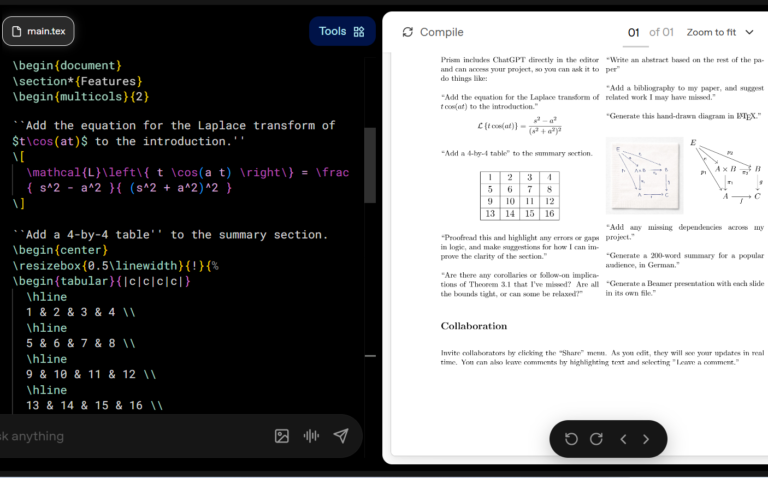
Among the most discussed developments is OpenAI Prism, a framework associated with the broader OpenAI ecosystem. For Nigerian developers, AI founders, academic researchers, and tech policy stakeholders, understanding what Prism represents is not just an exercise in trend-watching. It is a strategic necessity.
This article examines five key takeaways about OpenAI Prism, focusing on its technical implications, research relevance, developer opportunities, and implications for Nigeria’s growing AI ecosystem.
Understanding OpenAI Prism in Context
Before analysing the key takeaways, it is important to situate Prism within the larger AI landscape. OpenAI has consistently positioned itself at the frontier of large language models, multimodal systems, and AI alignment research. Prism is best understood as an architectural and operational layer designed to enhance model transparency, safety calibration, and task-specific optimisation within advanced AI systems.
For Nigerian developers building AI-driven fintech tools, health diagnostics platforms, agricultural intelligence systems, or civic technology applications, frameworks such as Prism represent more than incremental improvements. They signal a shift towards more controllable, interpretable, and adaptable AI systems.
Now, let us examine the five core takeaways.
1. Prism Emphasises Model Interpretability and Transparency
One of the most significant aspects of OpenAI Prism is its focus on interpretability. Traditional large-scale AI systems often operate as black boxes. Developers input data, receive outputs, and optimise performance metrics, but struggle to understand the underlying reasoning processes.
Prism appears to prioritise:
-
Layered output inspection
-
Internal reasoning traceability
-
Improved debugging pathways
-
Enhanced alignment monitoring
For AI researchers in Nigerian universities, particularly those studying explainable AI, this focus is critical. Transparent models are easier to audit, benchmark, and deploy in regulated sectors such as banking and healthcare.
In Nigeria’s regulatory climate, where data protection laws and emerging AI governance discussions are gaining momentum, interpretability is not optional. It is foundational. Developers working with financial institutions or public-sector bodies will increasingly require systems that can justify decisions, particularly in areas such as credit scoring and automated case triage.
Prism’s emphasis on transparency could reduce operational risk while increasing stakeholder trust.
2. Stronger Safety and Alignment Mechanisms
Another key takeaway is Prism’s reinforcement of AI safety architecture. As AI systems become more capable, the risks associated with hallucinations, bias amplification, and misuse also grow.
Prism is structured to address:
-
Output moderation at multiple layers
-
Fine-grained policy enforcement
-
Context-aware response filtering
-
Safer integration with third-party applications
For Nigerian startups integrating AI into customer-facing platforms, safety is not merely an ethical concern; it is a commercial one. A chatbot deployed in Lagos for customer support cannot afford to produce defamatory or culturally insensitive outputs.
From a research standpoint, Prism’s safety scaffolding offers a valuable case study in the alignment of applied AI. It demonstrates how large-scale AI systems can integrate guardrails without crippling performance. Nigerian AI researchers exploring bias mitigation in local-language datasets may find this particularly relevant.
As local AI adoption expands across education, telecoms, and government, robust safety mechanisms will be indispensable.
3. Enhanced Developer Control and Customisation
Developers require flexibility. Whether building enterprise SaaS tools or academic prototypes, the ability to tailor models to domain-specific requirements is a decisive advantage.
Prism appears to prioritise developer-centric capabilities, including:
-
Task-specific fine-tuning frameworks
-
Structured prompt control layers
-
Adaptive inference configurations
-
Modular integration architecture
For Nigerian developers working in bandwidth-constrained or resource-limited environments, efficiency is critical. Systems that allow granular control over inference cost, response length, and reasoning depth are more commercially viable.
Customisation also enables localisation. Nigeria is linguistically and culturally diverse. AI systems must adapt to regional nuances, including Pidgin English, Hausa, Yoruba, and Igbo. A framework that supports more controllable behaviour can help developers build culturally aware applications without overhauling entire model architectures.
This is particularly relevant for edtech platforms, AI tutoring systems, and government service portals aiming to broaden accessibility.
4. Research Implications for Multimodal and Advanced Reasoning Systems
Prism’s architectural approach suggests a forward-looking design to support multimodal AI and advanced reasoning. Modern AI research is increasingly focused on systems that can integrate text, images, audio, and structured data seamlessly.
For Nigerian AI researchers:
-
Multimodal integration enables improved agricultural advisory tools by combining satellite imagery and text prompts.
-
Health AI systems can combine diagnostic images with patient history.
-
Civic technology platforms can analyse policy documents alongside visual data dashboards.
Prism’s emphasis on structured reasoning layers indicates a move toward more deliberate, step-aware problem-solving. This is critical in domains such as legal analysis, scientific research, and financial modelling.
For Nigerian academic institutions seeking to strengthen their AI research capacity, studying Prism-like architectures offers insights into the trajectory of global AI development. It can inform curriculum design, research grants, and collaborative industry projects.
Rather than treating AI as a black-box API, researchers can investigate its layered decision-making processes, improving local innovation capacity.
5. Strategic Opportunities for Nigeria’s AI Ecosystem
Perhaps the most important takeaway is strategic rather than technical. OpenAI Prism reflects a broader trend: AI systems are evolving from raw capability engines into structured, governable infrastructures.
For Nigeria, this creates several opportunities:
Building Compliance-Ready AI Products
As African regulators begin to shape AI governance frameworks, developers who understand safety and interpretability principles will be better positioned to secure contracts and partnerships.
Prism-style architectures align well with enterprise procurement standards, thereby enhancing the international competitiveness of Nigerian startups.
Strengthening AI Education and Talent Development
Nigerian universities and private tech academies can integrate lessons from Prism into AI curricula. Teaching students about alignment, layered reasoning, and structured control prepares them for global AI markets.
This is particularly relevant for aspiring AI engineers in Lagos, Abuja, and Port Harcourt who want to compete in international remote roles.
Enabling Responsible AI in Public Sector Deployment
Government agencies exploring AI for tax administration, public records management, or policy analysis must prioritise explainability and auditability.
Frameworks that resemble Prism facilitate decision justification, maintain accountability, and manage risk.
In a country with varying levels of public trust in digital systems, transparent AI deployment could improve adoption rates.
Practical Considerations for Developers and Researchers
Understanding the Prism conceptually is useful, but implementation thinking is essential.
Nigerian developers and researchers should focus on:
-
Studying alignment techniques and interpretability research
-
Experimenting with modular AI architectures
-
Building datasets reflective of local contexts
-
Monitoring global AI governance trends
It is also important to evaluate cost implications. Advanced AI frameworks can be resource-intensive. Startups must assess scalability, infrastructure requirements, and long-term API dependency risks.
AI researchers should consider collaborating with industry partners to test Prism-like systems in real-world Nigerian contexts, such as microfinance risk-scoring applications or agricultural advisory chatbots.
Why OpenAI Prism Matters for Nigeria
OpenAI Prism is not merely a technical refinement. It represents a shift towards more controllable, transparent, and safety-conscious AI systems. For developers and AI researchers in Nigeria, this evolution has direct implications.
It affects how models are built, audited, deployed, and regulated. It shapes commercial viability. It influences academic research trajectories. Most importantly, it provides a blueprint for building AI systems that are both powerful and responsible.
As Nigeria continues to expand its digital economy, frameworks like Prism offer insight into the standards that will define next-generation AI infrastructure. Developers and researchers who understand these shifts early will not only remain competitive but will help shape the country’s AI future.
The conversation is no longer about whether to adopt AI. It is about how to adopt it responsibly, strategically, and at scale. OpenAI Prism provides important signals about the future.
About OpenAI Prism for Developers and AI Researchers

Director
Bio: An (HND, BA, MBA, MSc) is a tech-savvy digital marketing professional, writing on artificial intelligence, digital tools, and emerging technologies. He holds an HND in Marketing, is a Chartered Marketer, earned an MBA in Marketing Management from LAUTECH, a BA in Marketing Management and Web Technologies from York St John University, and an MSc in Social Business and Marketing Management from the University of Salford, Manchester.
He has professional experience across sales, hospitality, healthcare, digital marketing, and business development, and has worked with Sheraton Hotels, A24 Group, and Kendal Nutricare. A skilled editor and web designer, He focuses on simplifying complex technologies and highlighting AI-driven opportunities for businesses and professionals.