

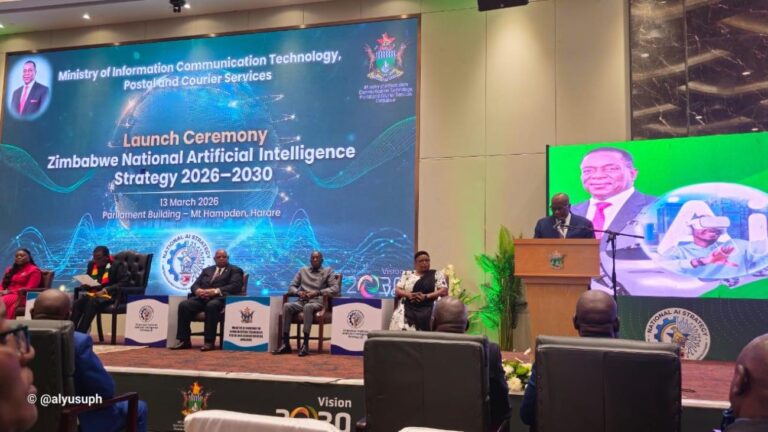
Zimbabwe has taken a significant step in its digital development agenda with the official launch of its National Artificial Intelligence Strategy (2026–2030), a government blueprint to harness artificial intelligence (AI) to accelerate economic growth, modernise public services, and position the country in the global digital economy.
The strategy was unveiled recently at the new Parliament building in Mount Hampden, Harare, Zimbabwe, in a ceremony attended by senior government officials, ICT sector leaders, and international delegates. It outlines a coordinated framework to mainstream AI technologies across key sectors, including agriculture, healthcare, education, mining, and public governance, to boost productivity, efficiency, and service delivery nationwide.
In his keynote address, President Emmerson D. Mnangagwa described the strategy as a cornerstone of Zimbabwe’s ambition for inclusive digital transformation. “Consecutive investments in the ICT and telecommunications sectors are bearing fruit, guaranteeing connectivity for a data‑ and knowledge‑driven future,” he said, underscoring the government’s commitment to building digital infrastructure and expanding internet access.
President Mnangagwa also emphasised the importance of ethical and responsible use of artificial intelligence: “We commit to ensuring that the use of artificial intelligence remains human‑centred, transparent and free from bias. The protection of our national interests as well as the dignity of all Zimbabweans remains at the heart of the legal frameworks we are putting in place,”signalling a focus on governance and safeguards as AI adoption grows.
Under the strategy’s pillars-which include talent development, infrastructure sovereignty, AI adoption, and ethical governance-the government plans to introduce incentives to encourage private-sector innovation and support businesses that deploy AI solutions.
Officials say the plan is aligned with Zimbabwe’s broader national development vision and digital transformation goals, positioning the nation to compete in the Fourth Industrial Revolution while promoting inclusive growth that reaches both urban centres and rural communities.
Read:

Senior Reporter/Editor
Bio: Ugochukwu is a freelance journalist and Editor at AIbase.ng, with a strong professional focus on investigative reporting. He holds a degree in Mass Communication and brings extensive experience in news gathering, reporting, and editorial writing. With over a decade of active engagement across diverse news outlets, he contributes in-depth analytical, practical, and expository articles exploring artificial intelligence and its real-world impact. His seasoned newsroom experience and well-established information networks provide AIbase.ng with credible, timely, and high-quality coverage of emerging AI developments.