

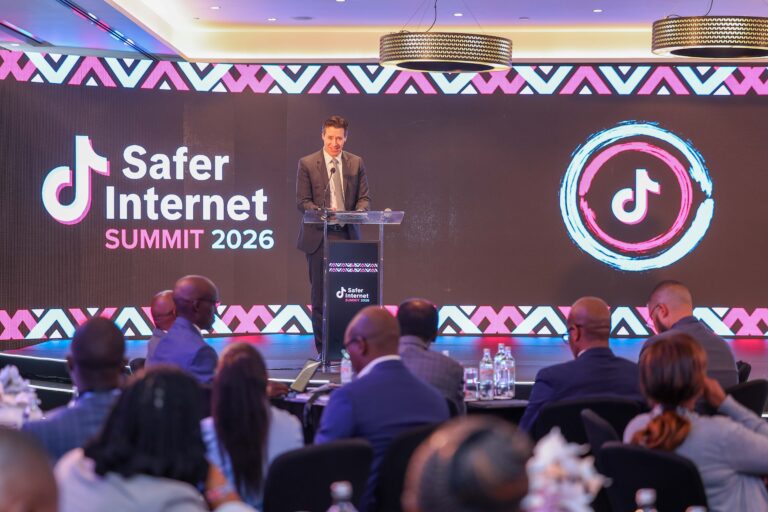
TikTok has announced an additional $200,000 investment in AI media literacy programmes across Sub‑Saharan Africa, aimed at helping users identify and respond to misinformation, deepfakes, and other AI‑generated content.
The funding was revealed during TikTok’s third annual Sub‑Saharan Africa Safer Internet Summit in Nairobi, which brought together government officials, regulators, technology companies, and civil society organisations to discuss online safety challenges in the region.
The $200,000 will be distributed as advertising credits to organisations already engaged in digital literacy and AI education, including Mtoto News in Kenya, Africa Check operating in Nigeria, South Africa, and Kenya, and the Centre for Journalism Innovation and Development, which runs the DUBAWA fact‑checking platform.
Tokunbo Ibrahim, Head of Government Relations and Public Policy for Sub‑Saharan Africa at TikTok, said the summit provides an opportunity for collaboration between policymakers, industry stakeholders, and communities.
“As we host the third Safer Internet Summit here in Kenya, our mission is clear: to share insights, address common challenges and develop solutions that protect citizens online,” Ibrahim said.
The initiative builds on TikTok’s global AI Literacy Fund, launched in 2025 to support nonprofit organisations producing educational content on AI technologies and their societal implications.
Experts say that AI‑powered tools have lowered the barriers to producing convincing fake content, including deepfakes, which can be used to spread misinformation, commit fraud, or manipulate public opinion. In regions with growing internet adoption but limited public awareness of AI risks, such efforts to improve media literacy are seen as increasingly critical.
Related Read:
- Tanzania Invests in Brainpower: AI and Data Science Scholarships
- Kenya Emerges as East Africa’s Hub for NVIDIA‑Powered AI Cloud Infrastructure
At the summit, discussions also focused on digital policy frameworks, responsible AI governance, and the protection of young and vulnerable social media users, highlighting the importance of cross-sector cooperation to create safer online environments.

Senior Reporter/Editor
Bio: Ugochukwu is a freelance journalist and Editor at AIbase.ng, with a strong professional focus on investigative reporting. He holds a degree in Mass Communication and brings extensive experience in news gathering, reporting, and editorial writing. With over a decade of active engagement across diverse news outlets, he contributes in-depth analytical, practical, and expository articles exploring artificial intelligence and its real-world impact. His seasoned newsroom experience and well-established information networks provide AIbase.ng with credible, timely, and high-quality coverage of emerging AI developments.