

OpenAI has rapidly emerged as one of the most influential forces in artificial intelligence development. Founded with the mission to ensure that artificial general intelligence benefits all of humanity, this research laboratory has evolved from a nonprofit startup into a powerhouse reshaping how we interact with technology. Through groundbreaking innovations like ChatGPT and DALL-E, OpenAI has brought sophisticated AI capabilities into the mainstream, sparking both excitement and debate about the future of machine intelligence.
What is OpenAI: A Comprehensive Overview
OpenAI is a research and deployment company specialising in artificial intelligence, with a particular focus on developing artificial general intelligence (AGI) in a safe and beneficial manner. The company was established in 2015 as a non-profit organisation by a group of tech luminaries including Sam Altman, Elon Musk, Greg Brockman, Ilya Sutskever, John Schulman, and Wojciech Zaremba.
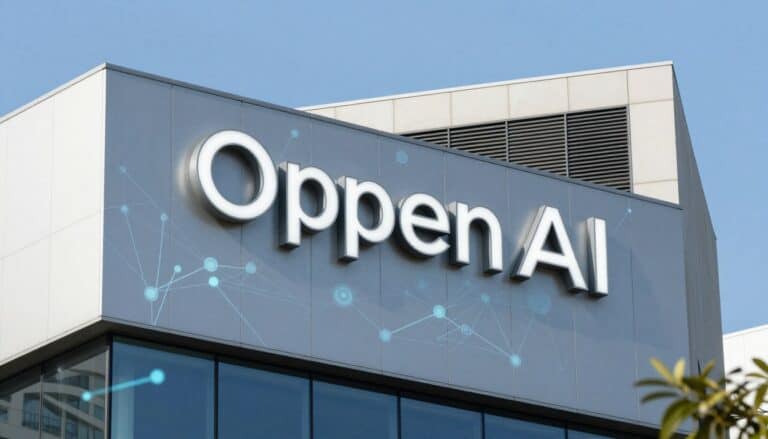
OpenAI’s headquarters, where cutting-edge AI research and development takes place
The company’s stated mission is to ensure that artificial general intelligence—defined as autonomous systems that outperform humans at most economically valuable work—benefits all of humanity. This mission has guided OpenAI’s approach to developing increasingly powerful AI models while attempting to address safety concerns and ethical considerations.
While OpenAI began as a non-profit entity, it restructured in 2019 to become a “capped-profit” company, with the non-profit arm maintaining governance over the for-profit division. This unique structure was designed to help OpenAI secure the substantial funding needed for advanced AI research while theoretically maintaining its commitment to developing AI that benefits humanity broadly rather than serving narrow commercial interests.
The History and Evolution of OpenAI
OpenAI’s journey from a small research lab to a global AI powerhouse reflects the rapid evolution of artificial intelligence technology over the past decade. Understanding this history provides valuable context for appreciating the company’s current position and influence.
The Founding Vision (2015-2017)
When OpenAI was established in December 2015, its founders pledged $1 billion to the venture. The initial mission emphasised open collaboration and transparency, with a commitment to freely share research, patents, and code with the wider community. This approach was designed as a counterbalance to concerns that advanced AI might become concentrated in the hands of a few powerful corporations or governments.
During these early years, OpenAI focused primarily on fundamental research in reinforcement learning, robotics, and language models. The company released several open-source tools including OpenAI Gym and Universe, which provided environments for training and measuring the progress of AI systems.
Pivot and Growth (2018-2020)
By 2018, OpenAI had begun to shift its approach. The company introduced its first Generative Pre-trained Transformer (GPT) model, representing a significant advancement in natural language processing. However, when GPT-2 was developed in 2019, OpenAI initially decided against releasing the full model, citing concerns about potential misuse for generating fake news or spam.
This period also saw a major structural change when OpenAI transitioned from a purely non-profit organisation to a “capped-profit” model in 2019. This controversial move was justified as necessary to attract the capital required for increasingly expensive AI research. Around this time, Microsoft invested $1 billion in OpenAI, beginning a partnership that would deepen in subsequent years.
Mainstream Breakthrough (2021-Present)
OpenAI truly entered the public consciousness with the release of DALL-E in 2021, a model capable of generating images from text descriptions. This was followed by increasingly powerful language models, culminating in the release of ChatGPT in November 2022, which amassed over a million users within its first week.
The company’s trajectory has not been without turbulence. In November 2023, OpenAI experienced a brief leadership crisis when CEO Sam Altman was temporarily removed from his position by the board before being reinstated days later. This episode highlighted tensions between OpenAI’s original mission and its growing commercial interests.
Today, OpenAI continues to develop increasingly sophisticated AI models while navigating complex questions about safety, governance, and the societal impact of its technology. The company’s evolution reflects broader debates about the direction and control of advanced artificial intelligence.
OpenAI’s Key Products and Innovations
OpenAI has developed several groundbreaking AI systems that have pushed the boundaries of what artificial intelligence can accomplish. These products have not only demonstrated remarkable technical capabilities but have also made advanced AI accessible to millions of users worldwide.
GPT Series and ChatGPT
The Generative Pre-trained Transformer (GPT) series represents OpenAI’s flagship language models. These neural networks are trained on vast datasets of text to understand and generate human-like language. Each iteration has demonstrated significant improvements:
- GPT-1 (2018): The initial model trained on the BookCorpus dataset containing over 7,000 unpublished books.
- GPT-2 (2019): A more powerful version with 1.5 billion parameters, trained on 8 million web pages.
- GPT-3 (2020): A massive leap forward with 175 billion parameters, capable of sophisticated text generation across diverse topics.
- GPT-4 (2023): The latest iteration with multimodal capabilities, able to process both text and images.
ChatGPT, launched in November 2022, brought the capabilities of GPT models to a conversational interface that anyone could use. Its ability to generate coherent, contextually relevant responses to a wide range of queries made it one of the fastest-growing consumer applications in history, reaching 100 million users within two months of launch.
DALL-E and Image Generation
DALL-E, named as a portmanteau of artist Salvador Dalí and Pixar’s WALL-E, represents OpenAI’s venture into image generation. These models can create original, realistic images and artwork based on text descriptions:
- DALL-E (2021): The original model that could generate images from text prompts, demonstrating an understanding of objects, their attributes, and their relationships.
- DALL-E 2 (2022): A significantly improved version with higher resolution, more realistic images, and better understanding of nuanced text prompts.
- DALL-E 3 (2023): The latest iteration integrated with ChatGPT, allowing for more precise image generation through conversational refinement.

Evolution of image quality across different versions of DALL-E
Codex and GitHub Copilot
Codex is an AI system trained on both natural language and billions of lines of source code. It powers GitHub Copilot, a tool that can translate natural language prompts into functional code, assist with programming tasks, and suggest code completions. This collaboration between OpenAI and GitHub has transformed how many developers write code, automating routine tasks and allowing programmers to focus on higher-level problem-solving.
OpenAI API
The OpenAI API provides developers with access to the company’s models, allowing them to build applications powered by OpenAI’s technology. This has enabled the creation of thousands of AI-enhanced products across industries, from writing assistants and educational tools to customer service platforms and creative applications. The API represents a key part of OpenAI’s business model, generating revenue through usage-based pricing while expanding the reach of its technology.
Through these products, OpenAI has not only demonstrated the technical capabilities of advanced AI systems but has also made these capabilities accessible to developers, businesses, and everyday users, accelerating the adoption of AI across society.
OpenAI’s Business Model and Funding
OpenAI’s business model has evolved significantly since its founding, reflecting both the enormous costs of developing cutting-edge AI and the tension between its original mission and commercial imperatives.
From Non-Profit to “Capped-Profit”
When OpenAI was established in 2015, it was structured as a non-profit research laboratory with $1 billion in commitments from its founders and initial backers. This structure aligned with the organisation’s stated goal of developing artificial general intelligence that would benefit humanity broadly rather than serving shareholders.
However, by 2019, the leadership determined that the non-profit model was insufficient to fund the increasingly expensive computational resources and talent required for advanced AI research. This led to the creation of OpenAI LP, a “capped-profit” company owned and controlled by the original non-profit board.
Under this unusual structure, investors in OpenAI LP can receive a maximum return of 100 times their investment, with additional profits flowing to the non-profit entity. This was designed as a compromise that would allow OpenAI to raise necessary capital while theoretically maintaining its commitment to broad public benefit.
Major Investments and Partnerships
OpenAI’s most significant financial relationship is with Microsoft, which invested $1 billion in 2019, followed by a reported $10 billion investment in 2023. This partnership gives Microsoft exclusive access to certain OpenAI technologies and has led to the integration of OpenAI’s models into Microsoft products like Bing and Microsoft 365.
Beyond Microsoft, OpenAI has raised capital from venture capital firms and other investors, with the company reportedly valued at $86 billion as of 2023. This places it among the most valuable private companies in the world, reflecting the enormous potential investors see in its technology.
Revenue Streams
OpenAI has developed several revenue streams to support its operations:
- API access: Developers and businesses pay to use OpenAI’s models through its API, with pricing based on usage volume.
- ChatGPT Plus: A subscription service offering priority access, faster response times, and access to the latest models for $20 per month.
- Enterprise licensing: Custom arrangements for large organisations to use OpenAI’s technology with additional features and support.
- Microsoft licensing: Revenue from Microsoft’s exclusive license to certain OpenAI technologies.
Despite these commercial developments, the tension between OpenAI’s original mission and its growing business interests remains evident. The brief leadership crisis in November 2023, when CEO Sam Altman was temporarily removed by the board before being reinstated, highlighted ongoing debates about the company’s direction and governance.
Impact and Controversies Surrounding OpenAI
OpenAI’s rapid rise has been accompanied by significant impact across various domains, as well as controversies that reflect broader societal concerns about advanced artificial intelligence.
Technological and Economic Impact
OpenAI’s models have demonstrated capabilities that were considered science fiction just a few years ago. These advances have accelerated the adoption of AI across industries, from healthcare and education to creative fields and software development. The company’s technology has enabled new products and services, improved existing ones, and created new possibilities for human-AI collaboration.
T
Economically, OpenAI has helped catalyze massive investment in AI development, with competitors and complementary startups raising billions to develop similar or adjacent technologies. The company has also influenced labour markets, with growing discussion about which jobs might be transformed or displaced by increasingly capable AI systems.
Ethical Concerns and Controversies
OpenAI’s development of increasingly powerful AI models has raised several ethical concerns:
Data Usage and Copyright
OpenAI’s models are trained on vast datasets that include content created by millions of people, often without explicit permission. This has led to legal challenges from content creators and publishers who argue their work is being used without compensation. The company faces multiple lawsuits alleging copyright infringement, including from prominent authors and news organisations.
Bias and Fairness
Like all AI systems trained on human-generated data, OpenAI’s models can reflect and potentially amplify societal biases present in their training data. Researchers have documented instances where these models produce outputs that reflect gender, racial, or cultural stereotypes, raising concerns about fairness and representation.
Transparency
Despite “Open” being in its name, OpenAI has become increasingly secretive about certain aspects of its technology, particularly with GPT-4. The company has cited competitive and safety concerns to justify limited disclosure about model architecture, training data, and evaluation methods. This has drawn criticism from researchers who argue that transparency is essential for understanding and addressing AI risks.
Governance and Alignment
The November 2023 leadership crisis highlighted questions about OpenAI’s governance structure and whether it can effectively balance commercial interests with its stated mission of ensuring AI benefits humanity broadly. The rapid reinstatement of CEO Sam Altman after his brief removal by the board raised concerns about the effectiveness of the company’s checks and balances.
Safety and Existential Risk
OpenAI has been vocal about potential risks from advanced AI, with some of its researchers and leaders expressing concern about the possibility of artificial general intelligence posing existential risks to humanity if developed without adequate safety measures. The company has invested in AI safety research and has advocated for industry standards and regulation.
However, critics argue that OpenAI’s rapid commercialization and deployment of increasingly powerful models is at odds with its expressed caution about AI risks. This tension between advancing AI capabilities and ensuring safety remains at the heart of debates about OpenAI’s approach and responsibility.
The Future of OpenAI
As OpenAI continues to develop increasingly sophisticated AI systems, several key trends and questions will shape its future trajectory and impact on society.
Technical Advancements
OpenAI is likely to continue pushing the boundaries of what AI systems can accomplish. Future developments may include:
- More powerful and efficient language models with enhanced reasoning capabilities
- Improved multimodal systems that can seamlessly work across text, images, audio, and video
- AI systems with better long-term memory and planning abilities
- Models that require less computational resources and energy to train and run
- Systems with improved alignment with human values and intentions
Business Evolution
OpenAI’s business model will likely continue to evolve as it balances commercial success with its stated mission. Key questions include:
- How will OpenAI’s relationship with Microsoft develop, particularly as Microsoft integrates OpenAI’s technology into more of its products?
- Will OpenAI pursue a public offering or maintain its private status?
- How will the company respond to growing competition from both tech giants and open-source alternatives?
- Can the “capped-profit” model be sustained as the company grows and faces increasing pressure from investors?
Regulatory and Societal Challenges
As AI becomes more powerful and pervasive, OpenAI will face increasing scrutiny and regulation:
- Government regulation of AI is expanding globally, with new frameworks emerging in the EU, US, China, and elsewhere
- Copyright and intellectual property disputes will continue to shape how AI systems are trained and deployed
- Questions about AI’s impact on labour markets and economic inequality will intensify
- Debates about AI safety, alignment, and existential risk will become more prominent as capabilities advance
How OpenAI navigates these technical, business, and societal challenges will not only determine its own success but will also significantly influence the broader development and impact of artificial intelligence. The company’s decisions will help shape whether AI fulfills its potential to benefit humanity broadly or whether its benefits and risks are distributed unevenly.
Understanding OpenAI’s Significance
OpenAI stands at the forefront of artificial intelligence development, having transformed from a research-focused non-profit to a commercial powerhouse that has brought advanced AI capabilities to millions of users worldwide. Through products like ChatGPT, DALL-E, and Codex, the company has demonstrated the remarkable potential of large language models and other AI systems to understand and generate human-like text, images, and code.
The company’s journey reflects broader tensions in the AI field between open and closed development approaches, between commercial incentives and public benefit, and between advancing capabilities and ensuring safety. OpenAI’s unique “capped-profit” structure represents an attempt to balance these competing priorities, though questions remain about how effectively this model can be maintained as the company grows.
As artificial intelligence continues to advance and permeate more aspects of society, OpenAI’s decisions about how to develop, deploy, and govern its technology will have far-reaching implications. Whether the company can fulfill its founding mission of ensuring that artificial general intelligence benefits all of humanity remains an open question—one that will be answered not just by OpenAI itself but by the broader ecosystem of researchers, policymakers, businesses, and citizens engaged with the future of AI.

Bio: An (HND, BA, MBA, MSc) is a tech-savvy digital marketing professional, writing on artificial intelligence, digital tools, and emerging technologies. He holds an HND in Marketing, is a Chartered Marketer, earned an MBA in Marketing Management from LAUTECH, a BA in Marketing Management and Web Technologies from York St John University, and an MSc in Social Business and Marketing Management from the University of Salford, Manchester.
He has professional experience across sales, hospitality, healthcare, digital marketing, and business development, and has worked with Sheraton Hotels, A24 Group, and Kendal Nutricare. A skilled editor and web designer, He focuses on simplifying complex technologies and highlighting AI-driven opportunities for businesses and professionals.
LinkedIn