
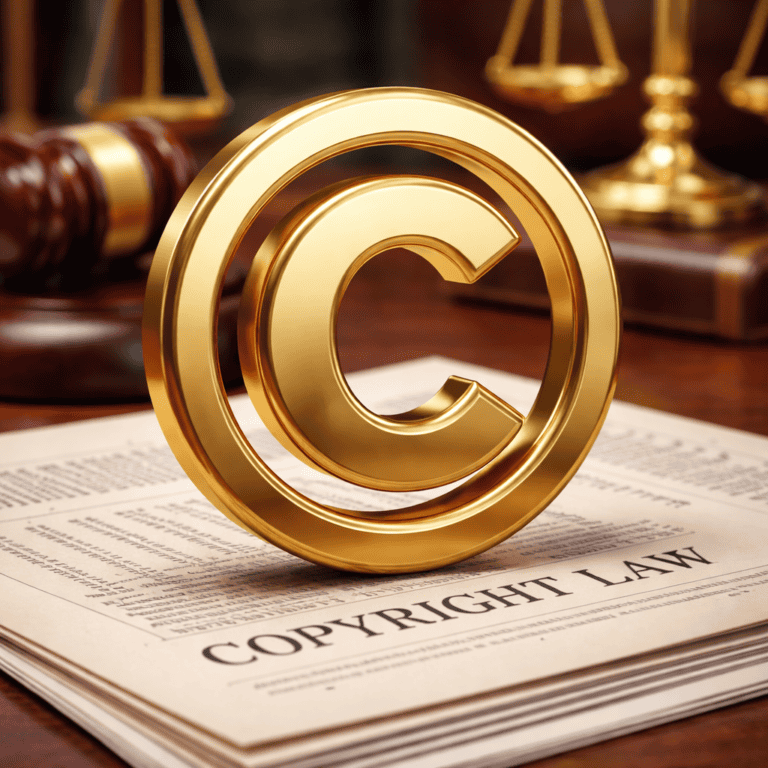
The concept of copyright has long been a cornerstone of intellectual property law, protecting the rights of creators while fostering innovation and cultural expression.
Traditionally, copyright was designed for works produced by human authors, encompassing literature, music, visual arts, and more. The law recognised the intrinsic link between creativity and human agency, providing authors with exclusive rights to reproduce, distribute, and adapt their work.
However, the rise of artificial intelligence (AI) presents a profound challenge to this conventional framework. AI systems can now generate content autonomously, from novels and poems to artwork, music, and even code.
This blurring of authorship raises fundamental questions: who owns AI-generated content, and should it be protected under copyright law?
For Nigeria, a nation witnessing rapid AI adoption in education, media, fintech, and creative industries, these questions are not abstract but pressing policy and economic concerns.
Nigerian readers should care because the outcome of this global debate will influence how local creators, startups, and institutions operate. As AI is increasingly integrated into sectors such as education and content creation, understanding the copyright implications is essential for protecting creative investments and fostering innovation responsibly.
Key Terms and Concepts
What Is Copyright?
Copyright is a legal right granted to the creator of original works. It provides exclusive control over reproduction, distribution, performance, and adaptation, typically lasting for the creator’s lifetime plus a defined period, depending on jurisdiction. Copyright is distinct from patents or trademarks, which protect inventions and brand identifiers, respectively.
What Is AI-Generated Content?
AI-generated content refers to outputs produced by artificial intelligence systems with minimal or no direct human authorship. Examples include:
- Textual works produced by language models such as ChatGPT.
- Images or artwork generated by tools like DALL·E or MidJourney.
- Music and sound compositions created via AI-assisted audio tools.
The critical legal question is whether such content, created autonomously, qualifies for copyright protection, which traditionally hinges on human creativity and intent.
The Distinction Between Human and AI Authorship
Global copyright systems historically assume a human author. This distinction creates a grey area when AI produces works:
- Direct AI outputs: Fully generated without human creative input.
- AI-assisted works: Human-guided works where AI acts as a tool.
This distinction matters because courts and copyright offices often treat human-guided creations differently from entirely AI-generated ones. In some jurisdictions, even minimal human involvement can justify copyright protection, whereas purely AI-generated content may be deemed unprotectable.
How AI Challenges Copyright in Practice
Global Perspectives
Internationally, AI has prompted diverse legal responses:
- United States: The U.S. Copyright Office has refused copyright registration for works created entirely by AI, citing the need for human authorship. However, works “assisted” by AI remain eligible.
- United Kingdom: The UK Copyright, Designs and Patents Act allows copyright protection for computer-generated works, assigning authorship to the person who made the arrangements for the creation.
- European Union: The EU is exploring legal frameworks to clarify rights for AI-generated works, balancing innovation with authors’ incentives.
These differences illustrate a lack of consensus on AI authorship, creating uncertainty for creators and businesses relying on AI tools.
Nigeria’s Reality
In Nigeria, copyright is governed by the Nigerian Copyright Act of 1988 (as amended). Currently, the law defines authorship in human terms, creating ambiguity around AI-generated works. While Nigerian creators increasingly use AI in music, literature, journalism, and digital media, the legal framework has yet to explicitly address ownership.
The Nigerian Copyright Commission (NCC) faces the challenge of modernising regulations to account for AI while protecting local creators. This is particularly relevant for AI startups that train models on Nigerian content, as observed in local AI initiatives.
Implications for the Nigerian Economy and Society
Economic Impact
AI-generated works can accelerate innovation and productivity, but may undermine traditional revenue streams for creators. For example, musicians who use AI to compose songs may face challenges in asserting copyright, which could limit monetisation opportunities. Similarly, Nigerian startups in content creation and digital marketing may encounter legal uncertainties when using AI-generated outputs for commercial purposes.
Education and Skill Development
AI tools in Nigerian higher education, as explored in AI-enabled learning platforms, facilitate teaching and research but also complicate academic authorship. Universities must determine how AI contributions affect plagiarism, authorship recognition, and intellectual property rights.
Governance and Legal Reform
For governance, the rise of AI challenges regulators to modernise intellectual property laws. Clear guidelines would help Nigerian creators, startups, and AI companies navigate copyright compliance while fostering innovation. The absence of legal clarity risks deterring investment in creative AI applications, slowing the growth of Nigeria’s digital economy.
Challenges Unique to Nigeria
Several factors make AI copyright management particularly complex in Nigeria:
- Legal Framework Limitations: The Copyright Act pre-dates modern AI technology. It does not explicitly define AI authorship or ownership, leaving creators vulnerable.
- Enforcement Gaps: Copyright enforcement in Nigeria has historically been inconsistent, complicating the protection of AI-assisted works.
- Cultural and Market Factors: Informal creative industries, such as Nollywood and independent music, often operate outside formal licensing structures, making AI-generated content harder to regulate.
- Technological Capacity: Limited local AI infrastructure and datasets may affect the originality and traceability of AI outputs, influencing copyright claims.
Addressing these challenges requires harmonising AI, copyright, and digital policies, drawing on global frameworks while adapting to local realities.
What Needs to Change for Meaningful Progress
For Nigeria to benefit from AI while protecting creators, several measures are essential:
- Legislative Reform: Amend the Copyright Act to define AI-generated content, clarify authorship, and establish rights for human-guided contributions.
- Regulatory Guidelines: Empower the NCC to issue clear regulations on AI content, licensing, and enforcement.
- Public Awareness: Educate creators and businesses about the copyright implications of AI usage.
- Collaboration with AI Initiatives: Partner with local AI startups to ensure that legal frameworks support innovation, as discussed in the context of AI’s transformation of Nigeria’s creator economy.
These steps would foster an environment where AI-driven creativity contributes to economic growth while preserving creators’ rights.
A Grounded Perspective
Artificial intelligence is redefining authorship, creativity, and the very concept of intellectual property. While global debates continue, Nigeria faces an urgent need to adapt copyright laws to reflect the realities of AI. The implications extend across sectors from education and creative industries to technology-driven startups, making it critical for policymakers, creators, and businesses to understand the evolving legal landscape.
The challenge is not merely legal; it is cultural, economic, and technological. By engaging with these complexities, Nigeria can chart a path that both encourages innovation and safeguards the rights of human creators. For those seeking broader insights into AI’s transformative role across Nigerian society, consider reading related explorations of AI and the future of work and AI-powered education, which highlight the intersection of technology, creativity, and policy in shaping the nation’s digital future.

Senior AI Writer
Bio: Okikiola is a writer and AI enthusiast with a background in Office Technology and Management from the Federal Polytechnic Offa. She went further to study an MSc in International Business at De Montfort University (DMU). With extensive work experience across administrative and business roles, she now focuses on exploring how artificial intelligence can transform work, innovation, and everyday life.