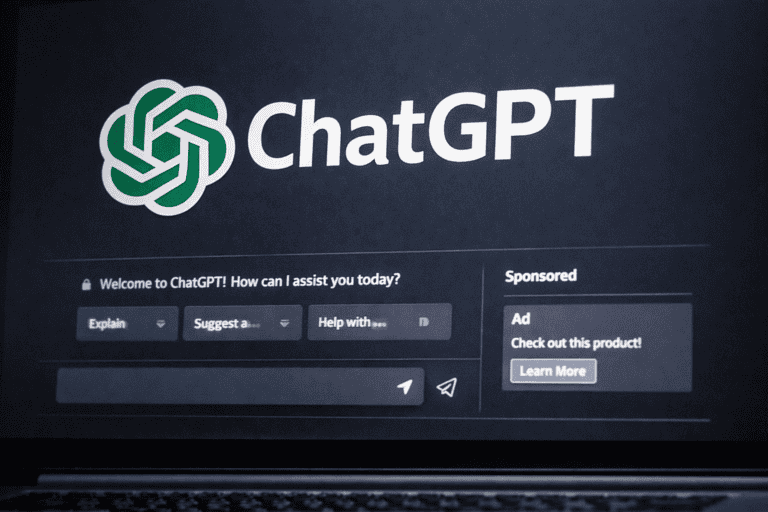
According to multiple industry reports, the initial ad testing is limited in scope and primarily targets users on ChatGPT’s free and entry-level plans. Higher-tier subscriptions, including Plus, Pro, Business and Enterprise, are expected to remain ad-free, at least for now.
Ads remain separate from AI responses
OpenAI has emphasised that advertisements will not be embedded within ChatGPT’s answers. Instead, ads are expected to appear as clearly labelled, standalone placements within the interface, similar to sponsored content seen on other digital platforms. The company has also stated that advertising will not influence how ChatGPT generates responses.
This distinction is critical as concerns grow globally about trust, bias and transparency in AI systems. By keeping ads separate from conversational outputs, OpenAI appears to be attempting to balance monetisation with user confidence.
Rising costs drive monetisation push
Running large-scale AI models requires immense computing power, energy consumption and infrastructure investment. With hundreds of millions of users worldwide — many of them on free plans — OpenAI faces mounting pressure to diversify its revenue streams beyond subscriptions and enterprise licensing.
Advertising offers a familiar solution, particularly for users unwilling or unable to pay for premium access. Analysts view the move as part of a broader trend in which AI platforms begin to resemble traditional consumer internet services in their business models.
What this means for users
For now, most users may not notice any immediate change. The ad rollout is still in a testing phase and may vary by region. Where ads do appear, they are expected to be minimal and clearly marked as sponsored content.
OpenAI has also reiterated that user conversations remain private and are not shared with advertisers. Targeting is expected to rely on broad contextual signals rather than personal chat histories.
A turning point for consumer AI
The introduction of ads into ChatGPT represents a symbolic moment for the AI industry. Once viewed purely as experimental or research-driven tools, conversational AI systems are now firmly positioned as mass-market products that must generate sustainable income.
As competition intensifies from rivals such as Google, Anthropic and Meta, OpenAI’s latest move underscores a reality facing the entire sector: the future of AI will depend not only on innovation, but also on viable business models.
Whether users ultimately accept ads as the price of free AI access remains to be seen