

These predictions go beyond mere speculation; they offer a roadmap for organisations and individuals preparing to navigate an increasingly AI-driven world. Whether you’re a technology leader, business executive, or simply curious about how AI will transform daily life, understanding these emerging trends will help you prepare for the opportunities and challenges that lie ahead.
1. AI Companions Will Redefine Relationships for Those Who Need It Most
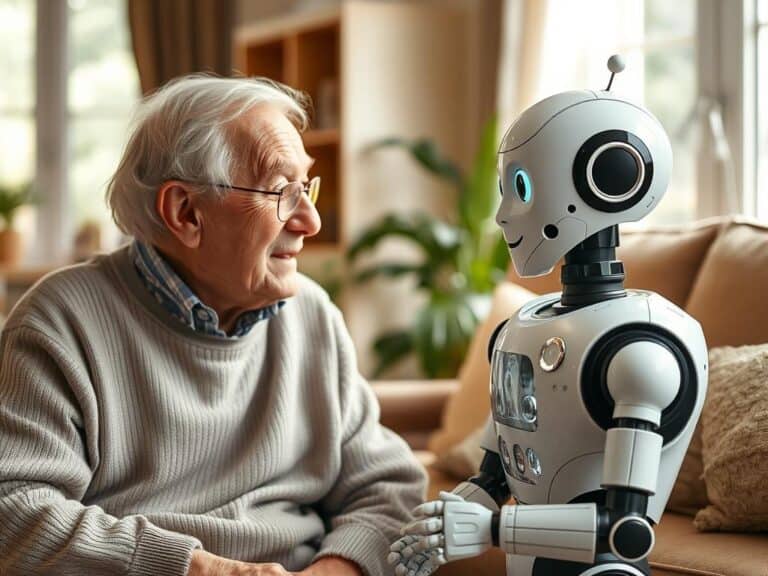
By 2026, AI companions will emerge as a powerful solution to the global loneliness epidemic, which currently affects one in six people worldwide. These companions will move beyond simple chatbots to become sophisticated emotional support systems with increasingly nuanced emotional intelligence and responsive behaviours.
According to Dr Werner Vogels, Amazon’s CTO, “We are witnessing a shift from transactional device interactions to relationship-building with physical AI that demonstrates increasingly nuanced emotional intelligence.” Clinical evidence already supports the effectiveness of companion robots in combating loneliness, with studies showing measurable reductions in agitation, depression, and medication usage among elderly patients.
What makes these AI companions particularly effective is our biological predisposition to form connections with autonomous entities in our physical space. As MIT researcher Kate Darling discovered, people treat robots more like animals than devices—naming them, feeling protective of them, and forming genuine emotional bonds. This biological response creates the foundation for companion robots to provide a consistent emotional presence that alleviates loneliness.
Rather than replacing human caregivers, these AI companions will create a collaborative model where technology and people work together to combat isolation. This represents technology at its best: keeping people central while extending our capacity to support those who need it most.
2. The Renaissance Developer Will Emerge in the Age of AI
Despite fears that AI will make developers obsolete, 2026 will instead see the rise of what experts call the “renaissance developer”—professionals who combine AI tools with uniquely human judgment, creativity, and domain expertise.

While generative AI can produce code in seconds, it lacks the contextual understanding that shapes technical decisions. As Vogels notes, “AI doesn’t sit in budget meetings where leadership debates whether to optimise for cost or performance. It doesn’t understand that the customer service system needs five 9s of uptime while the internal reporting dashboard can go down during peak sales periods.”
The developers who thrive in 2026 will be modern polymaths who understand that systems are living, dynamic environments where changes ripple through services, APIs, databases, infrastructure, and people. They’ll communicate with clarity that both humans and machines can build from, own the quality and intent of what they create, and bring domain knowledge that AI cannot replicate.
This shift mirrors historical patterns: when compilers emerged, they didn’t eliminate assembly programmers but elevated the level of abstraction and opened software development to more people. Similarly, cloud computing didn’t make operations engineers obsolete but lowered barriers to experimentation and created new roles. Each technological leap forward has followed this pattern—tools evolve, workflows change, and complexity increases, yet the core attributes of great developers remain constant.
3. Quantum-Safe Security Will Become the Only Safe Option
By 2026, the urgency to implement quantum-safe security measures will reach critical levels as timeline projections for quantum computing breakthroughs accelerate dramatically. Organisations that delay implementing post-quantum cryptography will face potentially catastrophic vulnerabilities.

The risk lies in how we secure data today. Malicious actors have been harvesting encrypted data for years, patiently waiting for quantum computing power to decrypt it. Most digital security relies on public-key cryptography, and the mathematical puzzles that make RSA and elliptic curve encryption hard for classical computers will be trivial for quantum machines running algorithms like Shor’s.
Recent research shows that 2048-bit RSA integers can be factored with less than one million noisy qubits—a 95% reduction from estimates just six years earlier. This means that within about five years, quantum computers could break the encryption used to secure internet communications, financial transactions, and sensitive personal data.
“Personal data, financial records, and state secrets are already being harvested by malicious actors betting on quantum’s arrival. Advances in error correction and algorithmic efficiency have compressed timelines, and the window for proactive defense is closing.”
Organisations need to act on three fronts: deploying post-quantum cryptography where possible, planning to update physical infrastructure where necessary, and developing quantum-ready talent. Major tech companies are already converging on NIST standards like ML-KEM to ensure interoperability and security. Still, the physical world presents greater challenges—from smart TVs and thermostats to hotel key systems and utility meters that lack the processing power to support post-quantum algorithms.
By 2026, quantum-safe will be the only safe approach to security, with cloud-native organisations transitioning smoothly through provider-managed updates, while infrastructure-heavy companies that begin planning physical transitions now will survive. Those who delay will face vulnerabilities with no viable remediation path when quantum computers mature.
Stay updated on AI Analysis and trends in Nigeria.
Join our newsletter to receive the latest updates, news and analysis like this.
4. Defence Technology Will Transform Civilian Applications
In 2026, we’ll witness an unprecedented acceleration in the transfer of defence technologies to civilian applications, fundamentally reshaping infrastructure, emergency response, and healthcare worldwide.
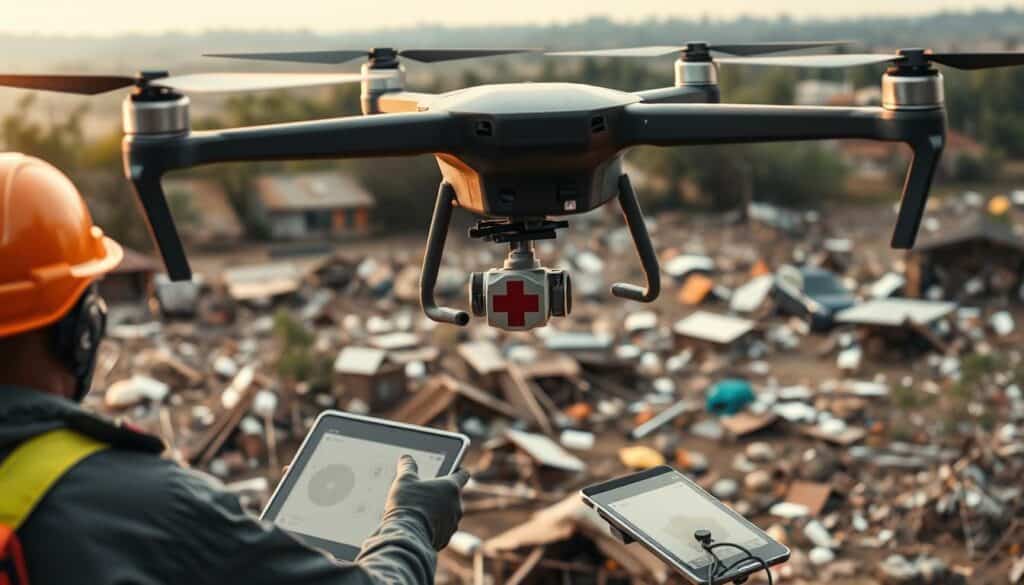
Historically, military innovations like DARPA’s internet and GPS research have taken 10-20 years to transition to civilian use. What’s different now is the fundamental approach to innovation. Companies like Anduril Industries and Shield AI operate more like technology startups than traditional defence contractors, designing technologies as dual-use from inception and seeing civilian applications as core business models rather than afterthoughts.
Consider what’s happening in conflict zones around the world, where technologies are being refined under extreme pressure. Software updates for autonomous systems happen weekly, not annually. AI algorithms learn from real-world data and improve overnight. This creates feedback loops measured in days rather than decades.
By 2026, technologies being refined under pressure today will be widely deployed across civilian sectors:
- Night vision systems guide search-and-rescue helicopters and enable wildlife conservation
- Tactical edge computing powering remote healthcare clinics in areas with limited infrastructure
- Autonomous systems developed for military logistics are solving agricultural labour challenges
- Robotics innovations driving solutions for power plants and wind farms
- Drone technologies are revolutionising search and rescue operations
- Advanced security systems protecting maritime port operations
Healthcare systems, emergency services, and infrastructure operators should prepare for capabilities that will emerge from current defence investments within the next two years, not in the next two decades. The organisations that understand this accelerated timeline will gain significant advantages in solving critical problems, from disaster response and food security to healthcare access in remote regions.
5. Personalised AI Learning Will Meet Infinite Curiosity
By 2026, AI-powered personalised learning will democratize access to high-quality education, adapting to each student’s unique learning style, pace, and interests in ways previously available only to the wealthy.

Children are natural learners with boundless curiosity. The only limit is access to people and tools that can answer their questions. Instead of forcing every student through the same system and learning sequence, AI in 2026 will adapt to each child’s thinking-answering “why?” as many times as needed, exploring tangents that spark interest, and adjusting explanations until concepts click.
This transformation is already underway. Khan Academy’s Khanmigo exceeded all projections by 1,400%, reaching 1.4 million students in its first year. According to a UK survey, the proportion of students using any AI tool has jumped from 66% to 92% in just one year. These aren’t experiments—they’re production systems at scale, and the transformation is happening globally.
Generation Alpha is already thinking about AI differently from older generations. For them, AI isn’t just a tool—it’s an extension of thinking. They’ve deleted “impossible” from their operating system and replaced it with “not yet.” AI tutoring nurtures this curiosity, with studies showing a 65% increase in willingness to attempt challenging tasks when using AI tools.
Importantly, teachers aren’t going away. What’s changing is what teachers do. AI is freeing them from tasks that scale poorly (and can be automated)—grading, administration, answering routine questions—while enabling them to be more creative, provide more individualised education, and keep students engaged. Teachers who use AI tools save an average of 5.9 hours per week, which is equivalent to about 6 weeks per school year.
By 2026, personalised AI tutoring will be as ubiquitous as smartphones, with every student having access to instruction adapted to their learning style, pace, language, and needs—creating conditions under which people thrive rather than merely comply.
6. AI Will Drive Pragmatic Business Value Over Hype
In 2026, AI will trade its “tiara for a hard hat” as enterprises prioritise function over flair, focusing on measurable business outcomes rather than experimental applications. This shift marks AI’s maturation from a buzzword to an essential business tool.
According to Forrester’s 2026 predictions, organisations will implement more rigorous ROI frameworks for AI investments, with 70% of enterprises requiring clear business cases before approving new AI projects. This represents a significant shift from the experimental approach that characterised earlier AI adoption.
Three key factors will drive this pragmatic approach:
Budget Constraints
Economic pressures will force organisations to justify AI investments based on tangible returns rather than potential innovation value.
Governance Maturity
Organisations will implement comprehensive AI governance frameworks that balance innovation with risk management and compliance.
Talent Optimization
Companies will focus on upskilling existing employees rather than competing for scarce specialised AI talent.
This pragmatic approach will manifest in several ways. First, organisations will prioritise AI applications that directly impact revenue or operational efficiency, such as customer service automation, predictive maintenance, and supply chain optimisation. Second, they’ll invest more heavily in AI training and governance to ensure responsible deployment. Finally, they’ll evaluate AI more closely against alternative solutions rather than assuming AI is always the best approach.
The result will be more sustainable AI adoption that delivers measurable business value while avoiding the pitfalls of chasing technology for its own sake. Organisations that embrace this pragmatic approach will outperform those still caught in the hype cycle.
7. Cybersecurity Will Adapt to New AI-Powered Threats
By 2026, the cybersecurity landscape will be transformed by AI-powered threats, forcing organisations to implement equally sophisticated defensive technologies and prepare their workforce for significant shifts in security operations.

Political instability, coupled with cybercriminals’ use of technological advancements, will create a perfect storm of security challenges. According to Forrester’s 2026 predictions, we’ll see several critical developments:
| Threat Evolution | Defensive Response | Organizational Impact |
| AI-powered phishing that perfectly mimics trusted contacts | Zero-trust authentication with continuous behavioural verification | Complete redesign of identity management systems |
| Autonomous attack systems that adapt in real-time | AI defensive systems with predictive capabilities | Shift from reactive to proactive security posture |
| Sophisticated deepfakes used in business compromise attacks | Content provenance verification systems | New verification protocols for high-value transactions |
| Quantum computing threats to encryption | Post-quantum cryptography implementation | Comprehensive cryptographic inventory and migration |
These developments will fundamentally change how organisations approach cybersecurity. Security teams will shift from manual threat hunting to designing and supervising AI security systems. This will require new skills, with 60% of security roles expected to require AI expertise by 2026, up from just 15% today.
Organisations will also need to implement comprehensive AI governance frameworks that address both the use of AI in security operations and the security of AI systems themselves. This dual challenge will require collaboration between security, data science, and compliance teams in ways not previously necessary.
The most successful organisations will be those that view these challenges as opportunities to build more resilient security architectures rather than merely responding to threats as they emerge.
8. AI Will Reshape Leadership and Decision-Making
In 2026, technology leaders will face unprecedented challenges that combine technical complexity, ethical considerations, and organisational change. Those who successfully navigate this landscape will fundamentally reshape how decisions are made and how organisations operate.

According to Forrester’s 2026 predictions, technology leadership will be “part roller coaster, part chess match, and part improv comedy.” This colourful description captures the multifaceted challenges leaders will face as AI becomes increasingly embedded in critical business functions.
Three key shifts will define leadership in 2026:
From Technical Oversight to Ethical Governance
Leaders will spend less time managing technical implementation and more time establishing ethical frameworks and governance structures. This will require new skills in moral reasoning, stakeholder management, and regulatory compliance. By 2026, 75% of large organisations will have formal AI ethics committees with C-suite representation.
From Intuitive to Augmented Decision-Making
Leaders will increasingly rely on AI-augmented decision support systems that analyse complex scenarios and provide evidence-based recommendations. However, the most successful leaders will maintain a balance between algorithmic insights and human judgment, particularly for decisions with significant ethical implications or stakeholder impact.
From Functional to Systemic Thinking
As AI systems become more interconnected and impact multiple business functions, leaders will need to develop more sophisticated systems thinking capabilities. This includes understanding complex interdependencies, anticipating second-order effects, and designing organisational structures that can adapt to rapid technological change.
These shifts will require leaders to develop new capabilities while maintaining the core leadership qualities that have always been essential. The most successful organisations will invest in leadership development programs that combine technical AI literacy with ethical reasoning, systems thinking, and change management skills.
By 2026, we’ll see the emergence of new C-suite roles specifically focused on AI governance and ethics, with 40% of Fortune 500 companies having Chief AI Ethics Officers or equivalent positions. These leaders will bridge the gap between technical implementation and strategic business value.
9. Environmental Sustainability Will Enter an Era of AI-Driven Authenticity
In 2026, environmental sustainability efforts will shift dramatically from performative messaging to data-driven authenticity, with AI playing a central role in measuring, optimising, and verifying ecological impact.

According to Forrester’s 2026 predictions, environmental sustainability is entering a new era where performative messaging is out and authenticity is in. Three key factors are driving this shift:
- Increasing regulatory pressure, with 80% of large organisations facing mandatory environmental reporting requirements by 2026
- Growing investor scrutiny of environmental claims, with ESG-focused investors demanding verifiable data
- Advances in AI-powered monitoring and optimisation technologies make authentic sustainability more achievable
AI will transform environmental sustainability efforts in several key ways:
AI-Enabled Sustainability Opportunities
- Real-time monitoring of ecological impact across complex supply chains
- Predictive maintenance to reduce resource waste and emissions
- Optimisation of energy usage in buildings, data centres, and manufacturing
- Automated sustainability reporting with verification capabilities
- Design optimisation for product lifecycle sustainability
AI Sustainability Challenges
- Energy consumption of AI systems themselves
- Data centre water usage for cooling AI infrastructure
- Electronic waste from specialised AI hardware
- Privacy concerns with environmental monitoring systems
- Potential for “greenwashing” using selective AI analysis
Organisations that embrace this shift toward authentic sustainability will gain competitive advantages beyond mere regulatory compliance. They’ll reduce operational costs through resource optimisation, attract environmentally conscious customers and employees, and build resilience against future environmental regulations and resource constraints.
By 2026, we’ll see the emergence of AI-powered sustainability platforms that integrate environmental monitoring, reporting, and optimisation into core business operations rather than treating sustainability as a separate initiative.
10. AI Agents Will Transform How Work Gets Done
By 2026, AI agents will move beyond simple task automation to become collaborative partners that fundamentally transform how work is organised, executed, and measured across organisations.
According to Amazon’s recent announcements, agentic AI applications like Amazon Quick Suite are already reshaping how work gets done. By 2026, these capabilities will evolve dramatically, with AI agents that can:
These capabilities will transform work in several key ways:
Workflow Orchestration
AI agents will coordinate complex workflows across teams and systems, automatically handling handoffs, identifying bottlenecks, and optimising processes in real-time.
Knowledge Synthesis
Agents will continuously analyse organisational data, synthesise insights, and proactively share relevant information with the right people at the right time.
Decision Augmentation
AI agents will provide context-aware recommendations that incorporate both organisational knowledge and external data, helping humans make better decisions faster.
This transformation will require organisations to rethink job roles, team structures, and performance metrics. By 2026, 50% of knowledge worker roles will be redefined to focus on tasks that uniquely require human judgment, creativity, and emotional intelligence, with AI agents handling routine cognitive tasks.
Organisations that successfully integrate AI agents will gain significant competitive advantages through increased productivity, improved decision quality, and enhanced employee experience as workers focus on more meaningful aspects of their roles.
The Future of AI: Preparing for 2026 and Beyond
As we’ve explored throughout this article, AI in 2026 will be characterised by a shift from experimental applications to practical, value-driven implementations that address fundamental human and business needs. From combating loneliness with AI companions to securing our digital infrastructure against quantum threats, these predictions highlight how AI is maturing into a transformative force across industries and society.

Several common themes emerge across these predictions. First, AI is increasingly focusing on augmenting human capabilities rather than replacing them—whether in software development, education, or decision-making. Second, the technology is maturing from hype to practical implementation, with greater emphasis on measurable outcomes and responsible deployment. Finally, AI is becoming more contextually aware and emotionally intelligent, enabling more natural and productive human-machine collaboration.
For organisations preparing for this AI-driven future, the key will be balancing innovation with responsibility. This means investing in AI capabilities while simultaneously developing robust governance frameworks, focusing on both technical implementation and ethical considerations, and preparing workforces for changing roles and responsibilities.
The organisations that thrive in 2026 will be those that view AI not merely as a technology to be deployed but as a transformative force that requires rethinking fundamental aspects of how they operate, compete, and create value in an increasingly AI-driven world.
Stay updated on AI Analysis and trends in Nigeria.
Join our newsletter to receive the latest updates, news and analysis like this.

Bio: An (HND, BA, MBA, MSc) is a tech-savvy digital marketing professional, writing on artificial intelligence, digital tools, and emerging technologies. He holds an HND in Marketing, is a Chartered Marketer, earned an MBA in Marketing Management from LAUTECH, a BA in Marketing Management and Web Technologies from York St John University, and an MSc in Social Business and Marketing Management from the University of Salford, Manchester.
He has professional experience across sales, hospitality, healthcare, digital marketing, and business development, and has worked with Sheraton Hotels, A24 Group, and Kendal Nutricare. A skilled editor and web designer, He focuses on simplifying complex technologies and highlighting AI-driven opportunities for businesses and professionals.
LinkedIn