
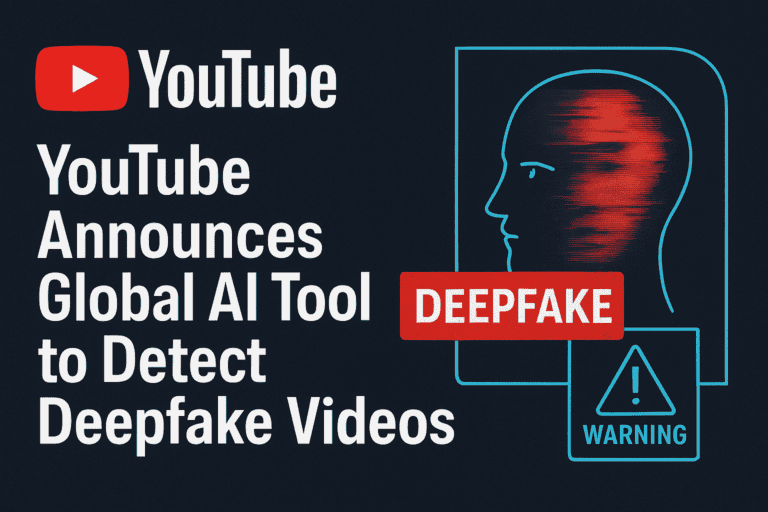
YouTube Announces Global AI Tool to Detect Deepfake Videos – What Nigerians Need to Know in this Global Step Against Video Manipulation.
YouTube has announced that it is rolling out a new AI‑powered tool designed to detect and track deepfake and manipulated videos globally. According to reporting on the planned feature, the tool aims to help identify altered videos — such as deepfakes – to curb misinformation, protect authenticity, and safeguard users around the world.
The announcement is part of a broader push by YouTube, owned by Google, to use artificial intelligence to improve content verification and increase trust on the platform. The move reflects rising concerns over AI‑generated content misuse, especially deepfakes, which can be used to spread false information, defame public figures, or manipulate public opinion.
What the tool is expected to do
-
Deepfake detection: The AI tool will scan uploaded videos for signs of manipulation — for example, splicing, face-swapping, or altered audio – and flag content that appears suspicious.
-
Biometric data warning: As part of its deepfake strategy, YouTube may also monitor biometric or identity‑based data misuse in videos. This aims to highlight videos where a person’s likeness or voice is manipulated in a way that could mislead viewers.
-
Global rollout, universal access: The tool is intended to be available worldwide – across all regions, including Nigeria – to help users everywhere navigate video content with greater caution.
What this means for Nigerian Users
For Nigerians using YouTube, this development could be especially significant – at a time when social media and digital video consumption are widespread, and misinformation can spread quickly. Here’s why it matters:
-
Better protection against fake content: If the AI tool flags manipulated videos reliably, users will have a stronger defence against deepfake‑based scams, political misinformation, or misleading content featuring public figures.
-
Improved trust in information sources: Verified content and warnings about potential deepfakes may help rebuild public trust in digital media, which is crucial for news consumption, civic engagement, and online discourse.
-
Greater awareness and media literacy: The announcement could spur broader conversations about verifying digital content – encouraging Nigerians to be more critical viewers and more discerning sharers online.
What we still don’t know
While the announcement signals progress, some questions remain unanswered:
-
It’s not yet clear when the tool will be fully live and available to all users globally – YouTube has described the development as “announced”, rather than “fully launched.”
-
The accuracy of the detection tool – especially in detecting subtle, high‑quality deepfakes – remains uncertain. AI detection of video manipulation remains technically challenging.
-
There’s no public detail yet about how flagged content will be handled: whether it will be removed, labelled, reviewed by human moderators, or subject to user appeal.
Why this matters globally and in Nigeria
As AI-generated media becomes more sophisticated, platforms like YouTube face increasing pressure to police content and protect users from manipulation. This announcement is part of a growing trend: big tech leveraging AI to fight back against AI-based threats.
For Nigeria – a country with a large, youthful, digitally connected population – the combination of high mobile internet adoption and widespread social media use means that tools like this one could play a critical role in safeguarding truth and improving media reliability. AI in Nigeria.
AI Writer
Bio: Joseph Michael is an MBA graduate in Marketing from Ladoke Akintola University of Technology and a passionate tech enthusiast. As a professional writer and author at AIbase.ng, he simplifies complex AI concepts, explores digital innovation, and creates practical guides for Nigerian learners and businesses. With a background in marketing and brand communication, Joseph brings clarity, insight, and real-world relevance to every article he writes.