

Technology leaders, policymakers, civil society actors, academia, and development practitioners have renewed calls for a coordinated national approach to artificial intelligence (AI) governance aimed at ensuring that the technology is developed and deployed in an inclusive, ethical, and socially responsible manner.
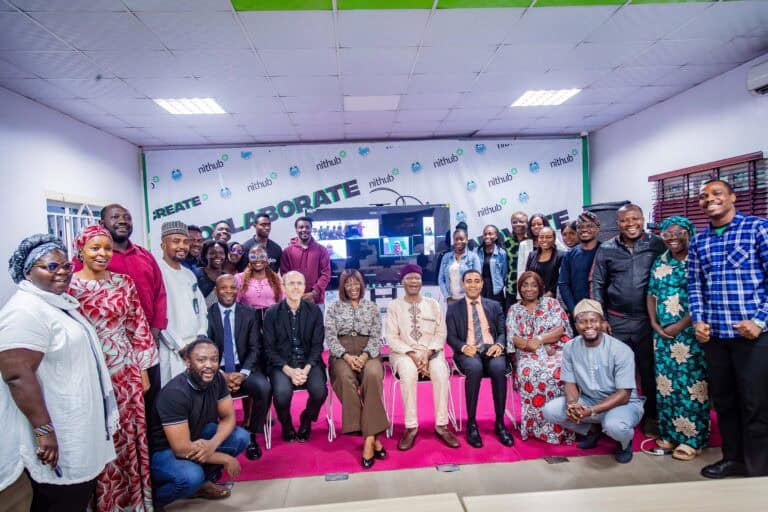
The call was reinforced at a high-level strategic dialogue convened in Lagos, where stakeholders, including the MacArthur Foundation, Dataphyte Foundation, and the University of Lagos’ NitHub, engaged in discussions on inclusive AI development, safety, and governance in Nigeria.
The engagement focused on strengthening collaboration across sectors to address emerging risks and opportunities in the country’s fast-growing AI framework.
Participants examined the opportunities and risks associated with the rapid expansion of AI across key sectors of Nigeria’s economy, including education, healthcare, agriculture, and financial services, stressing that innovation must be matched with strong governance structures.
A major concern raised was the existing gap in localised language data, and datasets needed to ensure AI systems accurately reflect Nigeria’s linguistic and cultural diversity. Stakeholders also highlighted the urgent need for clear AI safety standards and regulatory frameworks to guide responsible deployment.
Speakers noted that while AI presents significant opportunities for productivity and innovation, its benefits must be deliberately structured to ensure inclusion for women, young people, persons with disabilities, and rural communities.
Consider Reading:
- Kenya Pushes for AI-Powered Growth Amid Political Unrest
- Stakeholders Advocate AI Skills Development for Young People
- Stakeholders Urge Visually Impaired Persons to Embrace AI Tools
A recurring concern was the risk of widening inequality if access to digital infrastructure, AI tools, and skills development remains uneven across regions.
A technology policy expert, Dr Timi Olagunju, emphasised the importance of embedding ethical safeguards into AI systems from the outset.
“Artificial intelligence must not only be about innovation; it must be about responsibility. If we fail to embed fairness, transparency, and accountability into these systems from the beginning, we will end up scaling bias at an unprecedented level,” he said.
Participants also underscored the importance of investing in digital literacy and workforce readiness to prepare Nigerians for an AI-driven economy.
A digital inclusion advocate at the forum noted that inclusion must be intentional and systematically implemented.
“Inclusion in the AI era cannot happen by accident. It must be designed. We must ensure that access to skills, infrastructure, and opportunity is not limited to urban centres alone, but extends to every part of the country,” he said.
Government representatives reiterated ongoing efforts to strengthen Nigeria’s national AI strategy, with emphasis on responsible innovation, data governance, and regulatory frameworks that protect citizens while supporting technological growth.
Industry stakeholders highlighted the rising momentum within Nigeria’s tech connectivity, noting increased interest from startups and international partners in developing AI-driven solutions tailored to local challenges.
However, they warned that innovation must be matched with strong ethical guidelines and accountability systems to prevent misuse and unintended consequences.
A civil society representative called for greater public participation in AI governance.
“If AI is going to shape the future of our society, then the public must have a say in how it is governed. Decisions about these technologies cannot be left to a small group of actors; they must reflect the voices of all Nigerians,” he said.
The engagement concluded with a shared commitment among stakeholders to deepen collaboration and accelerate the development of inclusive AI frameworks aligned with Nigeria’s long-term development priorities.
Participants agreed that Nigeria’s AI future will depend not only on innovation but also on how effectively the country ensures fairness, access, and inclusivity in technological transformation.

AI Writer
Bio: Joseph Michael is an MBA graduate in Marketing from Ladoke Akintola University of Technology and a passionate tech enthusiast. As a professional writer and author at AIbase.ng, he simplifies complex AI concepts, explores digital innovation, and creates practical guides for Nigerian learners and businesses. With a background in marketing and brand communication, Joseph brings clarity, insight, and real-world relevance to every article he writes.