

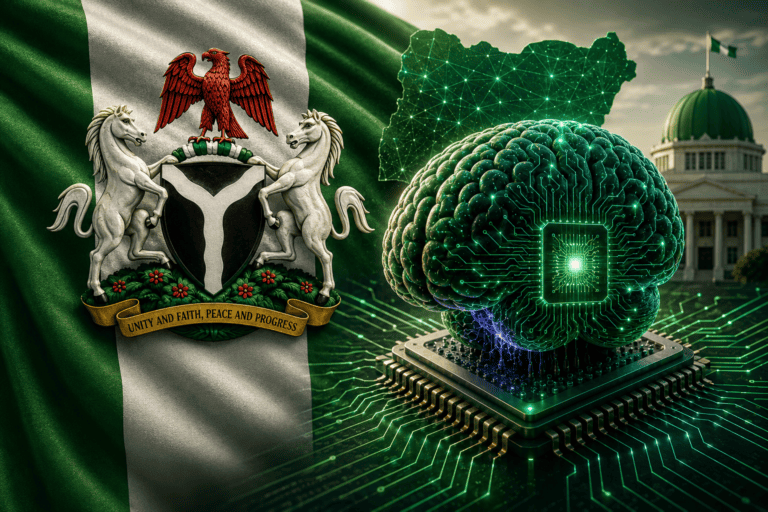
The Federal Government has launched a major reform initiative to integrate Artificial Intelligence (AI) into the nation’s civil service operations, as part of efforts to modernise governance, improve efficiency, and strengthen public service delivery across Ministries, Departments, and Agencies (MDAs).
The initiative was unveiled in Abuja during a three-day AI Literacy Training Programme organised by the Office of the Head of the Civil Service of the Federation (OHCSF) in collaboration with the United Nations Educational, Scientific and Cultural Organisation (UNESCO) and with support from the European Union (EU).
The reform programme is expected to reposition the Federal Civil Service into a technology-driven institution capable of responding to emerging governance challenges while enhancing transparency, accountability, and operational efficiency.
Speaking at the launch, the Head of the Civil Service of the Federation, Mrs Didi Esther Walson-Jack, stated that Artificial Intelligence is rapidly transforming governance systems globally, and Nigeria must embrace innovation to remain competitive and effective in public administration.
According to her, the initiative aligns with President Bola Ahmed Tinubu’s Renewed Hope Agenda, which places strong emphasis on digital transformation, transparency, and improved institutional performance. Walson-Jack explained that the reform programme is already producing measurable outcomes through the deployment of digital tools and paperless systems across federal institutions.
One of the major innovations introduced under the reform initiative is “Service Wise GPT,” an AI-powered platform designed to assist civil servants with quick access to Public Service Rules, procurement guidelines, financial regulations, and official government circulars. “The Nigerian Federal Civil Service cannot afford to stand on the sidelines of this transformation,” Walson-Jack said.
She clarified that the AI system was introduced to support public servants and not to replace human responsibilities or professional judgment. According to her, the technology is expected to reduce bureaucratic bottlenecks, speed up decision-making processes, and improve institutional coordination across MDAs.
Government officials disclosed that the digital transformation programme has significantly expanded paperless operations within the public service, increasing adoption from only a few ministries to dozens of federal institutions nationwide.
The reform is also expected to improve service delivery to businesses, investors, and the general public by reducing delays in approvals, documentation, and communication processes. Speaking on the broader impact of the initiative, Walson-Jack noted that a more efficient civil service would create positive economic outcomes for the country.
“Every efficiency we build into the civil service creates a dividend that flows outward: faster processing, better communication, and more predictable regulation,” she stated. The Federal Government further stressed that ethical considerations would remain central to the deployment of AI technologies within public institutions.
Walson-Jack warned that the irresponsible use of Artificial Intelligence could lead to misinformation, data abuse, privacy violations, and biased decision-making if not properly regulated. “Artificial Intelligence must support openness, not secrecy. It must strengthen accountability, not reduce it,” she said.
Representatives of UNESCO described the initiative as a significant step toward building a responsible and human-centred AI framework in Nigeria. UNESCO officials noted that AI literacy and digital skills are becoming increasingly important for governance, economic competitiveness, education, and workforce development globally.
The training programme adopts a “train-the-trainers” model to ensure that participants transfer knowledge and digital governance skills across various MDAs, achieving long-term institutional impact. The initiative is also expected to strengthen Nigeria’s broader digital economy strategy and position the country among leading African nations exploring ethical AI integration within public administration.
Read Also:
- AI Overhaul Of Nigeria’s Civil Service Aims To Improve
- Akwa Ibom Launches AI-Powered Education Reform

Senior Reporter/Editor
Bio: Ugochukwu is a freelance journalist and Editor at AIbase.ng, with a strong professional focus on investigative reporting. He holds a degree in Mass Communication and brings extensive experience in news gathering, reporting, and editorial writing. With over a decade of active engagement across diverse news outlets, he contributes in-depth analytical, practical, and expository articles exploring artificial intelligence and its real-world impact. His seasoned newsroom experience and well-established information networks provide AIbase.ng with credible, timely, and high-quality coverage of emerging AI developments.